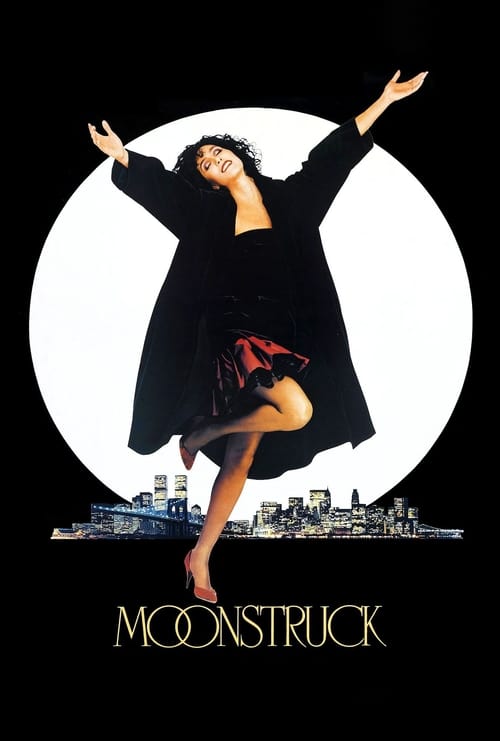
Moonstruck
37-year-old Italian-American widow Loretta Castorini believes she is unlucky in love, and so accepts a marriage proposal from her boyfriend Johnny, even though she doesn't love him. When she meets his estranged younger brother Ronny, an emotional and passionate man, she finds herself drawn to him. She tries to resist, but Ronny, who blames his brother for the loss of his hand, has no scruples about aggressively pursuing her while Johnny is out of the country. As Loretta falls for Ronny, she learns that she's not the only one in her family with a secret romance.
Despite a respectable budget of $15.0M, Moonstruck became a commercial juggernaut, earning $122.1M worldwide—a remarkable 714% return.
3 Oscars. 18 wins & 19 nominations


Plot Structure
Story beats plotted across runtime


Narrative Arc
Emotional journey through the story's key moments
Story Circle
Blueprint 15-beat structure
Arcplot Score Breakdown
Weighted: Precision (70%) + Arc (15%) + Theme (15%)
Moonstruck (1987) reveals strategically placed narrative design, characteristic of Norman Jewison's storytelling approach. This structural analysis examines how the film's 15-point plot structure maps to proven narrative frameworks across 1 hour and 42 minutes. With an Arcplot score of 6.5, the film balances conventional beats with creative variation.
Structural Analysis
The Status Quo at 1 minutes (1% through the runtime) establishes Loretta Castorini, a widowed bookkeeper, lives a practical, emotionally cautious life in Brooklyn, suppressing passion to avoid the bad luck she believes killed her first husband.. Notably, this early placement immediately immerses viewers in the story world.
The inciting incident occurs at 12 minutes when Johnny proposes to Loretta at a restaurant. She accepts, but only after insisting he do it "right" (on one knee with a ring), trying to control fate through proper ritual.. At 12% through the film, this Disruption aligns precisely with traditional story structure. This beat shifts the emotional landscape, launching the protagonist into the central conflict.
The First Threshold at 25 minutes marks the transition into Act II, occurring at 24% of the runtime. This reveals the protagonist's commitment to Loretta actively chooses to go to the bakery to meet Ronny, entering his passionate, chaotic world beneath the streets. This decision will change everything., moving from reaction to action.
At 51 minutes, the Midpoint arrives at 50% of the runtime—precisely centered, creating perfect narrative symmetry. Of particular interest, this crucial beat At the Met Opera watching La Bohème, Loretta is swept away by romantic passion. She sees Ronny in the crowd and fully embraces her transformation, acknowledging her true feelings., fundamentally raising what's at risk. The emotional intensity shifts, dividing the narrative into clear before-and-after phases.
The Collapse moment at 76 minutes (75% through) represents the emotional nadir. Here, Johnny arrives at the Castorini home to announce his mother didn't die - but he cannot marry Loretta. The engagement ends, but this also means Loretta has betrayed him for nothing., shows the protagonist at their lowest point. This beat's placement in the final quarter sets up the climactic reversal.
The Second Threshold at 82 minutes initiates the final act resolution at 81% of the runtime. Ronny crashes the family breakfast and proposes to Loretta in front of everyone. She must choose publicly between safety (rejecting him) and passion (accepting him)., demonstrating the transformation achieved throughout the journey.
Emotional Journey
Moonstruck's emotional architecture traces a deliberate progression across 15 carefully calibrated beats.
Narrative Framework
This structural analysis employs proven narrative structure principles that track dramatic progression. By mapping Moonstruck against these established plot points, we can identify how Norman Jewison utilizes or subverts traditional narrative conventions. The plot point approach reveals not only adherence to structural principles but also creative choices that distinguish Moonstruck within the comedy genre.
Norman Jewison's Structural Approach
Among the 13 Norman Jewison films analyzed on Arcplot, the average structural score is 7.2, reflecting strong command of classical structure. Moonstruck takes a more unconventional approach compared to the director's typical style. For comparative analysis, explore the complete Norman Jewison filmography.
Comparative Analysis
Additional comedy films include The Bad Guys, Ella Enchanted and The Evening Star. For more Norman Jewison analyses, see A Soldier's Story, ...And Justice for All and F.I.S.T..
Plot Points by Act
Act I
SetupStatus Quo
Loretta Castorini, a widowed bookkeeper, lives a practical, emotionally cautious life in Brooklyn, suppressing passion to avoid the bad luck she believes killed her first husband.
Theme
Old man at the wedding tells Loretta: "I'm here to tell you: love don't make things nice, it ruins everything. It breaks your heart." The theme of love as disruption vs. safety is stated.
Worldbuilding
Loretta's controlled world is established: her Italian-American family, her job keeping books, her superstitions about marriage and bad luck, and her relationship with passive Johnny Cammareri.
Disruption
Johnny proposes to Loretta at a restaurant. She accepts, but only after insisting he do it "right" (on one knee with a ring), trying to control fate through proper ritual.
Resistance
Johnny must leave for Sicily to be with his dying mother, asking Loretta to invite his estranged brother Ronny to the wedding. Loretta debates whether to get involved in their family drama.
Act II
ConfrontationFirst Threshold
Loretta actively chooses to go to the bakery to meet Ronny, entering his passionate, chaotic world beneath the streets. This decision will change everything.
Mirror World
Ronny explodes with rage and passion, telling Loretta the story of how Johnny "killed" his hand and ruined his life. He represents everything Loretta has suppressed: raw emotion, uncontrolled passion, life.
Premise
Loretta is drawn into Ronny's world of passion. After he declares love and they make love, she tries to resist but is transformed. Meanwhile, her parents' own romantic complications mirror the theme.
Midpoint
At the Met Opera watching La Bohème, Loretta is swept away by romantic passion. She sees Ronny in the crowd and fully embraces her transformation, acknowledging her true feelings.
Opposition
Complications intensify: Loretta's mother discovers her father's affair, Loretta tries to break free from Ronny, and family secrets threaten to explode. Johnny announces he's returning, forcing a crisis.
Collapse
Johnny arrives at the Castorini home to announce his mother didn't die - but he cannot marry Loretta. The engagement ends, but this also means Loretta has betrayed him for nothing.
Crisis
The family gathers for breakfast as secrets spill out. Loretta must face her choice: return to safety or embrace the messy, passionate life she's been avoiding.
Act III
ResolutionSecond Threshold
Ronny crashes the family breakfast and proposes to Loretta in front of everyone. She must choose publicly between safety (rejecting him) and passion (accepting him).
Synthesis
Loretta accepts Ronny. The family reconciles: her mother confronts her father, Ronny and Johnny make peace, and the extended family celebrates. Love doesn't ruin everything - it redeems everything.
Transformation
The family toasts "To the family! To love!" Loretta, once controlled and fearful, is radiant and free, having chosen passionate life over safe death. The moon has worked its magic.