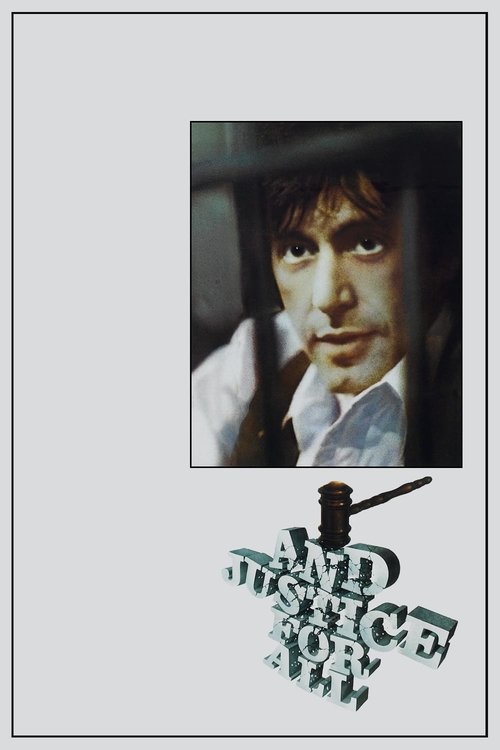
...And Justice for All
An ethical Baltimore defense lawyer disgusted with rampant legal corruption is forced to defend a judge he despises in a rape trial under the threat of being disbarred.
Despite its limited budget of $6.0M, ...And Justice for All became a commercial success, earning $33.3M worldwide—a 455% return. The film's distinctive approach resonated with audiences, showing that strong storytelling can transcend budget limitations.
Nominated for 2 Oscars. 1 win & 3 nominations


Plot Structure
Story beats plotted across runtime


Narrative Arc
Emotional journey through the story's key moments
Story Circle
Blueprint 15-beat structure
Arcplot Score Breakdown
Weighted: Precision (70%) + Arc (15%) + Theme (15%)
...And Justice for All (1979) reveals deliberately positioned plot construction, characteristic of Norman Jewison's storytelling approach. This structural analysis examines how the film's 15-point plot structure maps to proven narrative frameworks across 1 hour and 59 minutes. With an Arcplot score of 7.5, the film showcases strong structural fundamentals.
Characters
Cast & narrative archetypes

Arthur Kirkland
Judge Henry T. Fleming
Jay Porter
Gail Packer
Warren Fresnell
Jeff McCullaugh
Main Cast & Characters
Arthur Kirkland
Played by Al Pacino
An idealistic defense attorney driven to the edge by systemic corruption and moral compromise in Baltimore's legal system.
Judge Henry T. Fleming
Played by John Forsythe
A corrupt, tyrannical judge accused of rape who forces Arthur to defend him using blackmail and manipulation.
Jay Porter
Played by Jack Warden
Arthur's law partner and close friend struggling with depression and disillusionment with the legal system.
Gail Packer
Played by Christine Lahti
An ethics committee attorney who becomes romantically involved with Arthur while investigating his conduct.
Warren Fresnell
Played by Lee Strasberg
A senior partner at Arthur's firm who represents establishment values and compromises Arthur finds distasteful.
Jeff McCullaugh
Played by Thomas G. Waites
Arthur's innocent client wrongfully convicted and trapped in prison due to legal technicalities and bureaucracy.
Structural Analysis
The Status Quo at 1 minutes (1% through the runtime) establishes Arthur Kirkland, an idealistic defense attorney, flies with his suicidal judge friend in a helicopter, establishing his world of chaos and dysfunction in the Baltimore legal system.. Structural examination shows that this early placement immediately immerses viewers in the story world.
The inciting incident occurs at 14 minutes when Judge Fleming - Arthur's nemesis who railroaded his client - is arrested for rape and assault. The Ethics Committee pressures Arthur to defend him due to a technicality.. At 12% through the film, this Disruption aligns precisely with traditional story structure. This beat shifts the emotional landscape, launching the protagonist into the central conflict.
The First Threshold at 30 minutes marks the transition into Act II, occurring at 25% of the runtime. This demonstrates the protagonist's commitment to Arthur reluctantly agrees to defend Judge Fleming, crossing into a world where he must advocate for everything he despises to save his innocent client McCullaugh., moving from reaction to action.
At 60 minutes, the Midpoint arrives at 50% of the runtime—precisely centered, creating perfect narrative symmetry. Of particular interest, this crucial beat Judge Fleming confesses to Arthur that he is indeed guilty and committed the rape, smugly confident that Arthur must defend him anyway. Arthur realizes the full moral trap he's in - false defeat., fundamentally raising what's at risk. The emotional intensity shifts, dividing the narrative into clear before-and-after phases.
The Collapse moment at 90 minutes (76% through) represents the emotional nadir. Here, Jeff McCullaugh commits suicide in prison, unable to endure the injustice any longer. Arthur's innocent client - the reason he entered this devil's bargain - dies, rendering his moral compromise meaningless., shows the protagonist at their lowest point. This beat's placement in the final quarter sets up the climactic reversal.
The Second Threshold at 96 minutes initiates the final act resolution at 81% of the runtime. Arthur realizes he cannot and will not perpetuate the corrupt system any longer. He decides to expose Fleming in court, accepting the destruction of his career for the sake of actual justice., demonstrating the transformation achieved throughout the journey.
Emotional Journey
...And Justice for All's emotional architecture traces a deliberate progression across 15 carefully calibrated beats.
Narrative Framework
This structural analysis employs systematic plot point analysis that identifies crucial turning points. By mapping ...And Justice for All against these established plot points, we can identify how Norman Jewison utilizes or subverts traditional narrative conventions. The plot point approach reveals not only adherence to structural principles but also creative choices that distinguish ...And Justice for All within the drama genre.
Norman Jewison's Structural Approach
Among the 13 Norman Jewison films analyzed on Arcplot, the average structural score is 7.2, reflecting strong command of classical structure. ...And Justice for All represents one of the director's most structurally precise works. For comparative analysis, explore the complete Norman Jewison filmography.
Comparative Analysis
Additional drama films include After Thomas, South Pacific and Dirty Dancing: Havana Nights. For more Norman Jewison analyses, see A Soldier's Story, F.I.S.T. and Moonstruck.
Plot Points by Act
Act I
SetupStatus Quo
Arthur Kirkland, an idealistic defense attorney, flies with his suicidal judge friend in a helicopter, establishing his world of chaos and dysfunction in the Baltimore legal system.
Theme
Arthur's colleague Jay Porter states: "The law doesn't work" - encapsulating the film's central theme about justice system corruption and the gap between law and justice.
Worldbuilding
Establishment of Arthur's world: his passionate defense of innocent client Jeff McCullaugh imprisoned due to bureaucratic error, conflicts with Judge Fleming, relationships with fellow attorneys, and his commitment to actual justice over legal maneuvering.
Disruption
Judge Fleming - Arthur's nemesis who railroaded his client - is arrested for rape and assault. The Ethics Committee pressures Arthur to defend him due to a technicality.
Resistance
Arthur resists defending Fleming, debates the ethical implications with colleagues, and struggles with the choice between his career and his principles. Fleming blackmails him by threatening to reveal Arthur's past ethics violation.
Act II
ConfrontationFirst Threshold
Arthur reluctantly agrees to defend Judge Fleming, crossing into a world where he must advocate for everything he despises to save his innocent client McCullaugh.
Mirror World
Arthur deepens his relationship with Gail Packer, a legal ethics committee member who represents moral clarity and emotional honesty - the thematic opposite of the corrupt system.
Premise
Arthur navigates the absurdity of defending a guilty judge while fighting for innocent clients. The "promise of the premise" - watching an idealist forced to work within a corrupt system, leading to darkly comic and tragic situations.
Midpoint
Judge Fleming confesses to Arthur that he is indeed guilty and committed the rape, smugly confident that Arthur must defend him anyway. Arthur realizes the full moral trap he's in - false defeat.
Opposition
Pressure intensifies from all sides: Fleming demands Arthur win the case, McCullaugh deteriorates in prison, Jay Porter has a breakdown, the system's corruption becomes more suffocating, and Arthur's relationship with Gail strains under the weight of his moral compromise.
Collapse
Jeff McCullaugh commits suicide in prison, unable to endure the injustice any longer. Arthur's innocent client - the reason he entered this devil's bargain - dies, rendering his moral compromise meaningless.
Crisis
Arthur mourns McCullaugh's death and processes the complete failure of the system. He faces the dark night knowing he must go through with defending Fleming despite losing everything he compromised himself to save.
Act III
ResolutionSecond Threshold
Arthur realizes he cannot and will not perpetuate the corrupt system any longer. He decides to expose Fleming in court, accepting the destruction of his career for the sake of actual justice.
Synthesis
In the famous courtroom scene, Arthur delivers his opening statement declaring Judge Fleming guilty: "You're out of order! The whole trial is out of order!" He exposes the corruption, destroys his career, but reclaims his integrity.
Transformation
Arthur walks out of the courthouse having been physically removed, but smiling - destroyed professionally but spiritually intact. The final image mirrors the opening chaos, but Arthur has chosen principle over compromise.