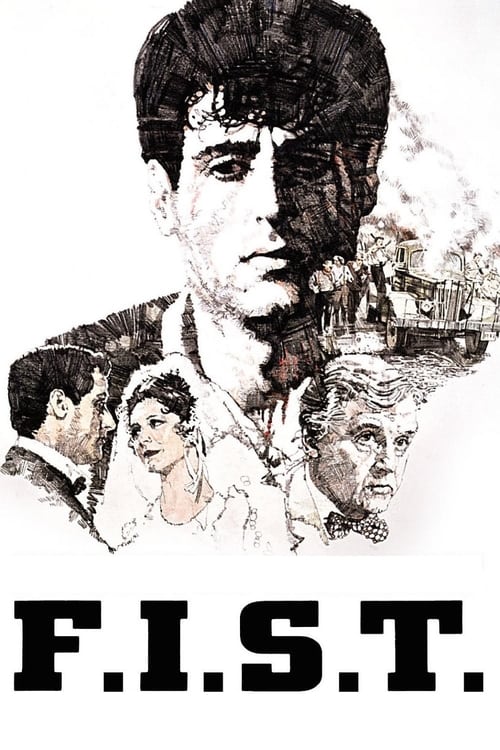
F.I.S.T.
Johnny Kovak joins the Teamsters trade-union in a local chapter in the 1930s and works his way up in the organization. As he climbs higher and higher his methods become more ruthless and finally senator Madison starts a campaign to find the truth about the alleged connections with the Mob.
Working with a tight budget of $11.0M, the film achieved a steady performer with $20.4M in global revenue (+85% profit margin).
1 win & 1 nomination
Plot Structure
Story beats plotted across runtime


Narrative Arc
Emotional journey through the story's key moments
Story Circle
Blueprint 15-beat structure
Arcplot Score Breakdown
Weighted: Precision (70%) + Arc (15%) + Theme (15%)
F.I.S.T. (1978) exhibits meticulously timed story structure, characteristic of Norman Jewison's storytelling approach. This structural analysis examines how the film's 15-point plot structure maps to proven narrative frameworks across 2 hours and 25 minutes. With an Arcplot score of 6.8, the film balances conventional beats with creative variation.
Characters
Cast & narrative archetypes

Johnny Kovak
Abe Belkin
Anna Zerinkas
Max Graham
Sen. Andrew Madison
Babe Milano
Main Cast & Characters
Johnny Kovak
Played by Sylvester Stallone
A Cleveland truck driver who rises from union organizer to powerful and corrupt labor boss.
Abe Belkin
Played by David Huffman
Johnny's cautious best friend and union colleague who becomes troubled by the organization's corruption.
Anna Zerinkas
Played by Melinda Dillon
Johnny's loyal girlfriend who witnesses his transformation from idealistic worker to ruthless union chief.
Max Graham
Played by Rod Steiger
A corrupt and violent mobster who helps Johnny build union power through intimidation and criminal methods.
Sen. Andrew Madison
Played by Peter Boyle
A senator investigating labor corruption who becomes Johnny's primary antagonist in the political arena.
Babe Milano
Played by Tony Lo Bianco
A tough union enforcer and Johnny's right-hand man who helps maintain power through force.
Structural Analysis
The Status Quo at 2 minutes (1% through the runtime) establishes 1937 Cleveland. Johnny Kovak works as a truck loader, living a simple working-class life with his friend Abe Belkin. The opening establishes the harsh conditions and exploitation of warehouse workers.. Significantly, this early placement immediately immerses viewers in the story world.
The inciting incident occurs at 16 minutes when Abe is brutally beaten by company thugs for speaking up about unfair treatment. Johnny witnesses the violence and injustice, sparking his awakening to the need for organized resistance.. At 11% through the film, this Disruption aligns precisely with traditional story structure. This beat shifts the emotional landscape, launching the protagonist into the central conflict.
The First Threshold at 35 minutes marks the transition into Act II, occurring at 24% of the runtime. This illustrates the protagonist's commitment to Johnny actively chooses to lead the workers in their first major strike action against the warehouse. He crosses from passive worker to active organizer, committing himself to the fight despite the dangers., moving from reaction to action.
At 71 minutes, the Midpoint arrives at 49% of the runtime—precisely centered, creating perfect narrative symmetry. Significantly, this crucial beat False victory: Johnny becomes president of the Federation of Interstate Truckers (F.I.S.T.). He has achieved major success, the union is powerful, and he has gained everything he fought for. But the stakes raise - he's now a target for both government and organized crime., fundamentally raising what's at risk. The emotional intensity shifts, dividing the narrative into clear before-and-after phases.
The Collapse moment at 106 minutes (73% through) represents the emotional nadir. Here, Abe Belkin, Johnny's oldest friend and moral conscience, is murdered - likely on orders from Johnny's mob associates. This "whiff of death" represents the death of Johnny's innocence and the complete loss of his original idealistic mission., shows the protagonist at their lowest point. This beat's placement in the final quarter sets up the climactic reversal.
The Second Threshold at 114 minutes initiates the final act resolution at 79% of the runtime. Johnny realizes there's no way back from what he's become. Rather than reform or redemption, he chooses to double down, accepting his Faustian bargain. He understands the full cost but proceeds anyway - a tragic threshold., demonstrating the transformation achieved throughout the journey.
Emotional Journey
F.I.S.T.'s emotional architecture traces a deliberate progression across 15 carefully calibrated beats.
Narrative Framework
This structural analysis employs structural analysis methodology used to understand storytelling architecture. By mapping F.I.S.T. against these established plot points, we can identify how Norman Jewison utilizes or subverts traditional narrative conventions. The plot point approach reveals not only adherence to structural principles but also creative choices that distinguish F.I.S.T. within the drama genre.
Norman Jewison's Structural Approach
Among the 13 Norman Jewison films analyzed on Arcplot, the average structural score is 7.2, reflecting strong command of classical structure. F.I.S.T. takes a more unconventional approach compared to the director's typical style. For comparative analysis, explore the complete Norman Jewison filmography.
Comparative Analysis
Additional drama films include After Thomas, South Pacific and Dirty Dancing: Havana Nights. For more Norman Jewison analyses, see A Soldier's Story, ...And Justice for All and Moonstruck.
Plot Points by Act
Act I
SetupStatus Quo
1937 Cleveland. Johnny Kovak works as a truck loader, living a simple working-class life with his friend Abe Belkin. The opening establishes the harsh conditions and exploitation of warehouse workers.
Theme
Abe tells Johnny: "You gotta stand up for yourself or they'll walk all over you." This statement captures the film's exploration of power, corruption, and the cost of fighting the system.
Worldbuilding
Setup of the Depression-era labor environment, introduction of Johnny's relationship with Anna, the brutal working conditions at the warehouse, and the power dynamics between workers and management. Establishes the corrupt company bosses and police complicity.
Disruption
Abe is brutally beaten by company thugs for speaking up about unfair treatment. Johnny witnesses the violence and injustice, sparking his awakening to the need for organized resistance.
Resistance
Johnny debates whether to get involved in union organizing. He meets union organizer Max Graham who mentors him. Johnny resists at first, wanting to keep his head down, but gradually sees the necessity of collective action. Planning and recruitment phase.
Act II
ConfrontationFirst Threshold
Johnny actively chooses to lead the workers in their first major strike action against the warehouse. He crosses from passive worker to active organizer, committing himself to the fight despite the dangers.
Mirror World
Johnny's deepening relationship with Anna represents the personal life and moral center he risks losing. She embodies the human cost of his ambition and the question of whether power will corrupt him.
Premise
The promise of the premise: Johnny's rise through the union ranks. Successful strikes, growing membership, confrontations with company goons and corrupt officials. Johnny discovers his talent for leadership and negotiation. The union gains power and Johnny becomes a respected figure.
Midpoint
False victory: Johnny becomes president of the Federation of Interstate Truckers (F.I.S.T.). He has achieved major success, the union is powerful, and he has gained everything he fought for. But the stakes raise - he's now a target for both government and organized crime.
Opposition
Johnny must make increasingly compromising deals to maintain union power. He allies with mobsters, uses violence and intimidation, and becomes what he once fought against. Senate investigations begin. His friendship with Abe deteriorates as Abe sees Johnny's corruption. Anna grows distant.
Collapse
Abe Belkin, Johnny's oldest friend and moral conscience, is murdered - likely on orders from Johnny's mob associates. This "whiff of death" represents the death of Johnny's innocence and the complete loss of his original idealistic mission.
Crisis
Johnny attends Abe's funeral, confronts the depths of what he's become. He faces Senate testimony, his relationship with Anna is shattered, and he must reckon with the fact that he's become the oppressor. Dark night of moral reckoning.
Act III
ResolutionSecond Threshold
Johnny realizes there's no way back from what he's become. Rather than reform or redemption, he chooses to double down, accepting his Faustian bargain. He understands the full cost but proceeds anyway - a tragic threshold.
Synthesis
Johnny testifies before the Senate, refusing to incriminate himself or his associates. He maintains his power but at total personal cost. Final confrontations with the government, the mob, and his own conscience. Resolution of all relationships and conflicts.
Transformation
Johnny sits alone in his office, powerful but isolated, having sacrificed everything personal for institutional power. The closing image mirrors the opening - he's still fighting the system, but has become part of it. A tragic transformation from idealist to corrupt power broker.