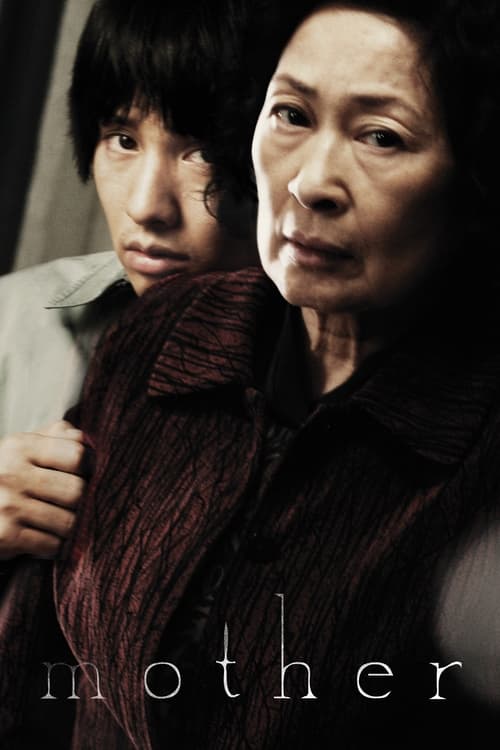
Mother
A mother lives quietly with her son. One day, a girl is brutally killed, and the boy is charged with the murder. Now, it's his mother's mission to prove him innocent.
Despite its tight budget of $5.0M, Mother became a box office success, earning $17.1M worldwide—a 242% return. The film's unique voice found its audience, demonstrating that strong storytelling can transcend budget limitations.
45 wins & 49 nominations


Plot Structure
Story beats plotted across runtime


Narrative Arc
Emotional journey through the story's key moments
Story Circle
Blueprint 15-beat structure
Arcplot Score Breakdown
Weighted: Precision (70%) + Arc (15%) + Theme (15%)
Mother (2009) showcases carefully calibrated story structure, characteristic of Bong Joon Ho's storytelling approach. This structural analysis examines how the film's 15-point plot structure maps to proven narrative frameworks across 2 hours and 9 minutes. With an Arcplot score of 6.9, the film balances conventional beats with creative variation.
Characters
Cast & narrative archetypes

Mother
Yoon Do-joon
Jin-tae
Je-moon
Main Cast & Characters
Mother
Played by Kim Hye-ja
A fiercely devoted acupuncturist who will do anything to protect her intellectually disabled son, even descend into moral darkness.
Yoon Do-joon
Played by Won Bin
An intellectually disabled young man accused of murder who depends entirely on his mother for protection and guidance.
Jin-tae
Played by Jin Goo
Do-joon's opportunistic best friend who leads him into trouble and proves unreliable when it matters most.
Je-moon
Played by Jeon Mi-seon
A local junk collector who becomes a key witness and suspect in the murder investigation.
Structural Analysis
The Status Quo at 2 minutes (1% through the runtime) establishes Mother performs a trance-like dance alone in a field, establishing her fragile mental state and fierce devotion to her intellectually disabled son Do-joon, whom she lives with and protects obsessively.. Notably, this early placement immediately immerses viewers in the story world.
The inciting incident occurs at 16 minutes when A high school girl is found murdered, and Do-joon is quickly arrested as the prime suspect after being seen following her the night before. Mother's world collapses.. At 13% through the film, this Disruption is delayed, allowing extended setup of the story world. This beat shifts the emotional landscape, launching the protagonist into the central conflict.
The First Threshold at 32 minutes marks the transition into Act II, occurring at 25% of the runtime. This reveals the protagonist's commitment to Mother makes the active choice to become a detective herself, abandoning faith in the police and legal system. She begins her own investigation into the murder, crossing into a dangerous world of lies and violence., moving from reaction to action.
At 65 minutes, the Midpoint arrives at 50% of the runtime—precisely centered, creating perfect narrative symmetry. Significantly, this crucial beat Mother discovers evidence that seems to point to another suspect - a golf ball with the victim's blood. This false hope raises stakes but darkens as she realizes the evidence may implicate her own actions in destroying other leads., fundamentally raising what's at risk. The emotional intensity shifts, dividing the narrative into clear before-and-after phases.
The Collapse moment at 97 minutes (75% through) represents the emotional nadir. Here, Mother discovers the devastating truth: Do-joon actually committed the murder. Her son is guilty. Everything she's done - the lies, the violence, framing an innocent man - was to protect a murderer., indicates the protagonist at their lowest point. This beat's placement in the final quarter sets up the climactic reversal.
The Second Threshold at 103 minutes initiates the final act resolution at 80% of the runtime. Mother makes a chilling choice: she will protect her son anyway. She accepts complete moral compromise, using her acupuncture knowledge to give Do-joon amnesia about the confession, erasing his memory and her guilt., demonstrating the transformation achieved throughout the journey.
Emotional Journey
Mother's emotional architecture traces a deliberate progression across 15 carefully calibrated beats.
Narrative Framework
This structural analysis employs proven narrative structure principles that track dramatic progression. By mapping Mother against these established plot points, we can identify how Bong Joon Ho utilizes or subverts traditional narrative conventions. The plot point approach reveals not only adherence to structural principles but also creative choices that distinguish Mother within the crime genre.
Bong Joon Ho's Structural Approach
Among the 5 Bong Joon Ho films analyzed on Arcplot, the average structural score is 7.0, demonstrating varied approaches to story architecture. Mother takes a more unconventional approach compared to the director's typical style. For comparative analysis, explore the complete Bong Joon Ho filmography.
Comparative Analysis
Additional crime films include The Bad Guys, Rustom and The Whole Ten Yards. For more Bong Joon Ho analyses, see The Host, Mickey 17 and Snowpiercer.
Plot Points by Act
Act I
SetupStatus Quo
Mother performs a trance-like dance alone in a field, establishing her fragile mental state and fierce devotion to her intellectually disabled son Do-joon, whom she lives with and protects obsessively.
Theme
A local man mentions "a mother will do anything for her child," foreshadowing the moral descent Mother will undergo and establishing the film's central question about the limits of maternal love.
Worldbuilding
Mother runs an acupuncture practice while caring for Do-joon, who has the mind of a child. She babies him excessively while he hangs out with troublemaker Jin-tae. Their codependent relationship and poverty are established.
Disruption
A high school girl is found murdered, and Do-joon is quickly arrested as the prime suspect after being seen following her the night before. Mother's world collapses.
Resistance
Mother hires an incompetent lawyer and desperately searches for evidence to prove Do-joon's innocence. She debates whether to trust the system or take matters into her own hands, ultimately preparing to investigate herself.
Act II
ConfrontationFirst Threshold
Mother makes the active choice to become a detective herself, abandoning faith in the police and legal system. She begins her own investigation into the murder, crossing into a dangerous world of lies and violence.
Mirror World
Mother encounters Jin-tae, Do-joon's friend, who becomes her investigative partner. Their relationship represents a twisted mirror of mother-son bonds and explores the theme of loyalty versus truth.
Premise
Mother investigates suspects including a junk collector and follows leads across town. She uses increasingly desperate and violent methods, descending into moral ambiguity as she seeks anyone to blame for the crime.
Midpoint
Mother discovers evidence that seems to point to another suspect - a golf ball with the victim's blood. This false hope raises stakes but darkens as she realizes the evidence may implicate her own actions in destroying other leads.
Opposition
Mother's investigation leads her deeper into darkness. She frames the junk collector, burns evidence, and becomes increasingly ruthless. The truth begins closing in as her own moral corruption accelerates.
Collapse
Mother discovers the devastating truth: Do-joon actually committed the murder. Her son is guilty. Everything she's done - the lies, the violence, framing an innocent man - was to protect a murderer.
Crisis
Mother confronts the horror of what her son did and what she has become. She processes the moral abyss she's fallen into, sitting with the knowledge that maternal love has turned her into a monster.
Act III
ResolutionSecond Threshold
Mother makes a chilling choice: she will protect her son anyway. She accepts complete moral compromise, using her acupuncture knowledge to give Do-joon amnesia about the confession, erasing his memory and her guilt.
Synthesis
Mother eliminates the last witness (Jin-tae) and ensures Do-joon's release from prison. She executes her plan with cold precision, cementing her transformation into someone capable of anything for her child.
Transformation
Mother dances on a bus with other women, mirroring the opening scene. But now the dance is hollow - she has lost her innocence and humanity. She performs the same movements but is fundamentally transformed into someone who has sacrificed her soul.