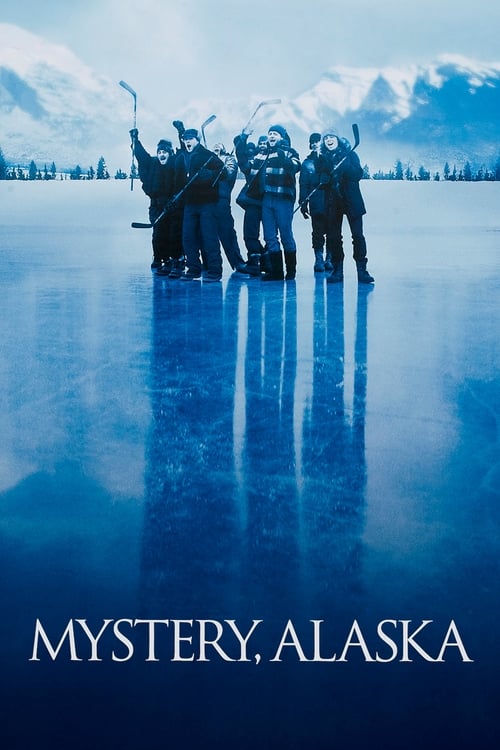
Mystery, Alaska
In Mystery, Alaska, life revolves around the legendary Saturday hockey game at the local pond. But everything changes when the hometown team unexpectedly gets booked in an exhibition match against the New York Rangers. When quirky small-towners, slick promoters and millionaire athletes come together.
The film financial setback against its mid-range budget of $28.0M, earning $8.9M globally (-68% loss). While initial box office returns were modest, the film has gained appreciation for its innovative storytelling within the drama genre.


Plot Structure
Story beats plotted across runtime


Narrative Arc
Emotional journey through the story's key moments
Story Circle
Blueprint 15-beat structure
Arcplot Score Breakdown
Weighted: Precision (70%) + Arc (15%) + Theme (15%)
Mystery, Alaska (1999) exhibits deliberately positioned plot construction, characteristic of Jay Roach's storytelling approach. This structural analysis examines how the film's 15-point plot structure maps to proven narrative frameworks across 1 hour and 59 minutes. With an Arcplot score of 7.3, the film balances conventional beats with creative variation.
Characters
Cast & narrative archetypes

John Biebe
Donna Biebe
Charlie Danner
Skank Marden
Judge Walter Burns
Stevie Weeks
Mary Jane Pitcher
Bailey Pruitt
Main Cast & Characters
John Biebe
Played by Russell Crowe
Sheriff and captain of Mystery's hockey team, faces being cut from the roster while preparing for the biggest game of the town's history.
Donna Biebe
Played by Mary McCormack
John's wife and mother of three, the town judge who must balance family loyalty with community responsibility.
Charlie Danner
Played by Hank Azaria
Former Mystery resident turned New York sports writer who brings the media spotlight to his hometown and rekindles old relationships.
Skank Marden
Played by Lolita Davidovich
The team's hot-headed enforcer and local tough guy who lives for hockey and protecting his teammates.
Judge Walter Burns
Played by Burt Reynolds
The town's veteran hockey coach and moral compass, guides the team with wisdom and small-town values.
Stevie Weeks
Played by Ryan Northcott
Young, talented player who earns John Biebe's spot on the roster, causing tension and guilt in the tight-knit community.
Mary Jane Pitcher
Played by Maury Chaykin
Local bar owner and Charlie's old flame, represents the warmth and complications of returning home.
Bailey Pruitt
Played by Colm Meaney
Town mayor and enthusiastic organizer who sees the NHL exhibition as Mystery's moment to shine on the world stage.
Structural Analysis
The Status Quo at 1 minutes (1% through the runtime) establishes Saturday game in Mystery, Alaska. The town gathers at the outdoor rink for their weekly hockey ritual, establishing this tight-knit community where hockey is everything and John Biebe is the respected sheriff and team captain.. Significantly, this early placement immediately immerses viewers in the story world.
The inciting incident occurs at 14 minutes when Charlie Danner, former Mystery resident now with Sports Illustrated, pitches a story about Mystery playing an exhibition game against the New York Rangers. This external opportunity disrupts the town's comfortable isolation and self-contained world.. At 12% through the film, this Disruption aligns precisely with traditional story structure. This beat shifts the emotional landscape, launching the protagonist into the central conflict.
The First Threshold at 31 minutes marks the transition into Act II, occurring at 26% of the runtime. This illustrates the protagonist's commitment to The town officially commits to the game. Mystery accepts the challenge to play the New York Rangers on national television. There's no turning back—the small town will face the hockey world, and John must decide his own path forward despite being cut from the team., moving from reaction to action.
At 60 minutes, the Midpoint arrives at 50% of the runtime—precisely centered, creating perfect narrative symmetry. Of particular interest, this crucial beat False defeat: The Rangers and media arrive, bringing the reality of the mismatch into sharp focus. The town realizes the magnitude of what they've undertaken. Personal conflicts escalate—John's marriage strains, town divisions deepen. The stakes are raised and the fun and games are over., fundamentally raising what's at risk. The emotional intensity shifts, dividing the narrative into clear before-and-after phases.
The Collapse moment at 88 minutes (74% through) represents the emotional nadir. Here, John's lowest point: his marriage is in crisis, he's alienated from the team and community, and he confronts the death of his ego-driven identity. The "whiff of death" is the loss of who he thought he was—the hero, the captain, the center of Mystery's hockey world., indicates the protagonist at their lowest point. This beat's placement in the final quarter sets up the climactic reversal.
The Second Threshold at 94 minutes initiates the final act resolution at 79% of the runtime. Synthesis and breakthrough: John reconciles with Donna and the team, understanding that his value isn't defined by being captain. The town rediscovers their authentic purpose—playing for themselves and their community, not for glory or validation. They enter the game with clarity., demonstrating the transformation achieved throughout the journey.
Emotional Journey
Mystery, Alaska's emotional architecture traces a deliberate progression across 15 carefully calibrated beats.
Narrative Framework
This structural analysis employs systematic plot point analysis that identifies crucial turning points. By mapping Mystery, Alaska against these established plot points, we can identify how Jay Roach utilizes or subverts traditional narrative conventions. The plot point approach reveals not only adherence to structural principles but also creative choices that distinguish Mystery, Alaska within the drama genre.
Jay Roach's Structural Approach
Among the 10 Jay Roach films analyzed on Arcplot, the average structural score is 7.4, reflecting strong command of classical structure. Mystery, Alaska takes a more unconventional approach compared to the director's typical style. For comparative analysis, explore the complete Jay Roach filmography.
Comparative Analysis
Additional drama films include After Thomas, South Pacific and Dirty Dancing: Havana Nights. For more Jay Roach analyses, see Austin Powers: International Man of Mystery, Meet the Fockers and Meet the Parents.
Plot Points by Act
Act I
SetupStatus Quo
Saturday game in Mystery, Alaska. The town gathers at the outdoor rink for their weekly hockey ritual, establishing this tight-knit community where hockey is everything and John Biebe is the respected sheriff and team captain.
Theme
Judge Burns states the thematic question: "It's not about whether you win or lose, it's about how you play the game." This seemingly simple sports platitude will be tested as the town faces the temptation of national recognition versus their authentic identity.
Worldbuilding
Establishing the small-town Alaska community, the Saturday game tradition, John Biebe's role as sheriff and team captain, the town dynamics, family relationships, and the importance of hockey to Mystery's identity. Introduces key characters and their interconnected lives.
Disruption
Charlie Danner, former Mystery resident now with Sports Illustrated, pitches a story about Mystery playing an exhibition game against the New York Rangers. This external opportunity disrupts the town's comfortable isolation and self-contained world.
Resistance
The town debates whether to accept the challenge. Excitement builds but complications emerge: John is cut from the team by Coach Kelvin, creating personal conflict. The town prepares while John struggles with being sidelined. Political maneuvering and egos surface.
Act II
ConfrontationFirst Threshold
The town officially commits to the game. Mystery accepts the challenge to play the New York Rangers on national television. There's no turning back—the small town will face the hockey world, and John must decide his own path forward despite being cut from the team.
Mirror World
John's relationship with his wife Donna deepens as a thematic mirror. She represents authenticity and what truly matters versus external validation. Their marriage is tested as John grapples with his ego and what defines his identity beyond being the team captain.
Premise
The promise of the premise: watching a small Alaska town prepare to face the NHL Rangers. Training montages, media attention arrives, town politics and rivalries intensify, personal dramas unfold. The fun of watching underdogs prepare for their moment in the spotlight.
Midpoint
False defeat: The Rangers and media arrive, bringing the reality of the mismatch into sharp focus. The town realizes the magnitude of what they've undertaken. Personal conflicts escalate—John's marriage strains, town divisions deepen. The stakes are raised and the fun and games are over.
Opposition
Pressure intensifies from all sides: media scrutiny, internal town conflicts, personal relationships fracture, the weight of expectation grows. The team faces the reality of their limitations. John confronts his pride and what he truly values. Everything gets harder as game day approaches.
Collapse
John's lowest point: his marriage is in crisis, he's alienated from the team and community, and he confronts the death of his ego-driven identity. The "whiff of death" is the loss of who he thought he was—the hero, the captain, the center of Mystery's hockey world.
Crisis
John processes his loss and reaches understanding. Dark night of reflection where he must decide what kind of man he wants to be. The community also faces its crisis: are they doing this for the right reasons, or have they lost sight of what makes Mystery special?
Act III
ResolutionSecond Threshold
Synthesis and breakthrough: John reconciles with Donna and the team, understanding that his value isn't defined by being captain. The town rediscovers their authentic purpose—playing for themselves and their community, not for glory or validation. They enter the game with clarity.
Synthesis
The big game: Mystery plays the Rangers with heart and unity. They perform beyond expectations, playing as a true team. John supports from the sidelines with grace. The town proves themselves not by winning, but by showing who they truly are. The finale resolves all character arcs.
Transformation
Final image mirrors the opening: another Saturday game on the outdoor rink. But everything has changed. John watches with contentment, the community is stronger and more unified, and they've learned that their identity comes from within, not external validation. They are Mystery, Alaska.