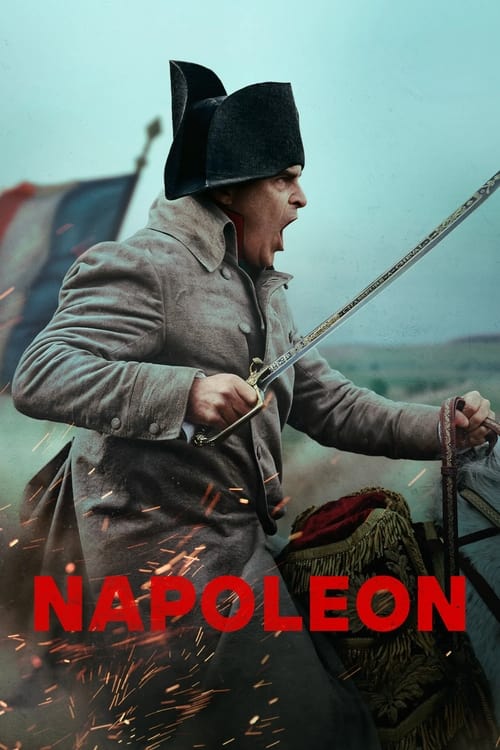
Napoleon
An epic that details the checkered rise and fall of French Emperor Napoleon Bonaparte and his relentless journey to power through the prism of his addictive, volatile relationship with his wife, Josephine.
Working with a enormous budget of $165.0M, the film achieved a modest success with $220.6M in global revenue (+34% profit margin).
Nominated for 3 Oscars. 6 wins & 47 nominations


Plot Structure
Story beats plotted across runtime


Narrative Arc
Emotional journey through the story's key moments
Story Circle
Blueprint 15-beat structure
Arcplot Score Breakdown
Weighted: Precision (70%) + Arc (15%) + Theme (15%)
Napoleon (2023) showcases strategically placed plot construction, characteristic of Ridley Scott's storytelling approach. This structural analysis examines how the film's 15-point plot structure maps to proven narrative frameworks across 2 hours and 38 minutes. With an Arcplot score of 6.7, the film balances conventional beats with creative variation.
Structural Analysis
The Status Quo at 2 minutes (1% through the runtime) establishes Marie Antoinette's execution at the guillotine as Revolutionary France descends into chaos. Napoleon is an ambitious artillery officer in a world of violent upheaval.. Significantly, this early placement immediately immerses viewers in the story world.
The inciting incident occurs at 19 minutes when Napoleon meets Joséphine de Beauharnais at a Parisian salon. The passionate, volatile relationship that will define his personal life begins, disrupting his singular focus on military glory.. At 12% through the film, this Disruption aligns precisely with traditional story structure. This beat shifts the emotional landscape, launching the protagonist into the central conflict.
The First Threshold at 40 minutes marks the transition into Act II, occurring at 25% of the runtime. This reveals the protagonist's commitment to Napoleon chooses to launch the Egyptian campaign, leaving Joséphine behind. He actively pursues his destiny as a conqueror, crossing into the role of military legend and future emperor., moving from reaction to action.
At 80 minutes, the Midpoint arrives at 51% of the runtime—precisely centered, creating perfect narrative symmetry. Of particular interest, this crucial beat Napoleon crowns himself Emperor and places the crown on Joséphine. False victory: he has reached the pinnacle of power, but his empire's cracks are forming and his marriage remains unfulfilled., fundamentally raising what's at risk. The emotional intensity shifts, dividing the narrative into clear before-and-after phases.
The Collapse moment at 119 minutes (75% through) represents the emotional nadir. Here, Napoleon's catastrophic defeat at the Battle of Waterloo. His army is destroyed, his legend shattered. The whiff of death: his empire dies, and he faces the end of everything he built., demonstrates the protagonist at their lowest point. This beat's placement in the final quarter sets up the climactic reversal.
The Second Threshold at 127 minutes initiates the final act resolution at 80% of the runtime. In exile, Napoleon gains clarity: he dictates his memoirs, controlling his own legend. He realizes his true conquest is not territory but history itself—how he will be remembered., demonstrating the transformation achieved throughout the journey.
Emotional Journey
Napoleon's emotional architecture traces a deliberate progression across 15 carefully calibrated beats.
Narrative Framework
This structural analysis employs proven narrative structure principles that track dramatic progression. By mapping Napoleon against these established plot points, we can identify how Ridley Scott utilizes or subverts traditional narrative conventions. The plot point approach reveals not only adherence to structural principles but also creative choices that distinguish Napoleon within the history genre.
Ridley Scott's Structural Approach
Among the 24 Ridley Scott films analyzed on Arcplot, the average structural score is 6.5, demonstrating varied approaches to story architecture. Napoleon represents one of the director's most structurally precise works. For comparative analysis, explore the complete Ridley Scott filmography.
Comparative Analysis
Additional history films include The Attacks Of 26/11, Joyeux Noel and Rob Roy. For more Ridley Scott analyses, see Alien, White Squall and American Gangster.
Plot Points by Act
Act I
SetupStatus Quo
Marie Antoinette's execution at the guillotine as Revolutionary France descends into chaos. Napoleon is an ambitious artillery officer in a world of violent upheaval.
Theme
Talleyrand or a political figure remarks on destiny and power: "Destiny is not a matter of chance, it is a matter of choice." The film explores whether greatness comes from fate or ruthless ambition.
Worldbuilding
Revolutionary France is established: political chaos, military opportunity, and social upheaval. Napoleon demonstrates tactical brilliance at the Siege of Toulon, earning recognition and promotion.
Disruption
Napoleon meets Joséphine de Beauharnais at a Parisian salon. The passionate, volatile relationship that will define his personal life begins, disrupting his singular focus on military glory.
Resistance
Napoleon courts Joséphine while navigating political turbulence in Paris. He grapples with his obsessive desire for her and his growing military reputation. The Egyptian campaign is planned.
Act II
ConfrontationFirst Threshold
Napoleon chooses to launch the Egyptian campaign, leaving Joséphine behind. He actively pursues his destiny as a conqueror, crossing into the role of military legend and future emperor.
Mirror World
In Egypt, Napoleon learns of Joséphine's infidelity. The Mirror World relationship reveals the theme: his need for love and validation conflicts with his ruthless pursuit of power.
Premise
The promise of the premise: Napoleon as unstoppable conqueror. The Egyptian campaign, the coup of 18 Brumaire, his rise to First Consul, coronation as Emperor, and spectacular military victories across Europe.
Midpoint
Napoleon crowns himself Emperor and places the crown on Joséphine. False victory: he has reached the pinnacle of power, but his empire's cracks are forming and his marriage remains unfulfilled.
Opposition
The costs of empire mount: the disastrous Russian campaign, freezing retreat from Moscow, Joséphine cannot provide an heir. Napoleon divorces her for political necessity. Coalition forces close in.
Collapse
Napoleon's catastrophic defeat at the Battle of Waterloo. His army is destroyed, his legend shattered. The whiff of death: his empire dies, and he faces the end of everything he built.
Crisis
Napoleon's dark night: abdication, capture, and exile to Saint Helena. He is stripped of power, separated from France, reduced from emperor to prisoner on a remote island.
Act III
ResolutionSecond Threshold
In exile, Napoleon gains clarity: he dictates his memoirs, controlling his own legend. He realizes his true conquest is not territory but history itself—how he will be remembered.
Synthesis
Napoleon's final years on Saint Helena. He shapes his mythology through his writings, receives news of Joséphine's death, and faces mortality while cementing his place in history.
Transformation
Napoleon dies in exile, defeated and diminished. But text reveals his massive death toll and lasting impact. Transformation: from ambitious officer to emperor to legend—immortal in history, mortal in life.