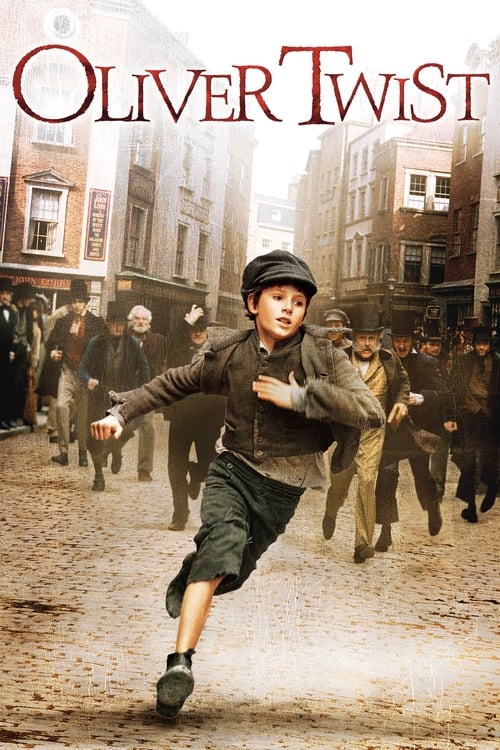
Oliver Twist
When 9-year-old orphan Oliver Twist dares to ask his cruel taskmaster, Mr. Bumble, for a second serving of gruel, he's hired out as an apprentice. Escaping that dismal fate, young Oliver falls in with the street urchin known as the Artful Dodger and his criminal mentor, Fagin. When kindly Mr. Brownlow takes Oliver in, Fagin's evil henchman Bill Sikes plots to kidnap the boy.
The film underperformed commercially against its moderate budget of $50.0M, earning $42.6M globally (-15% loss).

Plot Structure
Story beats plotted across runtime


Narrative Arc
Emotional journey through the story's key moments
Story Circle
Blueprint 15-beat structure
Arcplot Score Breakdown
Weighted: Precision (70%) + Arc (15%) + Theme (15%)
Oliver Twist (2005) reveals strategically placed story structure, characteristic of Roman Polanski's storytelling approach. This structural analysis examines how the film's 15-point plot structure maps to proven narrative frameworks across 2 hours and 10 minutes. With an Arcplot score of 6.5, the film balances conventional beats with creative variation.
Structural Analysis
The Status Quo at 1 minutes (1% through the runtime) establishes Oliver's mother dies giving birth to him in the workhouse during a violent storm. The infant is left alone in a cruel institutional world, establishing his status as an orphan with no identity or belonging.. The analysis reveals that this early placement immediately immerses viewers in the story world.
The inciting incident occurs at 16 minutes when Oliver asks for more gruel and is declared a troublemaker. He is sold to an undertaker as an apprentice, forcibly removed from the only world he has known. His act of desperate hunger becomes the catalyst for his journey.. At 12% through the film, this Disruption aligns precisely with traditional story structure. This beat shifts the emotional landscape, launching the protagonist into the central conflict.
The First Threshold at 33 minutes marks the transition into Act II, occurring at 25% of the runtime. This reveals the protagonist's commitment to Oliver meets the Artful Dodger on the road to London and accepts his offer of lodging and food. Oliver actively chooses to follow this stranger into the unknown, crossing from rural desperation into the criminal underworld of London., moving from reaction to action.
At 65 minutes, the Midpoint arrives at 50% of the runtime—precisely centered, creating perfect narrative symmetry. Structural examination shows that this crucial beat Mr. Brownlow, the robbery victim, takes pity on the ill Oliver and brings him home to recover. Oliver experiences genuine kindness and comfort for the first time - a false victory as Fagin and Sikes plot to reclaim him., fundamentally raising what's at risk. The emotional intensity shifts, dividing the narrative into clear before-and-after phases.
The Collapse moment at 98 minutes (75% through) represents the emotional nadir. Here, Bill Sikes murders Nancy after discovering she secretly met with Mr. Brownlow to help Oliver. The death of the one person who bridged both worlds represents the ultimate cost of corruption. Oliver loses his protector within Fagin's world., demonstrates the protagonist at their lowest point. This beat's placement in the final quarter sets up the climactic reversal.
The Second Threshold at 104 minutes initiates the final act resolution at 80% of the runtime. Mr. Brownlow and the authorities close in on Fagin's gang. The truth about Oliver's parentage begins to emerge. Oliver realizes he has allies fighting for him, and the forces of justice mobilize to rescue him from the underworld., demonstrating the transformation achieved throughout the journey.
Emotional Journey
Oliver Twist's emotional architecture traces a deliberate progression across 15 carefully calibrated beats.
Narrative Framework
This structural analysis employs systematic plot point analysis that identifies crucial turning points. By mapping Oliver Twist against these established plot points, we can identify how Roman Polanski utilizes or subverts traditional narrative conventions. The plot point approach reveals not only adherence to structural principles but also creative choices that distinguish Oliver Twist within the crime genre.
Roman Polanski's Structural Approach
Among the 11 Roman Polanski films analyzed on Arcplot, the average structural score is 6.5, demonstrating varied approaches to story architecture. Oliver Twist represents one of the director's most structurally precise works. For comparative analysis, explore the complete Roman Polanski filmography.
Comparative Analysis
Additional crime films include The Bad Guys, Rustom and The Whole Ten Yards. For more Roman Polanski analyses, see Frantic, Tess and Carnage.
Plot Points by Act
Act I
SetupStatus Quo
Oliver's mother dies giving birth to him in the workhouse during a violent storm. The infant is left alone in a cruel institutional world, establishing his status as an orphan with no identity or belonging.
Theme
Mr. Bumble declares that workhouse boys are ungrateful wretches who don't know their place. This crystallizes the theme: society labels the innocent as criminals, but true character transcends circumstance.
Worldbuilding
Oliver's brutal childhood in the workhouse is established. He endures starvation, abuse, and dehumanization. The infamous "Please, sir, I want some more" scene demonstrates both Oliver's desperate circumstances and his quiet courage.
Disruption
Oliver asks for more gruel and is declared a troublemaker. He is sold to an undertaker as an apprentice, forcibly removed from the only world he has known. His act of desperate hunger becomes the catalyst for his journey.
Resistance
Oliver is apprenticed to Mr. Sowerberry the undertaker, suffers abuse from Noah Claypole, and after defending his mother's memory in a fight, decides to run away. He walks to London, debating whether to continue or return to certain punishment.
Act II
ConfrontationFirst Threshold
Oliver meets the Artful Dodger on the road to London and accepts his offer of lodging and food. Oliver actively chooses to follow this stranger into the unknown, crossing from rural desperation into the criminal underworld of London.
Mirror World
Oliver meets Fagin and his gang of child thieves in their den. Nancy shows Oliver unexpected kindness and warmth. She represents the possibility of goodness surviving within corruption, mirroring Oliver's own struggle.
Premise
Oliver is initiated into Fagin's world of pickpockets. He observes the boys' games, learns their trade, and is sent on his first mission. He is caught during a theft he didn't commit and brought before the magistrate.
Midpoint
Mr. Brownlow, the robbery victim, takes pity on the ill Oliver and brings him home to recover. Oliver experiences genuine kindness and comfort for the first time - a false victory as Fagin and Sikes plot to reclaim him.
Opposition
Oliver thrives at Mr. Brownlow's but is kidnapped back by Nancy and Sikes. Fagin pressures Oliver to participate in a burglary. During the robbery at the Maylie house, Oliver is shot. The criminal world tightens its grip.
Collapse
Bill Sikes murders Nancy after discovering she secretly met with Mr. Brownlow to help Oliver. The death of the one person who bridged both worlds represents the ultimate cost of corruption. Oliver loses his protector within Fagin's world.
Crisis
The murder of Nancy sends shockwaves through London. Sikes flees as a hunted man. Oliver remains trapped, seemingly destined to be corrupted or destroyed by the criminal world that has claimed him.
Act III
ResolutionSecond Threshold
Mr. Brownlow and the authorities close in on Fagin's gang. The truth about Oliver's parentage begins to emerge. Oliver realizes he has allies fighting for him, and the forces of justice mobilize to rescue him from the underworld.
Synthesis
Sikes dies during his attempted escape, hanging himself accidentally while fleeing across rooftops. Fagin is captured and faces execution. Oliver's true identity and inheritance are revealed. Justice prevails over the criminal world.
Transformation
Oliver is adopted by Mr. Brownlow and rides away in a carriage to his new life. The orphan who began the story abandoned and nameless now has a family, identity, and future. Innocence has survived and found its reward.