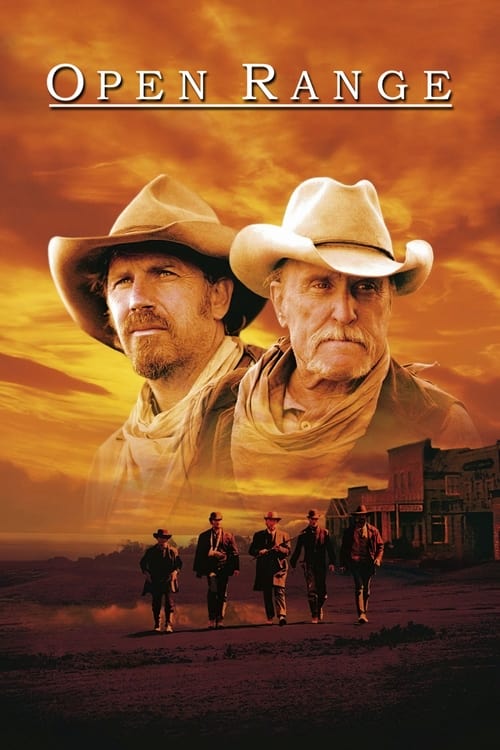
Open Range
A former gunslinger is forced to take up arms again when he and his cattle crew are threatened by a corrupt lawman.
Despite a moderate budget of $22.0M, Open Range became a solid performer, earning $68.3M worldwide—a 210% return.
1 win & 5 nominations


Plot Structure
Story beats plotted across runtime


Narrative Arc
Emotional journey through the story's key moments
Story Circle
Blueprint 15-beat structure
Arcplot Score Breakdown
Weighted: Precision (70%) + Arc (15%) + Theme (15%)
Open Range (2003) demonstrates carefully calibrated narrative architecture, characteristic of Kevin Costner's storytelling approach. This structural analysis examines how the film's 15-point plot structure maps to proven narrative frameworks across 2 hours and 19 minutes. With an Arcplot score of 7.0, the film balances conventional beats with creative variation.
Characters
Cast & narrative archetypes

Charley Waite
Boss Spearman
Sue Barlow
Denton Baxter
Mose Harrison
Button
Doc Barlow
Sheriff Poole
Butler
Main Cast & Characters
Charley Waite
Played by Kevin Costner
A former Civil War soldier haunted by his violent past who works as a free-range cattleman and must confront his demons when his peaceful life is threatened.
Boss Spearman
Played by Robert Duvall
A wise and principled free-grazer who leads a small cattle outfit and stands firm against corrupt land barons threatening his way of life.
Sue Barlow
Played by Annette Bening
The compassionate town doctor's sister who runs the local café and develops a romantic connection with Charley despite the dangerous circumstances.
Denton Baxter
Played by Michael Gambon
A ruthless and powerful rancher who uses violence and intimidation to control the open range and drive out free-grazers.
Mose Harrison
Played by Abraham Benrubi
A gentle giant and loyal member of Boss's cattle crew whose brutal beating by Baxter's men sets the conflict in motion.
Button
Played by Diego Luna
A young orphan taken in by Boss and Charley who helps with the cattle and represents innocence in the brutal frontier world.
Doc Barlow
Played by Dean McDermott
The town's principled physician and Sue's brother who risks his safety to help the free-grazers against Baxter.
Sheriff Poole
Played by James Russo
The corrupt and cowardly town sheriff who is in Baxter's pocket and refuses to stand up for justice.
Butler
Played by Kim Coates
Baxter's cold and efficient chief enforcer who leads the violent attacks against the free-grazers.
Structural Analysis
The Status Quo at 1 minutes (1% through the runtime) establishes Free grazers Boss Spearman and Charley Waite tend their cattle on the open range with Mose and Button, living a peaceful nomadic existence away from civilization and trouble.. Significantly, this early placement immediately immerses viewers in the story world.
The inciting incident occurs at 18 minutes when Mose returns badly beaten by Marshal Poole and Baxter's men. The crew learns that land baron Denton Baxter controls the town and violently opposes free grazers.. At 13% through the film, this Disruption is delayed, allowing extended setup of the story world. This beat shifts the emotional landscape, launching the protagonist into the central conflict.
The First Threshold at 35 minutes marks the transition into Act II, occurring at 25% of the runtime. This indicates the protagonist's commitment to Boss and Charley make the active choice to go into Harmonville despite the danger, entering Baxter's controlled territory to stand up for their rights and get medical help for Mose., moving from reaction to action.
At 68 minutes, the Midpoint arrives at 49% of the runtime—precisely centered, creating perfect narrative symmetry. Of particular interest, this crucial beat Baxter's men attack the camp at night. Button is killed and Mose is critically wounded. False defeat: the violence Charley tried to escape has found him, and innocent blood has been spilled. The stakes become life and death., fundamentally raising what's at risk. The emotional intensity shifts, dividing the narrative into clear before-and-after phases.
The Collapse moment at 102 minutes (73% through) represents the emotional nadir. Here, Mose dies from his wounds despite Doc's efforts. The whiff of death is literal. Charley faces the death of innocence (Button) and friendship (Mose), confronting the cost of the violence he's tried to leave behind., indicates the protagonist at their lowest point. This beat's placement in the final quarter sets up the climactic reversal.
The Second Threshold at 111 minutes initiates the final act resolution at 80% of the runtime. Boss and Charley make the conscious decision to confront Baxter and his men directly. They combine their skills with moral clarity from Sue and Doc's support. Percy, a townsman, chooses to help them, showing courage can spread., demonstrating the transformation achieved throughout the journey.
Emotional Journey
Open Range's emotional architecture traces a deliberate progression across 15 carefully calibrated beats.
Narrative Framework
This structural analysis employs proven narrative structure principles that track dramatic progression. By mapping Open Range against these established plot points, we can identify how Kevin Costner utilizes or subverts traditional narrative conventions. The plot point approach reveals not only adherence to structural principles but also creative choices that distinguish Open Range within the western genre.
Kevin Costner's Structural Approach
Among the 4 Kevin Costner films analyzed on Arcplot, the average structural score is 6.8, demonstrating varied approaches to story architecture. Open Range represents one of the director's most structurally precise works. For comparative analysis, explore the complete Kevin Costner filmography.
Comparative Analysis
Additional western films include All the Pretty Horses, Shenandoah and Lone Star. For more Kevin Costner analyses, see The Postman, Horizon: An American Saga - Chapter 1 and Dances with Wolves.
Plot Points by Act
Act I
SetupStatus Quo
Free grazers Boss Spearman and Charley Waite tend their cattle on the open range with Mose and Button, living a peaceful nomadic existence away from civilization and trouble.
Theme
Boss tells Charley: "There's nuthin' like bein' your own man." Theme of freedom versus the encroaching constraints of civilization and personal codes of justice.
Worldbuilding
Establishment of the crew's dynamics, their free-grazing lifestyle, and the world of 1882 open range cattle driving. Mose goes to town for supplies in Harmonville.
Disruption
Mose returns badly beaten by Marshal Poole and Baxter's men. The crew learns that land baron Denton Baxter controls the town and violently opposes free grazers.
Resistance
Boss and Charley debate their options. Boss wants to avoid trouble and move on, but Charley's violent past makes him wary. They need supplies, so Boss decides to go to town himself.
Act II
ConfrontationFirst Threshold
Boss and Charley make the active choice to go into Harmonville despite the danger, entering Baxter's controlled territory to stand up for their rights and get medical help for Mose.
Mirror World
Charley meets Sue Barlow, the strong-willed sister of Doc Barlow. She represents civilization, domesticity, and the possibility of a life beyond violence—the thematic counterpoint to Charley's gunfighter past.
Premise
The promise of the premise: honest men standing up to corruption. Charley and Sue's relationship develops. Tensions escalate with Baxter. The crew navigates the dangerous political landscape of Harmonville.
Midpoint
Baxter's men attack the camp at night. Button is killed and Mose is critically wounded. False defeat: the violence Charley tried to escape has found him, and innocent blood has been spilled. The stakes become life and death.
Opposition
Boss and Charley get Mose to Doc Barlow. They discover Baxter controls the law through Marshal Poole. The town is paralyzed by fear. Boss and Charley realize they must face Baxter alone, with no legal recourse.
Collapse
Mose dies from his wounds despite Doc's efforts. The whiff of death is literal. Charley faces the death of innocence (Button) and friendship (Mose), confronting the cost of the violence he's tried to leave behind.
Crisis
Charley and Boss grieve and process their loss. Charley reveals his dark past as a killer in the Civil War. They contemplate revenge versus justice, and whether they can ever escape violence.
Act III
ResolutionSecond Threshold
Boss and Charley make the conscious decision to confront Baxter and his men directly. They combine their skills with moral clarity from Sue and Doc's support. Percy, a townsman, chooses to help them, showing courage can spread.
Synthesis
The climactic gunfight in Harmonville. Boss, Charley, and Percy face Baxter, Poole, and their gunmen in an extended, brutal shootout. Charley must embrace his violent skills one last time for a just cause. Baxter is killed.
Transformation
Charley, wounded but alive, prepares to leave with Sue Barlow for a new life. The closing image mirrors the opening: a man on the range. But now Charley has chosen connection over isolation, a future over the past.