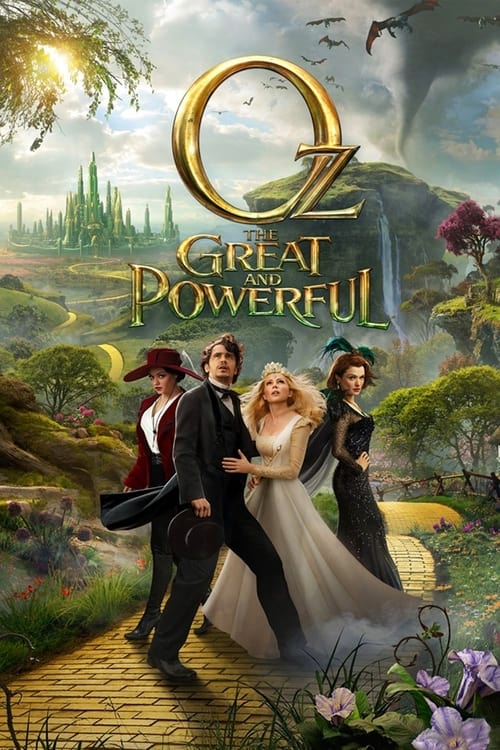
Oz the Great and Powerful
A small-time magician is swept away to an enchanted land and is forced into a power struggle among three witches.
Despite a massive budget of $200.0M, Oz the Great and Powerful became a commercial success, earning $491.9M worldwide—a 146% return. This commercial performance validated the ambitious narrative scope, confirming that audiences embrace bold vision even at blockbuster scale.
6 wins & 31 nominations


Plot Structure
Story beats plotted across runtime


Narrative Arc
Emotional journey through the story's key moments
Story Circle
Blueprint 15-beat structure
Characters
Cast & narrative archetypes

Oscar Diggs / Oz
Theodora / Wicked Witch of the West
Evanora
Glinda
Finley
China Girl
Master Tinker
Knuck
Main Cast & Characters
Oscar Diggs / Oz
Played by James Franco
A small-time circus magician and con artist from Kansas who gets swept away to the Land of Oz, where he must become the great wizard everyone believes him to be.
Theodora / Wicked Witch of the West
Played by Mila Kunis
A naive and romantic witch who falls in love with Oscar, but transforms into the iconic Wicked Witch after feeling betrayed and consuming a cursed apple.
Evanora
Played by Rachel Weisz
The manipulative Wicked Witch of the East who secretly rules Oz through deception, posing as a good witch while orchestrating evil plans.
Glinda
Played by Michelle Williams
The Good Witch of the South, a compassionate and wise leader who sees through Oscar's facade but believes in his potential to become a true hero.
Finley
Played by Zach Braff
A loyal flying monkey who becomes Oscar's devoted companion after Oscar saves his life, serving as his conscience and friend throughout the journey.
China Girl
Played by Joey King
A living porcelain doll whose family was destroyed by the Wicked Witch's forces. She joins Oscar's quest seeking revenge and becomes like a daughter to him.
Master Tinker
Played by Bill Cobbs
The leader of the Tinkers, a community of inventors in Oz who help Oscar create his elaborate illusions to defeat the witches.
Knuck
Played by Tony Cox
A grumpy Munchkin herald who initially doubts Oscar but eventually joins his cause against the wicked witches.
Structural Analysis
The Status Quo at 1 minutes (1% through the runtime) establishes Oscar Diggs performs as a small-time magician in a Kansas circus, a charlatan who uses tricks and deception to dazzle audiences while dreaming of greatness he hasn't earned.. Structural examination shows that this early placement immediately immerses viewers in the story world.
The inciting incident occurs at 16 minutes when A strongman threatens Oscar's life after discovering he seduced his wife. Oscar escapes in a carnival hot air balloon just as a tornado strikes, pulling him into its vortex.. At 12% through the film, this Disruption aligns precisely with traditional story structure. This beat shifts the emotional landscape, launching the protagonist into the central conflict.
The First Threshold at 33 minutes marks the transition into Act II, occurring at 25% of the runtime. This shows the protagonist's commitment to Oscar actively chooses to travel to the Emerald City and claim the throne by killing the Wicked Witch, motivated by the promise of gold and power rather than heroism., moving from reaction to action.
At 66 minutes, the Midpoint arrives at 50% of the runtime—precisely centered, creating perfect narrative symmetry. Significantly, this crucial beat Oscar discovers that Evanora is the true villain and that his deception of Theodora has transformed her into the Wicked Witch of the West. The stakes become real - people are being hurt by his cons, and real evil must be confronted., fundamentally raising what's at risk. The emotional intensity shifts, dividing the narrative into clear before-and-after phases.
The Collapse moment at 98 minutes (75% through) represents the emotional nadir. Here, The witches' army surrounds the Emerald City. Oscar admits to his allies that he is not a real wizard, just a con man with no actual power. His greatest fear - being exposed as a fraud - comes true., demonstrates the protagonist at their lowest point. This beat's placement in the final quarter sets up the climactic reversal.
The Second Threshold at 105 minutes initiates the final act resolution at 80% of the runtime. Oscar realizes that he doesn't need real magic - his "fake" skills of illusion, showmanship, and deception can become true weapons if used for good rather than selfish gain. He chooses to become the wizard Oz needs., demonstrating the transformation achieved throughout the journey.
Emotional Journey
Oz the Great and Powerful's emotional architecture traces a deliberate progression across 15 carefully calibrated beats.
Narrative Framework
This structural analysis employs systematic plot point analysis that identifies crucial turning points. By mapping Oz the Great and Powerful against these established plot points, we can identify how Sam Raimi utilizes or subverts traditional narrative conventions. The plot point approach reveals not only adherence to structural principles but also creative choices that distinguish Oz the Great and Powerful within the adventure genre.
Sam Raimi's Structural Approach
Among the 13 Sam Raimi films analyzed on Arcplot, the average structural score is 7.1, reflecting strong command of classical structure. Oz the Great and Powerful exemplifies the director's characteristic narrative technique. For comparative analysis, explore the complete Sam Raimi filmography.
Comparative Analysis
Additional adventure films include The Black Stallion, The Bad Guys and Puss in Boots. For more Sam Raimi analyses, see Spider-Man 2, The Quick and the Dead and Army of Darkness.
Plot Points by Act
Act I
SetupStatus Quo
Oscar Diggs performs as a small-time magician in a Kansas circus, a charlatan who uses tricks and deception to dazzle audiences while dreaming of greatness he hasn't earned.
Theme
Frank, Oscar's assistant, tells him "You're not a good man" - establishing the central thematic question of whether Oscar can become truly great rather than just appearing great.
Worldbuilding
Oscar's world of smoke and mirrors is established: he seduces women with lies, cheats his assistant, and runs from consequences. His encounter with Annie reveals what he could have - genuine love - but he's too committed to his con artist life.
Disruption
A strongman threatens Oscar's life after discovering he seduced his wife. Oscar escapes in a carnival hot air balloon just as a tornado strikes, pulling him into its vortex.
Resistance
Oscar tumbles through the tornado, crashes in the Land of Oz, and meets Theodora, a witch who believes he is the prophesied wizard who will save Oz from the Wicked Witch. Oscar plays along, seeing opportunity for riches.
Act II
ConfrontationFirst Threshold
Oscar actively chooses to travel to the Emerald City and claim the throne by killing the Wicked Witch, motivated by the promise of gold and power rather than heroism.
Mirror World
Oscar meets Glinda the Good Witch, who sees through his deception but believes in his potential for goodness. She represents genuine virtue in contrast to his fake magic, and their relationship carries the theme of becoming versus appearing.
Premise
Oscar journeys through the magical land with Finley the flying monkey and China Girl, using his tricks to appear powerful. He enjoys the adventure and perks of being the "wizard" while avoiding real responsibility or danger.
Midpoint
Oscar discovers that Evanora is the true villain and that his deception of Theodora has transformed her into the Wicked Witch of the West. The stakes become real - people are being hurt by his cons, and real evil must be confronted.
Opposition
The Wicked Witches and their army attack. Oscar's usual tricks feel inadequate against real power. Glinda is captured, and Oscar realizes he cannot simply con his way out - real courage and sacrifice are required.
Collapse
The witches' army surrounds the Emerald City. Oscar admits to his allies that he is not a real wizard, just a con man with no actual power. His greatest fear - being exposed as a fraud - comes true.
Crisis
Oscar faces his darkest moment of self-doubt. He must choose between running away (his usual pattern) or staying to face impossible odds. His friends remind him that belief and hope matter more than real magic.
Act III
ResolutionSecond Threshold
Oscar realizes that he doesn't need real magic - his "fake" skills of illusion, showmanship, and deception can become true weapons if used for good rather than selfish gain. He chooses to become the wizard Oz needs.
Synthesis
Oscar orchestrates an elaborate illusion combining projections, fireworks, and theatrical tricks to defeat the witches. He uses everything he learned as a fake magician, but now in service of others. He sends Evanora away and gives the people hope.
Transformation
Oscar sits on the throne behind a projection screen as the great and powerful Oz, but now the illusion serves a higher purpose. The selfish charlatan has become a leader who inspires goodness in others - appearing great has become being great.