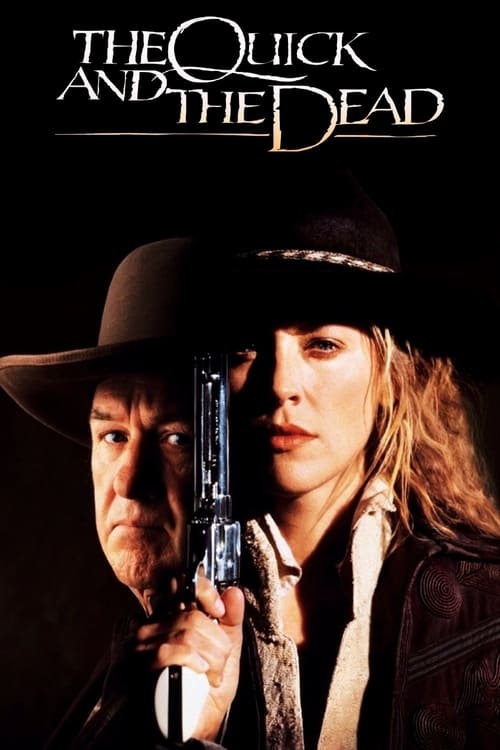
The Quick and the Dead
A mysterious woman comes to compete in a quick-draw elimination tournament, in a town taken over by a notorious gunman.
Working with a moderate budget of $35.0M, the film achieved a steady performer with $47.0M in global revenue (+34% profit margin).


Plot Structure
Story beats plotted across runtime


Narrative Arc
Emotional journey through the story's key moments
Story Circle
Blueprint 15-beat structure
Arcplot Score Breakdown
Weighted: Precision (70%) + Arc (15%) + Theme (15%)
The Quick and the Dead (1995) exhibits meticulously timed plot construction, characteristic of Sam Raimi's storytelling approach. This structural analysis examines how the film's 15-point plot structure maps to proven narrative frameworks across 1 hour and 47 minutes. With an Arcplot score of 6.8, the film balances conventional beats with creative variation.
Structural Analysis
The Status Quo at 1 minutes (1% through the runtime) establishes A mysterious woman rides alone through the desert toward the town of Redemption, her face hidden and her purpose unknown, establishing her as a solitary gunfighter haunted by her past.. Significantly, this early placement immediately immerses viewers in the story world.
The inciting incident occurs at 13 minutes when John Herod announces the quick-draw tournament with a massive cash prize, and Ellen realizes this is her opportunity to face and kill the man who murdered her father years ago.. At 12% through the film, this Disruption aligns precisely with traditional story structure. This beat shifts the emotional landscape, launching the protagonist into the central conflict.
The First Threshold at 27 minutes marks the transition into Act II, occurring at 25% of the runtime. This indicates the protagonist's commitment to Ellen signs her name on the tournament roster, committing herself to the deadly competition. This is her active choice to pursue vengeance rather than walk away, entering the violent world she had tried to escape., moving from reaction to action.
At 54 minutes, the Midpoint arrives at 50% of the runtime—precisely centered, creating perfect narrative symmetry. Notably, this crucial beat Herod reveals he knows exactly who Ellen is - the daughter of the marshal he murdered. This false defeat raises the stakes dramatically as Ellen's cover is blown and Herod now sees her as a threat to be eliminated., fundamentally raising what's at risk. The emotional intensity shifts, dividing the narrative into clear before-and-after phases.
The Collapse moment at 80 minutes (75% through) represents the emotional nadir. Here, Herod kills The Kid, his own son, in a duel when The Kid challenges him. Ellen witnesses this murder of the young man who had befriended her, seeing Herod's absolute ruthlessness. This whiff of death shows her the monster she faces., indicates the protagonist at their lowest point. This beat's placement in the final quarter sets up the climactic reversal.
The Second Threshold at 86 minutes initiates the final act resolution at 80% of the runtime. Ellen returns to face her demons. She stages her own death in a duel with Cort (using a trick bullet), freeing herself from the tournament rules while positioning herself for the final confrontation with Herod., demonstrating the transformation achieved throughout the journey.
Emotional Journey
The Quick and the Dead's emotional architecture traces a deliberate progression across 15 carefully calibrated beats.
Narrative Framework
This structural analysis employs proven narrative structure principles that track dramatic progression. By mapping The Quick and the Dead against these established plot points, we can identify how Sam Raimi utilizes or subverts traditional narrative conventions. The plot point approach reveals not only adherence to structural principles but also creative choices that distinguish The Quick and the Dead within the western genre.
Sam Raimi's Structural Approach
Among the 13 Sam Raimi films analyzed on Arcplot, the average structural score is 7.1, reflecting strong command of classical structure. The Quick and the Dead takes a more unconventional approach compared to the director's typical style. For comparative analysis, explore the complete Sam Raimi filmography.
Comparative Analysis
Additional western films include All the Pretty Horses, Shenandoah and Lone Star. For more Sam Raimi analyses, see Spider-Man 2, Oz the Great and Powerful and Army of Darkness.
Plot Points by Act
Act I
SetupStatus Quo
A mysterious woman rides alone through the desert toward the town of Redemption, her face hidden and her purpose unknown, establishing her as a solitary gunfighter haunted by her past.
Theme
The bartender tells Ellen that in Redemption, "You're either quick or you're dead," establishing the film's central theme about survival, justice, and the cost of living by violence.
Worldbuilding
Ellen arrives in the lawless town of Redemption, ruled by the tyrannical John Herod. We see the oppressed townspeople, learn about the annual quick-draw elimination tournament, and witness Herod's brutal control. Cort, a former outlaw turned preacher, is dragged into town in chains.
Disruption
John Herod announces the quick-draw tournament with a massive cash prize, and Ellen realizes this is her opportunity to face and kill the man who murdered her father years ago.
Resistance
Ellen debates entering the tournament while flashbacks hint at her traumatic history with Herod. She watches preliminary fights, assesses the competition including The Kid (Herod's illegitimate son seeking his father's approval), and sees Cort forced to participate against his pacifist convictions.
Act II
ConfrontationFirst Threshold
Ellen signs her name on the tournament roster, committing herself to the deadly competition. This is her active choice to pursue vengeance rather than walk away, entering the violent world she had tried to escape.
Mirror World
Ellen and Cort share an intimate conversation about redemption and their pasts. Cort represents the possibility of leaving violence behind, serving as the thematic mirror to Ellen's revenge-driven journey.
Premise
The tournament unfolds with spectacular quick-draw duels in the town square. Ellen wins her early matches, proving herself a formidable gunfighter. The Kid shows off trying to impress his father. Cort is forced to kill despite his vows, each victory destroying more of his soul.
Midpoint
Herod reveals he knows exactly who Ellen is - the daughter of the marshal he murdered. This false defeat raises the stakes dramatically as Ellen's cover is blown and Herod now sees her as a threat to be eliminated.
Opposition
Herod manipulates the tournament brackets to pit his enemies against each other. He forces a duel between The Kid and Ellen. The townspeople who tried to help Ellen are punished. Cort continues to be brutalized. Ellen's confidence wavers as Herod demonstrates his complete control.
Collapse
Herod kills The Kid, his own son, in a duel when The Kid challenges him. Ellen witnesses this murder of the young man who had befriended her, seeing Herod's absolute ruthlessness. This whiff of death shows her the monster she faces.
Crisis
Ellen is devastated by The Kid's death and haunted by the full flashback of her father's murder - how Herod made her, as a child, accidentally shoot her own father. She nearly flees Redemption, overwhelmed by trauma and fear.
Act III
ResolutionSecond Threshold
Ellen returns to face her demons. She stages her own death in a duel with Cort (using a trick bullet), freeing herself from the tournament rules while positioning herself for the final confrontation with Herod.
Synthesis
With Herod believing Ellen dead, Cort faces him in the final duel. Ellen reappears dramatically, shooting Herod's gun hand. In the climactic confrontation, Ellen finally draws faster than Herod, killing him and avenging her father. The town is liberated from his tyranny.
Transformation
Ellen rides out of Redemption, finally free of her past. Unlike her arrival as a haunted, vengeful ghost, she leaves as a woman who has faced her trauma and found closure. Cort stays to help rebuild the town, his redemption complete.