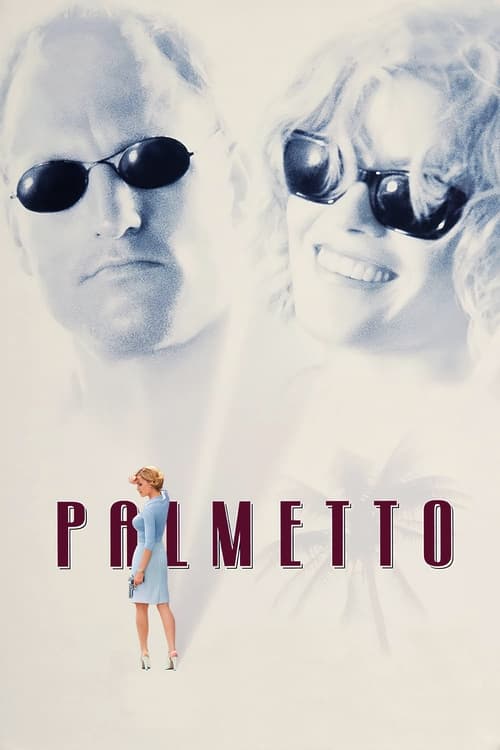
Palmetto
After being released from prison on a bum charge, Harry Barber is out for payback to regain his lost two years. He's hired by Mrs. Malroux to fake the kidnapping of her stepdaughter (the daughter of a dying millionaire). He discovers that he is being set up on multiple levels and will soon face a longer sentence if he doesn't prove the truth.
The film earned $5.9M at the global box office.


Plot Structure
Story beats plotted across runtime


Narrative Arc
Emotional journey through the story's key moments
Story Circle
Blueprint 15-beat structure
Arcplot Score Breakdown
Weighted: Precision (70%) + Arc (15%) + Theme (15%)
Palmetto (1998) showcases deliberately positioned plot construction, characteristic of Volker Schlöndorff's storytelling approach. This structural analysis examines how the film's 15-point plot structure maps to proven narrative frameworks across 1 hour and 54 minutes. With an Arcplot score of 7.0, the film balances conventional beats with creative variation.
Structural Analysis
The Status Quo at 1 minutes (1% through the runtime) establishes Harry Barber is released from prison after serving two years for a corruption charge he didn't commit. He's bitter, broken, and returns to Palmetto, Florida with nothing but resentment toward the town that betrayed him.. Of particular interest, this early placement immediately immerses viewers in the story world.
The inciting incident occurs at 14 minutes when The seductive Rhea Malroux approaches Harry with an intriguing proposition, offering him money to participate in a scheme. Her beauty and the promise of easy cash disrupt his attempts at honest living.. At 12% through the film, this Disruption aligns precisely with traditional story structure. This beat shifts the emotional landscape, launching the protagonist into the central conflict.
The First Threshold at 29 minutes marks the transition into Act II, occurring at 25% of the runtime. This indicates the protagonist's commitment to Harry agrees to participate in the fake kidnapping scheme, making the call demanding ransom. He crosses a moral line, actively choosing to become a criminal despite knowing it's wrong, seduced by money and lust., moving from reaction to action.
At 57 minutes, the Midpoint arrives at 50% of the runtime—precisely centered, creating perfect narrative symmetry. Significantly, this crucial beat Harry discovers that Odette has been actually murdered - this was never a fake kidnapping. He realizes he's been set up as the patsy for a real crime. The stakes shift from easy money to survival as he's now implicated in homicide., fundamentally raising what's at risk. The emotional intensity shifts, dividing the narrative into clear before-and-after phases.
The Collapse moment at 86 minutes (75% through) represents the emotional nadir. Here, Harry discovers that Nina has learned about his affair and involvement in the crime. His personal life collapses as the woman who stood by him through prison now sees him for the corrupt fool he's become. He's lost everything - his integrity, his love, his freedom is threatened., illustrates the protagonist at their lowest point. This beat's placement in the final quarter sets up the climactic reversal.
The Second Threshold at 91 minutes initiates the final act resolution at 80% of the runtime. Harry decides to expose the entire conspiracy rather than continue running. He realizes the only way out is through - he must reveal the truth about Rhea and the murder plot, even if it means confessing his own involvement in the original scheme., demonstrating the transformation achieved throughout the journey.
Emotional Journey
Palmetto's emotional architecture traces a deliberate progression across 15 carefully calibrated beats.
Narrative Framework
This structural analysis employs systematic plot point analysis that identifies crucial turning points. By mapping Palmetto against these established plot points, we can identify how Volker Schlöndorff utilizes or subverts traditional narrative conventions. The plot point approach reveals not only adherence to structural principles but also creative choices that distinguish Palmetto within the crime genre.
Volker Schlöndorff's Structural Approach
Among the 3 Volker Schlöndorff films analyzed on Arcplot, the average structural score is 6.9, demonstrating varied approaches to story architecture. Palmetto represents one of the director's most structurally precise works. For comparative analysis, explore the complete Volker Schlöndorff filmography.
Comparative Analysis
Additional crime films include The Bad Guys, Rustom and The Whole Ten Yards. For more Volker Schlöndorff analyses, see The Handmaid's Tale, The Tin Drum.
Plot Points by Act
Act I
SetupStatus Quo
Harry Barber is released from prison after serving two years for a corruption charge he didn't commit. He's bitter, broken, and returns to Palmetto, Florida with nothing but resentment toward the town that betrayed him.
Theme
Harry's girlfriend Nina tells him he needs to let go of his anger and move forward, suggesting that holding onto bitterness will only destroy him. The theme of how greed and vengeance corrupt the soul is introduced.
Worldbuilding
Harry struggles to reintegrate into society in Palmetto. He reconnects with Nina who has remained faithful, but he can't find work as an ex-con. The sweltering Florida setting and his mounting frustration establish a world where desperation breeds bad decisions.
Disruption
The seductive Rhea Malroux approaches Harry with an intriguing proposition, offering him money to participate in a scheme. Her beauty and the promise of easy cash disrupt his attempts at honest living.
Resistance
Rhea explains her plan: she wants Harry to pretend to kidnap her stepdaughter Odette so they can extort ransom money from her wealthy, dying husband Felix. Harry debates the morality of the scheme while being increasingly seduced by Rhea's charms and the promise of $50,000.
Act II
ConfrontationFirst Threshold
Harry agrees to participate in the fake kidnapping scheme, making the call demanding ransom. He crosses a moral line, actively choosing to become a criminal despite knowing it's wrong, seduced by money and lust.
Mirror World
Harry's relationship with Nina represents what he could have - honest love and redemption. As he gets deeper into the scheme with Rhea, his interactions with Nina show the stark contrast between the authentic life he's abandoning and the corrupt fantasy he's pursuing.
Premise
Harry plays his role in the fake kidnapping, enjoying the thrill and the affair with Rhea. The scheme seems to be working perfectly. He juggles his secret criminal life with his relationship with Nina, believing he can have it all.
Midpoint
Harry discovers that Odette has been actually murdered - this was never a fake kidnapping. He realizes he's been set up as the patsy for a real crime. The stakes shift from easy money to survival as he's now implicated in homicide.
Opposition
Harry desperately tries to extricate himself from the murder frame-up. The police investigation intensifies, and ironically Harry is appointed as a press liaison to the investigation of the very crime he's implicated in. Rhea continues to manipulate him while evidence mounts against him.
Collapse
Harry discovers that Nina has learned about his affair and involvement in the crime. His personal life collapses as the woman who stood by him through prison now sees him for the corrupt fool he's become. He's lost everything - his integrity, his love, his freedom is threatened.
Crisis
Harry reaches his lowest point, realizing he's been thoroughly manipulated. The police are closing in, Nina has abandoned him, and he faces either prison or death. He must confront how his greed and bitterness led him to this catastrophe.
Act III
ResolutionSecond Threshold
Harry decides to expose the entire conspiracy rather than continue running. He realizes the only way out is through - he must reveal the truth about Rhea and the murder plot, even if it means confessing his own involvement in the original scheme.
Synthesis
Harry confronts Rhea and works to expose the murder conspiracy. The true depths of the scheme are revealed - Rhea and her accomplices planned the murder from the start, using Harry as the perfect fall guy. A violent confrontation ensues as Harry fights to prove his innocence in the murder while accepting responsibility for his moral failures.
Transformation
Harry survives but is fundamentally changed. Unlike his wrongful imprisonment before, this time he's genuinely guilty of being a corrupt fool who let greed and lust override his judgment. The final image shows a man who has learned that easy money and femme fatales lead only to destruction.