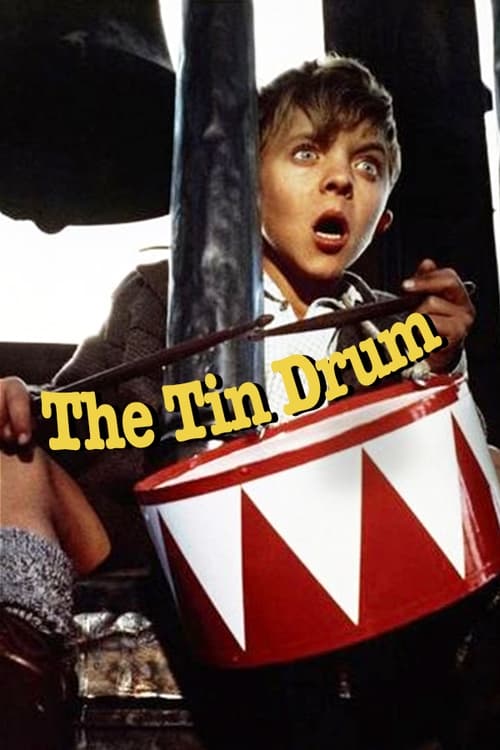
The Tin Drum
In 1924, Oskar Matzerath is born in the Free City of Danzig. At age three, he falls down a flight of stairs and stops growing. In 1939, World War II breaks out.
Despite its small-scale budget of $3.0M, The Tin Drum became a financial success, earning $17.0M worldwide—a 467% return. The film's unconventional structure attracted moviegoers, demonstrating that strong storytelling can transcend budget limitations.
1 Oscar. 18 wins & 6 nominations


Plot Structure
Story beats plotted across runtime


Narrative Arc
Emotional journey through the story's key moments
Story Circle
Blueprint 15-beat structure
Arcplot Score Breakdown
Weighted: Precision (70%) + Arc (15%) + Theme (15%)
The Tin Drum (1979) exemplifies precise plot construction, characteristic of Volker Schlöndorff's storytelling approach. This structural analysis examines how the film's 15-point plot structure maps to proven narrative frameworks across 2 hours and 42 minutes. With an Arcplot score of 6.9, the film balances conventional beats with creative variation.
Characters
Cast & narrative archetypes

Oskar Matzerath
Agnes Matzerath
Alfred Matzerath
Jan Bronski
Maria Matzerath
Bebra
Roswitha Raguna
Anna Koljaiczek
Sigismund Markus
Main Cast & Characters
Oskar Matzerath
Played by David Bennent
A boy who decides at age three to stop growing and uses his tin drum and glass-shattering scream to protest the adult world
Agnes Matzerath
Played by Angela Winkler
Oskar's mother, torn between her husband Alfred and her cousin Jan Bronski
Alfred Matzerath
Played by Mario Adorf
Oskar's presumed father, a German grocer who joins the Nazi party
Jan Bronski
Played by Daniel Olbrychski
Agnes's Polish cousin and likely Oskar's biological father, works at the Polish Post Office
Maria Matzerath
Played by Katharina Thalbach
Young woman who becomes Alfred's second wife and Oskar's stepmother
Bebra
Played by Fritz Hakl
Dwarf performer who befriends Oskar and advises him to join entertainers rather than be in the audience
Roswitha Raguna
Played by Mariella Oliveri
Italian dwarf performer and Bebra's companion who performs with Oskar
Anna Koljaiczek
Played by Tina Engel
Oskar's grandmother, a Kashubian woman who shelters fugitives under her skirts
Sigismund Markus
Played by Charles Aznavour
Jewish toy merchant who supplies Oskar with tin drums and is infatuated with Agnes
Structural Analysis
The Status Quo at 2 minutes (1% through the runtime) establishes Oskar narrates his own conception under his grandmother's skirts in a potato field, establishing his omniscient, detached perspective on his own bizarre existence.. Notably, this early placement immediately immerses viewers in the story world.
The inciting incident occurs at 21 minutes when Oskar throws himself down the cellar stairs, choosing to stop growing at age three. This self-inflicted injury is his active protest against becoming an adult.. At 13% through the film, this Disruption is delayed, allowing extended setup of the story world. This beat shifts the emotional landscape, launching the protagonist into the central conflict.
The First Threshold at 41 minutes marks the transition into Act II, occurring at 25% of the runtime. This demonstrates the protagonist's commitment to The Nazis begin their rise to power in Danzig. Oskar witnesses a Nazi rally and uses his drum to disrupt the marching rhythm, actively choosing to sabotage fascism through his unique powers., moving from reaction to action.
At 82 minutes, the Midpoint arrives at 51% of the runtime—precisely centered, creating perfect narrative symmetry. Structural examination shows that this crucial beat Oskar's mother Agnes dies after compulsively eating fish, destroyed by the moral compromise of her affair and the political situation. Her death represents the cost of adult complicity., fundamentally raising what's at risk. The emotional intensity shifts, dividing the narrative into clear before-and-after phases.
The Collapse moment at 121 minutes (75% through) represents the emotional nadir. Here, Jan Bronski, Oskar's biological father, is executed by the Nazis after the defense of the Polish Post Office. Oskar witnesses the death of the man who loved him, a casualty of his childish games., shows the protagonist at their lowest point. This beat's placement in the final quarter sets up the climactic reversal.
The Second Threshold at 130 minutes initiates the final act resolution at 80% of the runtime. At his father Alfred's death (choked on his Nazi pin while Russians invade), Oskar decides to grow again, throwing his drum into the grave and choosing to rejoin the world of adults., demonstrating the transformation achieved throughout the journey.
Emotional Journey
The Tin Drum's emotional architecture traces a deliberate progression across 15 carefully calibrated beats.
Narrative Framework
This structural analysis employs proven narrative structure principles that track dramatic progression. By mapping The Tin Drum against these established plot points, we can identify how Volker Schlöndorff utilizes or subverts traditional narrative conventions. The plot point approach reveals not only adherence to structural principles but also creative choices that distinguish The Tin Drum within the drama genre.
Volker Schlöndorff's Structural Approach
Among the 3 Volker Schlöndorff films analyzed on Arcplot, the average structural score is 6.9, demonstrating varied approaches to story architecture. The Tin Drum takes a more unconventional approach compared to the director's typical style. For comparative analysis, explore the complete Volker Schlöndorff filmography.
Comparative Analysis
Additional drama films include After Thomas, South Pacific and Dirty Dancing: Havana Nights. For more Volker Schlöndorff analyses, see Palmetto, The Handmaid's Tale.
Plot Points by Act
Act I
SetupStatus Quo
Oskar narrates his own conception under his grandmother's skirts in a potato field, establishing his omniscient, detached perspective on his own bizarre existence.
Theme
At his third birthday, Oskar declares he will never grow up, refusing to participate in the adult world he sees as corrupt and complicit.
Worldbuilding
Establishment of Oskar's family in 1920s Danzig: his mother Agnes, presumed father Alfred (a grocer), and likely biological father Jan Bronski. Oskar receives his tin drum and discovers his glass-shattering scream.
Disruption
Oskar throws himself down the cellar stairs, choosing to stop growing at age three. This self-inflicted injury is his active protest against becoming an adult.
Resistance
Oskar navigates childhood as a perpetual three-year-old, using his drum and scream as weapons. His family adapts to his condition while political tensions rise in Danzig.
Act II
ConfrontationFirst Threshold
The Nazis begin their rise to power in Danzig. Oskar witnesses a Nazi rally and uses his drum to disrupt the marching rhythm, actively choosing to sabotage fascism through his unique powers.
Mirror World
Oskar meets Bebra, the dwarf circus performer, who tells him "We dwarfs and fools have no place in this world but on the fringes." Bebra represents an alternative path: accommodation versus resistance.
Premise
Oskar explores his power and sexual awakening through his relationship with Maria, watches his mother's moral deterioration and death from overeating fish, and observes the Nazi annexation of Poland.
Midpoint
Oskar's mother Agnes dies after compulsively eating fish, destroyed by the moral compromise of her affair and the political situation. Her death represents the cost of adult complicity.
Opposition
World War II engulfs Danzig. Oskar joins Bebra's theater troupe entertaining Nazi troops, becoming complicit in the system he rejected. His father marries Maria, and Oskar's isolation deepens.
Collapse
Jan Bronski, Oskar's biological father, is executed by the Nazis after the defense of the Polish Post Office. Oskar witnesses the death of the man who loved him, a casualty of his childish games.
Crisis
As the war ends and Russians occupy Danzig, Oskar confronts the futility of his resistance. His eternal childhood has protected nothing and saved no one.
Act III
ResolutionSecond Threshold
At his father Alfred's death (choked on his Nazi pin while Russians invade), Oskar decides to grow again, throwing his drum into the grave and choosing to rejoin the world of adults.
Synthesis
Oskar begins to grow, experiences pain as his body changes, and prepares to leave Danzig with the refugees. His resistance is over; he must face the adult world he tried to escape.
Transformation
Oskar boards the refugee train as a growing boy, leaving behind his childhood, his drum, and Danzig itself. The closing image shows him unchanged in spirit—still an outsider—but no longer protected by childhood.