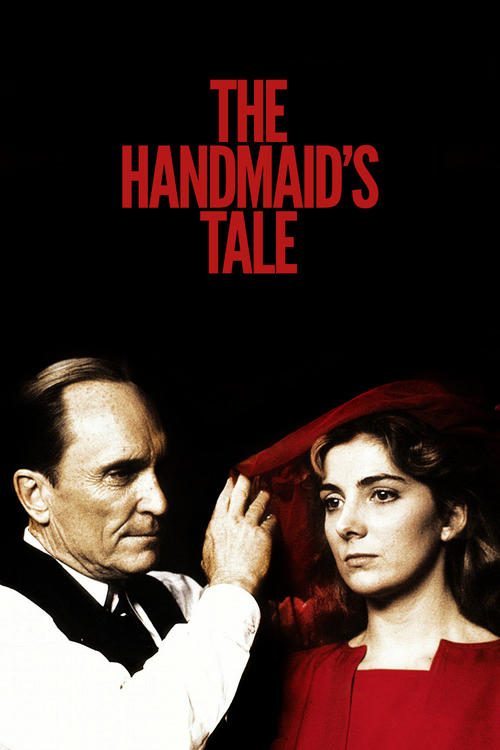
The Handmaid's Tale
In a dystopian, polluted right-wing religious tyranny, a young woman is put in sexual slavery on account of her now rare fertility.
The film box office disappointment against its small-scale budget of $13.0M, earning $5.0M globally (-62% loss). While initial box office returns were modest, the film has gained appreciation for its bold vision within the drama genre.
2 wins & 1 nomination


Plot Structure
Story beats plotted across runtime


Narrative Arc
Emotional journey through the story's key moments
Story Circle
Blueprint 15-beat structure
Arcplot Score Breakdown
Weighted: Precision (70%) + Arc (15%) + Theme (15%)
The Handmaid's Tale (1990) exemplifies meticulously timed narrative design, characteristic of Volker Schlöndorff's storytelling approach. This structural analysis examines how the film's 15-point plot structure maps to proven narrative frameworks across 1 hour and 48 minutes. With an Arcplot score of 6.8, the film balances conventional beats with creative variation.
Characters
Cast & narrative archetypes

Kate/Offred
The Commander
Serena Joy
Nick
Moira
Aunt Lydia
Janine/Ofwarren
Main Cast & Characters
Kate/Offred
Played by Natasha Richardson
A handmaid in the theocratic Republic of Gilead who struggles to maintain her identity and survive while being forced into reproductive servitude.
The Commander
Played by Robert Duvall
A high-ranking official in Gilead who takes Kate as his handmaid and develops a forbidden relationship with her.
Serena Joy
Played by Faye Dunaway
The Commander's wife, a former televangelist now forced into the role of barren wife in the patriarchal society she helped create.
Nick
Played by Aidan Quinn
The Commander's driver and guardian who becomes romantically involved with Kate and helps her survive.
Moira
Played by Elizabeth McGovern
Kate's best friend and fellow handmaid who attempts to escape Gilead and represents rebellion against the regime.
Aunt Lydia
Played by Victoria Tennant
A cruel instructor who indoctrinates handmaids into accepting their subjugation through psychological and physical punishment.
Janine/Ofwarren
Played by Blanche Baker
A fellow handmaid who suffers psychological breakdown under the oppressive regime and becomes increasingly unstable.
Structural Analysis
The Status Quo at 1 minutes (1% through the runtime) establishes Kate, her husband Luke, and daughter flee through snowy woods toward the Canadian border. A desperate family attempting escape from an oppressive regime—their fear palpable as they run for freedom.. Structural examination shows that this early placement immediately immerses viewers in the story world.
The inciting incident occurs at 13 minutes when Kate is assigned to her first posting as "Offred"—becoming the property of a Commander. Her old identity is formally erased as she dons the red habit and white wings, beginning her life as a reproductive vessel.. At 12% through the film, this Disruption aligns precisely with traditional story structure. This beat shifts the emotional landscape, launching the protagonist into the central conflict.
The First Threshold at 27 minutes marks the transition into Act II, occurring at 25% of the runtime. This demonstrates the protagonist's commitment to Kate is reassigned to Commander Fred's household after failing to conceive. She chooses to survive rather than give up, actively deciding to play the role of Offred while secretly preserving her true self—crossing into the dangerous game of hidden resistance., moving from reaction to action.
At 54 minutes, the Midpoint arrives at 50% of the runtime—precisely centered, creating perfect narrative symmetry. Significantly, this crucial beat Kate and Nick consummate their relationship—a false victory. For the first time since her capture, she experiences genuine intimacy and pleasure on her own terms. She feels alive again, but this forbidden affair puts both their lives at extreme risk., fundamentally raising what's at risk. The emotional intensity shifts, dividing the narrative into clear before-and-after phases.
The Collapse moment at 81 minutes (75% through) represents the emotional nadir. Here, Serena Joy discovers Kate's affair with Nick and confronts her with violent rage. Kate faces execution or being sent to the Colonies—a death sentence either way. Her small world of stolen moments collapses entirely; the "whiff of death" becomes imminent reality., indicates the protagonist at their lowest point. This beat's placement in the final quarter sets up the climactic reversal.
The Second Threshold at 86 minutes initiates the final act resolution at 80% of the runtime. Nick reveals he is part of the Mayday resistance and has arranged her escape. Kate realizes she must act—not just survive, but fight. She synthesizes her suffering into purpose, understanding that resistance requires sacrifice and action., demonstrating the transformation achieved throughout the journey.
Emotional Journey
The Handmaid's Tale's emotional architecture traces a deliberate progression across 15 carefully calibrated beats.
Narrative Framework
This structural analysis employs systematic plot point analysis that identifies crucial turning points. By mapping The Handmaid's Tale against these established plot points, we can identify how Volker Schlöndorff utilizes or subverts traditional narrative conventions. The plot point approach reveals not only adherence to structural principles but also creative choices that distinguish The Handmaid's Tale within the drama genre.
Volker Schlöndorff's Structural Approach
Among the 3 Volker Schlöndorff films analyzed on Arcplot, the average structural score is 6.9, demonstrating varied approaches to story architecture. The Handmaid's Tale takes a more unconventional approach compared to the director's typical style. For comparative analysis, explore the complete Volker Schlöndorff filmography.
Comparative Analysis
Additional drama films include After Thomas, South Pacific and Dirty Dancing: Havana Nights. For more Volker Schlöndorff analyses, see Palmetto, The Tin Drum.
Plot Points by Act
Act I
SetupStatus Quo
Kate, her husband Luke, and daughter flee through snowy woods toward the Canadian border. A desperate family attempting escape from an oppressive regime—their fear palpable as they run for freedom.
Theme
Aunt Lydia indoctrinates the captured women at the Red Center: "You are the lucky ones. You have been chosen." The theme of reproductive slavery disguised as divine purpose is established—women's bodies as state property.
Worldbuilding
The totalitarian Republic of Gilead is established through Kate's capture, indoctrination at the Red Center, and brutal training. We learn fertile women are conscripted as Handmaids, stripped of names and identities, while Aunt Lydia enforces compliance through religious zealotry and violence.
Disruption
Kate is assigned to her first posting as "Offred"—becoming the property of a Commander. Her old identity is formally erased as she dons the red habit and white wings, beginning her life as a reproductive vessel.
Resistance
Kate learns the rituals and rules of her new existence in the Commander's household. She meets Serena Joy, the bitter Wife, and experiences the dehumanizing "Ceremony." Moira, her friend from the Red Center, serves as a guide to survival through whispered resistance.
Act II
ConfrontationFirst Threshold
Kate is reassigned to Commander Fred's household after failing to conceive. She chooses to survive rather than give up, actively deciding to play the role of Offred while secretly preserving her true self—crossing into the dangerous game of hidden resistance.
Mirror World
Nick, the Commander's driver, makes meaningful eye contact with Kate. Their forbidden connection begins—representing humanity, desire, and the possibility of genuine intimacy in a world that has outlawed it. He embodies the theme of reclaiming personhood through connection.
Premise
Kate navigates the Commander's household, secretly meeting him for forbidden Scrabble games and conversation. She reconnects with Moira, discovers the underground resistance, and begins her affair with Nick. The dystopian world's rules and contradictions are explored as Kate finds small acts of rebellion.
Midpoint
Kate and Nick consummate their relationship—a false victory. For the first time since her capture, she experiences genuine intimacy and pleasure on her own terms. She feels alive again, but this forbidden affair puts both their lives at extreme risk.
Opposition
Serena Joy grows suspicious and hostile. The Commander takes Kate to a secret brothel (Jezebel's), revealing the regime's hypocrisy. Kate discovers Moira there, broken and hopeless. The Eyes increase surveillance. Kate becomes pregnant—unclear if by Nick or the Commander—raising the stakes exponentially.
Collapse
Serena Joy discovers Kate's affair with Nick and confronts her with violent rage. Kate faces execution or being sent to the Colonies—a death sentence either way. Her small world of stolen moments collapses entirely; the "whiff of death" becomes imminent reality.
Crisis
Kate awaits her fate in despair. She contemplates the loss of everything—her daughter she'll never find, the child she carries, Nick, her own life. The darkness of Gilead seems absolute and inescapable.
Act III
ResolutionSecond Threshold
Nick reveals he is part of the Mayday resistance and has arranged her escape. Kate realizes she must act—not just survive, but fight. She synthesizes her suffering into purpose, understanding that resistance requires sacrifice and action.
Synthesis
The escape plan unfolds. Kate stabs the Commander with a knife during a final confrontation, an act of violent resistance against her oppressor. The resistance operatives arrive disguised as Eyes to extract her. She leaves the household, escaping into the night toward an uncertain but free future.
Transformation
Kate sits in a trailer in the mountains, pregnant and waiting—but free. She speaks into a tape recorder, preserving her testimony. Unlike the opening flight as a victim, she is now a survivor who fought back. She doesn't know if she'll find her daughter, but she has reclaimed her story and her self.