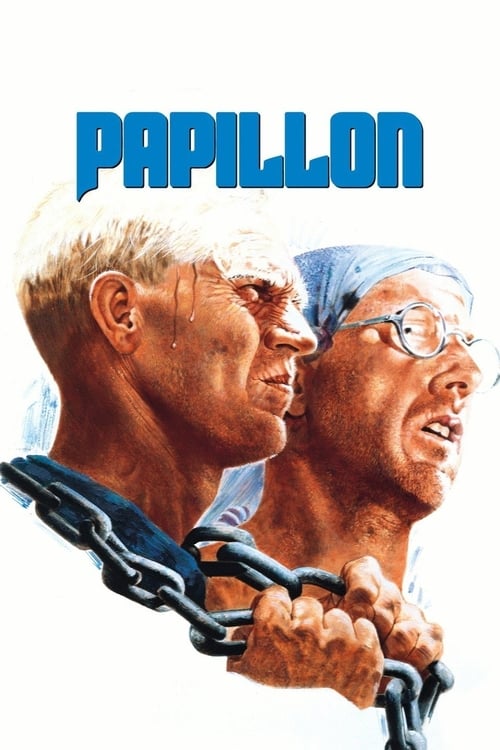
Papillon
A man befriends a fellow criminal as the two of them begin serving their sentence on a dreadful prison island, which inspires the man to plot his escape.
Despite its tight budget of $12.0M, Papillon became a solid performer, earning $53.3M worldwide—a 344% return. The film's fresh perspective engaged audiences, illustrating how strong storytelling can transcend budget limitations.
Nominated for 1 Oscar. 2 wins & 2 nominations


Plot Structure
Story beats plotted across runtime


Narrative Arc
Emotional journey through the story's key moments
Story Circle
Blueprint 15-beat structure
Arcplot Score Breakdown
Weighted: Precision (70%) + Arc (15%) + Theme (15%)
Papillon (1973) demonstrates precise plot construction, characteristic of Franklin J. Schaffner's storytelling approach. This structural analysis examines how the film's 15-point plot structure maps to proven narrative frameworks across 2 hours and 31 minutes. With an Arcplot score of 6.5, the film balances conventional beats with creative variation.
Characters
Cast & narrative archetypes

Henri Charriere (Papillon)
Louis Dega
Indian Chief
Julot
Clusiot
Maturette
Warden Barrot
Leper Colony Chief
Main Cast & Characters
Henri Charriere (Papillon)
Played by Steve McQueen
A safecracker wrongly convicted of murder who is sentenced to life imprisonment in French Guiana, driven by an unrelenting desire for freedom.
Louis Dega
Played by Dustin Hoffman
A wealthy counterfeiter who befriends Papillon, offering financial support in exchange for protection during their imprisonment.
Indian Chief
Played by Victor Jory
A tribal leader on a remote island who provides Papillon sanctuary and acceptance during one of his escapes.
Julot
Played by Don Gordon
A seasoned convict who befriends Papillon early in his imprisonment and shares valuable escape knowledge before his execution.
Clusiot
Played by Robert Deman
An artist and fellow prisoner who joins Papillon in escape attempts, serving as a loyal companion on their dangerous journey.
Maturette
Played by Robert Carradine
A young homosexual prisoner who becomes part of Papillon's escape group, showing unexpected courage and loyalty.
Warden Barrot
Played by Anthony Zerbe
A stern prison administrator who oversees the brutal penal colony and represents the oppressive system Papillon fights against.
Leper Colony Chief
Played by William Smithers
The leader of a leper colony who assists Papillon with supplies for his escape, showing humanity despite his isolation.
Structural Analysis
The Status Quo at 2 minutes (1% through the runtime) establishes Papillon, a convicted safecracker wrongly accused of murder, is paraded through the streets of Marseille in chains with other prisoners, showcasing his defiant spirit even in captivity as he boards the ship to French Guiana.. Structural examination shows that this early placement immediately immerses viewers in the story world.
The inciting incident occurs at 18 minutes when The prisoners arrive at the penal colony in French Guiana and witness the horrific conditions and brutal treatment awaiting them. The warden declares that any escape attempt will result in two years of solitary confinement for the first offense and five years for the second.. At 12% through the film, this Disruption aligns precisely with traditional story structure. This beat shifts the emotional landscape, launching the protagonist into the central conflict.
The First Threshold at 38 minutes marks the transition into Act II, occurring at 25% of the runtime. This indicates the protagonist's commitment to Papillon makes his first escape attempt, fleeing into the jungle with two other prisoners after killing a guard who was about to execute an escapee. He chooses the dangerous unknown over the certainty of prison, crossing into his quest for freedom., moving from reaction to action.
At 76 minutes, the Midpoint arrives at 50% of the runtime—precisely centered, creating perfect narrative symmetry. Of particular interest, this crucial beat Papillon is recaptured and sentenced to five years of solitary confinement in the brutal cells of Saint-Joseph Island. This false defeat marks the turning point where his physical freedom ends and his psychological battle for survival begins—the stakes shift from escape to mere survival., fundamentally raising what's at risk. The emotional intensity shifts, dividing the narrative into clear before-and-after phases.
The Collapse moment at 113 minutes (75% through) represents the emotional nadir. Here, Papillon, now old and broken after years of solitary confinement, is transferred to the inescapable Devil's Island. The warden tells him this is where men come to die. His body has aged decades, and escape seems truly impossible now—a living death sentence., demonstrates the protagonist at their lowest point. This beat's placement in the final quarter sets up the climactic reversal.
The Second Threshold at 121 minutes initiates the final act resolution at 80% of the runtime. Papillon discovers that coconuts thrown from the cliffs are carried by the current out to sea every seventh wave. He realizes he can use a sack of coconuts as a flotation device to escape. His observation and patience have revealed the path—nature itself will carry him to freedom., demonstrating the transformation achieved throughout the journey.
Emotional Journey
Papillon's emotional architecture traces a deliberate progression across 15 carefully calibrated beats.
Narrative Framework
This structural analysis employs proven narrative structure principles that track dramatic progression. By mapping Papillon against these established plot points, we can identify how Franklin J. Schaffner utilizes or subverts traditional narrative conventions. The plot point approach reveals not only adherence to structural principles but also creative choices that distinguish Papillon within the crime genre.
Franklin J. Schaffner's Structural Approach
Among the 3 Franklin J. Schaffner films analyzed on Arcplot, the average structural score is 6.7, demonstrating varied approaches to story architecture. Papillon takes a more unconventional approach compared to the director's typical style. For comparative analysis, explore the complete Franklin J. Schaffner filmography.
Comparative Analysis
Additional crime films include The Bad Guys, Rustom and The Whole Ten Yards. For more Franklin J. Schaffner analyses, see Patton, Planet of the Apes.
Plot Points by Act
Act I
SetupStatus Quo
Papillon, a convicted safecracker wrongly accused of murder, is paraded through the streets of Marseille in chains with other prisoners, showcasing his defiant spirit even in captivity as he boards the ship to French Guiana.
Theme
A prison guard warns the convicts that escape is impossible and resistance futile, but Papillon's eyes reveal he refuses to accept this fate—establishing the central conflict between institutional oppression and the unbreakable human will to be free.
Worldbuilding
The brutal world of French penal transportation is established as Papillon and the other convicts endure the sea voyage to Guiana. We learn of Papillon's background, his determination to escape, and witness his first strategic move to ally with the wealthy counterfeiter Louis Dega for financial backing.
Disruption
The prisoners arrive at the penal colony in French Guiana and witness the horrific conditions and brutal treatment awaiting them. The warden declares that any escape attempt will result in two years of solitary confinement for the first offense and five years for the second.
Resistance
Papillon navigates the prison's hierarchy and dangers while protecting Dega from other inmates in exchange for money to fund an escape. He observes the system, identifies potential escape routes, and builds the network necessary for his first attempt while enduring the backbreaking labor of the camp.
Act II
ConfrontationFirst Threshold
Papillon makes his first escape attempt, fleeing into the jungle with two other prisoners after killing a guard who was about to execute an escapee. He chooses the dangerous unknown over the certainty of prison, crossing into his quest for freedom.
Mirror World
Papillon finds temporary refuge with a leper colony and indigenous people in Honduras. Here, in the kindness of outcasts and the freedom of a simple life with a native tribe, he glimpses what true freedom and human connection mean—a stark contrast to the dehumanizing prison system.
Premise
Papillon experiences freedom's taste through his jungle escape, time with the leper colony, and idyllic months living with an indigenous tribe. Each escape attempt and recapture tests his resolve. The promise of the premise—a man who refuses to be caged—plays out through his resourcefulness, alliances, and relentless pursuit of liberty.
Midpoint
Papillon is recaptured and sentenced to five years of solitary confinement in the brutal cells of Saint-Joseph Island. This false defeat marks the turning point where his physical freedom ends and his psychological battle for survival begins—the stakes shift from escape to mere survival.
Opposition
Papillon endures years of solitary confinement in darkness and silence, his rations halved when he refuses to inform on who gave him a coconut. His body weakens and his teeth fall out, but his spirit remains unbroken. When finally released, he's a shell of his former self, reunited with Dega who has become a gardener for the warden.
Collapse
Papillon, now old and broken after years of solitary confinement, is transferred to the inescapable Devil's Island. The warden tells him this is where men come to die. His body has aged decades, and escape seems truly impossible now—a living death sentence.
Crisis
On Devil's Island, Papillon reconnects with the aged Dega, who has accepted his fate and tends pigs. Papillon studies the waves crashing against the cliffs, watching coconuts being carried out to sea, while Dega urges him to accept that their lives are over. Papillon struggles between acceptance and his lifelong drive for freedom.
Act III
ResolutionSecond Threshold
Papillon discovers that coconuts thrown from the cliffs are carried by the current out to sea every seventh wave. He realizes he can use a sack of coconuts as a flotation device to escape. His observation and patience have revealed the path—nature itself will carry him to freedom.
Synthesis
Papillon constructs his coconut-sack flotation device and prepares for his final escape. He asks Dega to join him, but his friend chooses to stay, too old and tired to risk it. Their farewell is bittersweet—two men who survived hell together, parting ways. Papillon leaps from the cliff into the churning waves.
Transformation
Papillon rides the seventh wave out to sea on his makeshift raft, triumphantly shouting "Hey, you bastards! I'm still here!" Text reveals he lived the rest of his life as a free man. The caged butterfly has finally flown—his indomitable spirit has conquered the system that tried to break him.