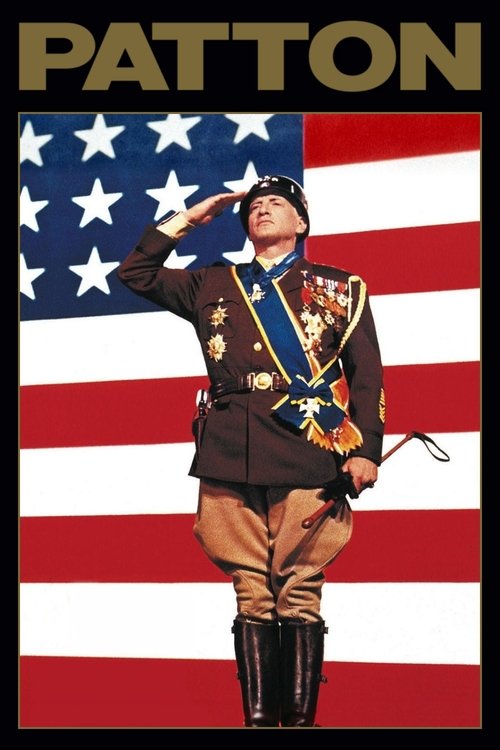
Patton
"Patton" tells the tale of General George S. Patton, famous tank commander of World War II. The film begins with Patton's career in North Africa and progresses through the invasion of Germany and the fall of the Third Reich. Side plots also speak of Patton's numerous faults such his temper and habit towards insubordination.
Despite its limited budget of $12.0M, Patton became a box office phenomenon, earning $89.8M worldwide—a remarkable 648% return. The film's distinctive approach resonated with audiences, illustrating how strong storytelling can transcend budget limitations.
7 Oscars. 25 wins & 8 nominations


Plot Structure
Story beats plotted across runtime


Narrative Arc
Emotional journey through the story's key moments
Story Circle
Blueprint 15-beat structure
Arcplot Score Breakdown
Weighted: Precision (70%) + Arc (15%) + Theme (15%)
Patton (1970) reveals carefully calibrated story structure, characteristic of Franklin J. Schaffner's storytelling approach. This structural analysis examines how the film's 15-point plot structure maps to proven narrative frameworks across 2 hours and 52 minutes. With an Arcplot score of 6.6, the film balances conventional beats with creative variation.
Characters
Cast & narrative archetypes

General George S. Patton
General Omar Bradley
Field Marshal Erwin Rommel
General Walter Bedell Smith
Field Marshal Bernard Montgomery
Brigadier General Hobart Carver
Sergeant William George Meeks
Main Cast & Characters
General George S. Patton
Played by George C. Scott
A brilliant, controversial WWII general driven by glory and an almost mystical belief in his destiny as a warrior across multiple lifetimes.
General Omar Bradley
Played by Karl Malden
Patton's foil and friend, the humble "soldier's general" who represents methodical, compassionate military leadership.
Field Marshal Erwin Rommel
Played by Karl Michael Vogler
The legendary "Desert Fox," Patton's respected nemesis and mirror - a worthy opponent whom Patton studies obsessively.
General Walter Bedell Smith
Played by Edward Binns
Eisenhower's chief of staff who serves as intermediary between high command and the troublesome Patton.
Field Marshal Bernard Montgomery
Played by Michael Bates
The cautious British general whose methodical approach and rivalry with Patton drives competitive Allied operations.
Brigadier General Hobart Carver
Played by Morgan Paull
Patton's aide who witnesses firsthand the general's mercurial brilliance and self-destructive outbursts.
Sergeant William George Meeks
Played by James Edwards
Patton's devoted orderly and personal servant who provides steady loyalty amid the chaos of war.
Structural Analysis
The Status Quo at 1 minutes (1% through the runtime) establishes Patton stands before a massive American flag delivering his famous speech to the Third Army, establishing him as a bold, profane, uncompromising warrior who believes in destiny and victory.. Of particular interest, this early placement immediately immerses viewers in the story world.
The inciting incident occurs at 20 minutes when Patton assumes command of demoralized II Corps and immediately transforms the unit with iron discipline and his distinctive leadership style, setting the stage for his campaign across North Africa.. At 12% through the film, this Disruption aligns precisely with traditional story structure. This beat shifts the emotional landscape, launching the protagonist into the central conflict.
The First Threshold at 42 minutes marks the transition into Act II, occurring at 24% of the runtime. This indicates the protagonist's commitment to Patton slaps a shell-shocked soldier in a field hospital, calling him a coward. This impulsive act of "discipline" becomes a career-threatening scandal that will haunt him throughout the rest of the film., moving from reaction to action.
At 86 minutes, the Midpoint arrives at 50% of the runtime—precisely centered, creating perfect narrative symmetry. Notably, this crucial beat Patton finally unleashes Third Army across France in August 1944, achieving his greatest triumph with a lightning advance that covers more ground faster than any army in history - the promise of his genius fulfilled., fundamentally raising what's at risk. The emotional intensity shifts, dividing the narrative into clear before-and-after phases.
The Collapse moment at 128 minutes (74% through) represents the emotional nadir. Here, Patton is relieved of command of Third Army for his statements about former Nazis. The warrior who saved the Battle of the Bulge is stripped of his army - a death of purpose and identity., reveals the protagonist at their lowest point. This beat's placement in the final quarter sets up the climactic reversal.
The Second Threshold at 136 minutes initiates the final act resolution at 79% of the runtime. Patton accepts his fate with stoic resignation, understanding that his type of warrior no longer has a place. He quotes his own opening speech about returning home: "All glory is fleeting."., demonstrating the transformation achieved throughout the journey.
Emotional Journey
Patton's emotional architecture traces a deliberate progression across 15 carefully calibrated beats.
Narrative Framework
This structural analysis employs proven narrative structure principles that track dramatic progression. By mapping Patton against these established plot points, we can identify how Franklin J. Schaffner utilizes or subverts traditional narrative conventions. The plot point approach reveals not only adherence to structural principles but also creative choices that distinguish Patton within the war genre.
Franklin J. Schaffner's Structural Approach
Among the 3 Franklin J. Schaffner films analyzed on Arcplot, the average structural score is 6.7, demonstrating varied approaches to story architecture. Patton takes a more unconventional approach compared to the director's typical style. For comparative analysis, explore the complete Franklin J. Schaffner filmography.
Comparative Analysis
Additional war films include Fury, Shenandoah and More American Graffiti. For more Franklin J. Schaffner analyses, see Papillon, Planet of the Apes.
Plot Points by Act
Act I
SetupStatus Quo
Patton stands before a massive American flag delivering his famous speech to the Third Army, establishing him as a bold, profane, uncompromising warrior who believes in destiny and victory.
Theme
General Omar Bradley observes that Patton is "a magnificent anachronism" - a warrior born out of his time, suggesting the central conflict between Patton's martial genius and the modern world that no longer values such men.
Worldbuilding
Introduction to North Africa 1943: American forces defeated at Kasserine Pass, Patton takes command of II Corps, establishes strict discipline, clashes with British General Montgomery, and prepares for battle against Rommel.
Disruption
Patton assumes command of demoralized II Corps and immediately transforms the unit with iron discipline and his distinctive leadership style, setting the stage for his campaign across North Africa.
Resistance
Patton whips II Corps into shape, defeats Rommel at El Guettar, races Montgomery to Messina in Sicily, but struggles with political constraints and his own impulsive nature. Bradley serves as counterbalance and conscience.
Act II
ConfrontationFirst Threshold
Patton slaps a shell-shocked soldier in a field hospital, calling him a coward. This impulsive act of "discipline" becomes a career-threatening scandal that will haunt him throughout the rest of the film.
Mirror World
General Bradley represents the "new" military - diplomatic, politically astute, team-oriented. His relationship with Patton embodies the thematic conflict between the pure warrior and the modern soldier-politician.
Premise
Patton publicly apologizes for the slapping incident, is sidelined as a decoy for D-Day, endures humiliation while his peers lead the invasion, but finally receives command of Third Army and prepares for the breakout from Normandy.
Midpoint
Patton finally unleashes Third Army across France in August 1944, achieving his greatest triumph with a lightning advance that covers more ground faster than any army in history - the promise of his genius fulfilled.
Opposition
Despite military success, opposition intensifies: Patton runs out of fuel as supplies go to Montgomery; he makes inflammatory statements about the Soviets; he clashes with Eisenhower over denazification policy; political forces conspire against him.
Collapse
Patton is relieved of command of Third Army for his statements about former Nazis. The warrior who saved the Battle of the Bulge is stripped of his army - a death of purpose and identity.
Crisis
Patton accepts a ceremonial paper-pushing command, walks through ancient battlefields reflecting on warriors of the past, and contemplates his obsolescence in the modern world. The war is over but he remains, purposeless.
Act III
ResolutionSecond Threshold
Patton accepts his fate with stoic resignation, understanding that his type of warrior no longer has a place. He quotes his own opening speech about returning home: "All glory is fleeting."
Synthesis
Patton walks with his dog Willie across a European field, reflecting on ancient battles and warriors of antiquity. He recognizes that like the great armies of Rome, his time has passed and he must fade into history.
Transformation
Patton walks away from camera into the distance across a bleak field, diminishing to a small figure against the sky - the magnificent anachronism fading into history, his glory fleeting as prophesied.