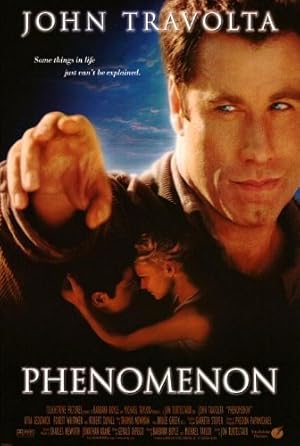
Phenomenon
John Travolta plays George Malley, who owns the local auto repair shop in a small California town. After celebrating his birthday with friends at the local bar/hang-out, George heads for home. He pauses to watch a strange light in the sky, then collapses for a few seconds in the middle of the deserted street. In the days and weeks that follow, George finds his IQ and consciousness expanding dramatically, and develops telekinetic abilities. Despite his attempts to explain what has happened to him, with just a very few exceptions, most of the local townspeople treat the "new" George as a freak. His state of isolation becomes even more pronounced when his new-found abilities allow him to correctly predict an earthquake, and outside authorities become interested in what's happened to him.
Despite a moderate budget of $32.0M, Phenomenon became a financial success, earning $152.0M worldwide—a 375% return.
7 wins & 8 nominations


Plot Structure
Story beats plotted across runtime


Narrative Arc
Emotional journey through the story's key moments
Story Circle
Blueprint 15-beat structure
Arcplot Score Breakdown
Weighted: Precision (70%) + Arc (15%) + Theme (15%)
Phenomenon (1996) demonstrates meticulously timed narrative architecture, characteristic of Jon Turteltaub's storytelling approach. This structural analysis examines how the film's 15-point plot structure maps to proven narrative frameworks across 2 hours and 3 minutes. With an Arcplot score of 7.3, the film balances conventional beats with creative variation.
Characters
Cast & narrative archetypes

George Malley
Lace Pennamin
Doc Brunder
Nate Pope
Dr. Bob Niedorf
Al Pennamin
Glory Pennamin
Banes
Main Cast & Characters
George Malley
Played by John Travolta
A simple, kind-hearted auto mechanic in a small California town who, after seeing a mysterious light on his 37th birthday, develops extraordinary intellectual abilities and telekinetic powers.
Lace Pennamin
Played by Kyra Sedgwick
A divorced single mother and furniture maker who becomes George's love interest, initially guarded due to past hurts but gradually opens her heart to him.
Doc Brunder
Played by Robert Duvall
The town's compassionate physician and one of George's closest friends who provides medical insight into George's transformation and supports him throughout his journey.
Nate Pope
Played by Forest Whitaker
George's loyal best friend, a simple and good-natured man who stands by George despite the community's growing fear and suspicion of his abilities.
Dr. Bob Niedorf
Played by Jeffrey DeMunn
A neurologist from UC Berkeley who examines George and discovers the devastating truth about the source of his abilities.
Al Pennamin
Played by David Gallagher
Lace's young son who quickly bonds with George and sees him as a father figure, representing innocence and unconditional acceptance.
Glory Pennamin
Played by Ashley Buccille
Lace's young daughter who, along with her brother, embraces George warmly and represents the pure, unjudging love of children.
Banes
Played by Richard Kiley
An FBI agent who investigates George after his abilities attract government attention, representing institutional suspicion and fear of the unknown.
Structural Analysis
The Status Quo at 1 minutes (1% through the runtime) establishes George Malley lives his simple, ordinary life in a small town as a well-liked auto mechanic celebrating his 37th birthday with friends at the local bar. He's content but unremarkable, showing interest in Lace but keeping things surface-level.. Of particular interest, this early placement immediately immerses viewers in the story world.
The inciting incident occurs at 15 minutes when George steps outside the bar on his birthday and is struck by a mysterious bright light from the sky that knocks him to the ground. This unexplained phenomenon fundamentally alters his brain, giving him extraordinary intelligence and telekinetic abilities.. At 12% through the film, this Disruption aligns precisely with traditional story structure. This beat shifts the emotional landscape, launching the protagonist into the central conflict.
The First Threshold at 30 minutes marks the transition into Act II, occurring at 25% of the runtime. This demonstrates the protagonist's commitment to George actively chooses to embrace his new gifts and share them with the world. He decides to help people with his abilities, predicting an earthquake and trying to contribute inventions and solutions to agricultural and community problems., moving from reaction to action.
At 62 minutes, the Midpoint arrives at 50% of the runtime—precisely centered, creating perfect narrative symmetry. Of particular interest, this crucial beat False defeat: The FBI interrogates George, suspecting him of espionage or being a threat. The townspeople become frightened and suspicious rather than grateful. What seemed like a gift is now isolating him from the community he wanted to help. Stakes raise as paranoia grows., fundamentally raising what's at risk. The emotional intensity shifts, dividing the narrative into clear before-and-after phases.
The Collapse moment at 92 minutes (75% through) represents the emotional nadir. Here, George collapses from a seizure and learns from Doc the devastating truth: he has an inoperable brain tumor. The "gift" was never a gift at all—it's a tumor growing and killing him. His extraordinary abilities will die with him. Everything he hoped to accomplish is impossible., demonstrates the protagonist at their lowest point. This beat's placement in the final quarter sets up the climactic reversal.
The Second Threshold at 98 minutes initiates the final act resolution at 80% of the runtime. George synthesizes what Lace taught him about love and connection with his extraordinary experience. He realizes his legacy isn't his inventions or intelligence—it's the human connections and love he shares. He chooses to spend his final days focused on what's real: love and relationships., demonstrating the transformation achieved throughout the journey.
Emotional Journey
Phenomenon's emotional architecture traces a deliberate progression across 15 carefully calibrated beats.
Narrative Framework
This structural analysis employs proven narrative structure principles that track dramatic progression. By mapping Phenomenon against these established plot points, we can identify how Jon Turteltaub utilizes or subverts traditional narrative conventions. The plot point approach reveals not only adherence to structural principles but also creative choices that distinguish Phenomenon within the drama genre.
Jon Turteltaub's Structural Approach
Among the 9 Jon Turteltaub films analyzed on Arcplot, the average structural score is 7.1, reflecting strong command of classical structure. Phenomenon represents one of the director's most structurally precise works. For comparative analysis, explore the complete Jon Turteltaub filmography.
Comparative Analysis
Additional drama films include After Thomas, South Pacific and Dirty Dancing: Havana Nights. For more Jon Turteltaub analyses, see The Meg, National Treasure and Cool Runnings.
Plot Points by Act
Act I
SetupStatus Quo
George Malley lives his simple, ordinary life in a small town as a well-liked auto mechanic celebrating his 37th birthday with friends at the local bar. He's content but unremarkable, showing interest in Lace but keeping things surface-level.
Theme
Doc tells George at his birthday party: "You're the same guy you were yesterday." The theme is about whether extraordinary abilities change who we fundamentally are, and how people respond to transformation they don't understand.
Worldbuilding
Establishment of George's world: his friendships with Nate and Doc, the small-town community dynamics, his attraction to Lace Pennamin (a guarded single mother), and his role as the town's friendly mechanic. The world is grounded, practical, and skeptical of anything unusual.
Disruption
George steps outside the bar on his birthday and is struck by a mysterious bright light from the sky that knocks him to the ground. This unexplained phenomenon fundamentally alters his brain, giving him extraordinary intelligence and telekinetic abilities.
Resistance
George discovers his new abilities: vastly increased intelligence, speed-reading, learning languages overnight, and telekinesis. He debates whether to reveal these changes, tries to understand what's happening to him, and experiments with his powers while friends notice something is different.
Act II
ConfrontationFirst Threshold
George actively chooses to embrace his new gifts and share them with the world. He decides to help people with his abilities, predicting an earthquake and trying to contribute inventions and solutions to agricultural and community problems.
Mirror World
George deepens his connection with Lace Pennamin, who represents the human, emotional counterpoint to his intellectual transformation. She challenges him to remain grounded and teaches him about vulnerability, trust, and authentic human connection beyond raw intelligence.
Premise
The "fun and games" of George using his genius-level abilities: solving agricultural problems, learning multiple languages, breaking codes, developing solar panel innovations, and experiencing the wonder of his expanded consciousness. He believes he can change the world and help everyone.
Midpoint
False defeat: The FBI interrogates George, suspecting him of espionage or being a threat. The townspeople become frightened and suspicious rather than grateful. What seemed like a gift is now isolating him from the community he wanted to help. Stakes raise as paranoia grows.
Opposition
George faces increasing rejection from the community, government pressure, and isolation. His friendship with Nate strains, people fear him, and he experiences seizures. Lace pulls away in fear. The more he tries to help and connect, the more people push him away. His abilities are killing him.
Collapse
George collapses from a seizure and learns from Doc the devastating truth: he has an inoperable brain tumor. The "gift" was never a gift at all—it's a tumor growing and killing him. His extraordinary abilities will die with him. Everything he hoped to accomplish is impossible.
Crisis
George processes his mortality and the meaninglessness of his intellectual gifts in the face of death. He struggles with the unfairness of his situation and grieves the future he won't have. This is his dark night, confronting what truly matters as everything slips away.
Act III
ResolutionSecond Threshold
George synthesizes what Lace taught him about love and connection with his extraordinary experience. He realizes his legacy isn't his inventions or intelligence—it's the human connections and love he shares. He chooses to spend his final days focused on what's real: love and relationships.
Synthesis
George reconciles with the community, particularly Nate and Lace. He shares his final moments with Lace and her children, giving them love and memories. He releases his need to be extraordinary and embraces being human. He provides the town with meaningful gifts of connection rather than inventions.
Transformation
Lace and the children sit in George's garden among the sunflowers he planted, now grown tall. The community gathers to honor him. Where the Status Quo showed George as ordinary and alone, the Transformation shows his legacy of love has made him extraordinary in the way that truly matters.