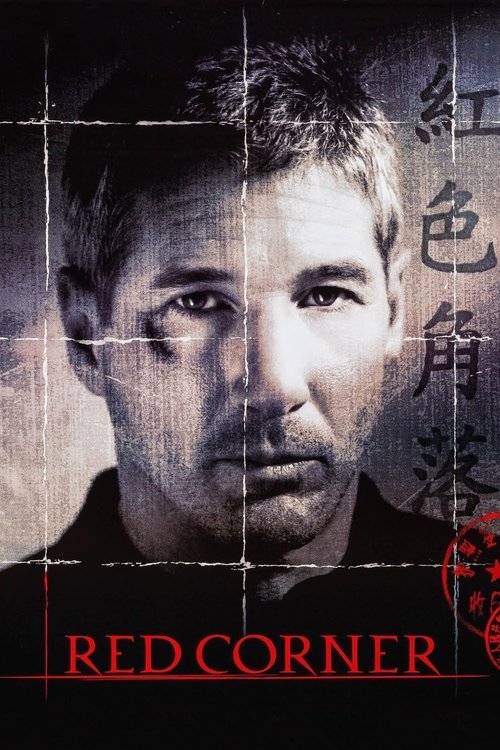
Red Corner
An American attorney on business in China, ends up wrongfully on trial for murder and his only key to innocence is a female defense lawyer from the country.
The film financial setback against its respectable budget of $48.0M, earning $22.4M globally (-53% loss). While initial box office returns were modest, the film has gained appreciation for its unique voice within the crime genre.


Plot Structure
Story beats plotted across runtime


Narrative Arc
Emotional journey through the story's key moments
Story Circle
Blueprint 15-beat structure
Arcplot Score Breakdown
Weighted: Precision (70%) + Arc (15%) + Theme (15%)
Red Corner (1997) exhibits carefully calibrated story structure, characteristic of Jon Avnet's storytelling approach. This structural analysis examines how the film's 15-point plot structure maps to proven narrative frameworks across 2 hours and 2 minutes. With an Arcplot score of 7.4, the film balances conventional beats with creative variation.
Characters
Cast & narrative archetypes

Jack Moore
Shen Yuelin
Ambassador
General Xu
Lin Dan
Main Cast & Characters
Jack Moore
Played by Richard Gere
American entertainment lawyer wrongfully accused of murder in Beijing, fighting for his life in a corrupt legal system.
Shen Yuelin
Played by Bai Ling
Dedicated Chinese defense attorney assigned to defend Jack, risking her career to seek justice.
Ambassador
Played by James Hong
U.S. Ambassador to China who provides limited support to Jack while navigating diplomatic constraints.
General Xu
Played by Jessey Meng
Powerful military general and political figure orchestrating the conspiracy against Jack.
Lin Dan
Played by Tzi Ma
Prosecution attorney determined to convict Jack as part of the political scheme.
Structural Analysis
The Status Quo at 1 minutes (1% through the runtime) establishes Jack Moore, confident American attorney, arrives in Beijing for a lucrative satellite TV deal. He's a successful dealmaker in his element, networking at high-level meetings.. The analysis reveals that this early placement immediately immerses viewers in the story world.
The inciting incident occurs at 14 minutes when Jack wakes up in a hotel room covered in blood next to the dead body of the model he was with. He has no memory of what happened. He's immediately arrested by Chinese authorities.. At 12% through the film, this Disruption aligns precisely with traditional story structure. This beat shifts the emotional landscape, launching the protagonist into the central conflict.
The First Threshold at 30 minutes marks the transition into Act II, occurring at 24% of the runtime. This demonstrates the protagonist's commitment to Jack refuses to confess and chooses to fight the charges in Chinese court, despite knowing the conviction rate is 99.7%. He commits to playing by their rules to prove his innocence., moving from reaction to action.
At 62 minutes, the Midpoint arrives at 50% of the runtime—precisely centered, creating perfect narrative symmetry. Notably, this crucial beat During the trial, Jack presents evidence suggesting a frame-up, but the judges reject it and the prosecution presents devastating "new" evidence. False defeat: what seemed like a path to justice is revealed to be rigged from the start., fundamentally raising what's at risk. The emotional intensity shifts, dividing the narrative into clear before-and-after phases.
The Collapse moment at 90 minutes (74% through) represents the emotional nadir. Here, Jack is found guilty and sentenced to death. Shen is disbarred and arrested for helping him. All hope seems lost; the innocent will be executed and those who helped him destroyed. Death looms literally., shows the protagonist at their lowest point. This beat's placement in the final quarter sets up the climactic reversal.
The Second Threshold at 97 minutes initiates the final act resolution at 80% of the runtime. Jack and Shen obtain crucial evidence proving the conspiracy goes to the highest levels. They realize the murder was political and they must expose it publicly to survive. Synthesis of evidence and understanding of the system., demonstrating the transformation achieved throughout the journey.
Emotional Journey
Red Corner's emotional architecture traces a deliberate progression across 15 carefully calibrated beats.
Narrative Framework
This structural analysis employs a 15-point narrative structure framework that maps key story moments. By mapping Red Corner against these established plot points, we can identify how Jon Avnet utilizes or subverts traditional narrative conventions. The plot point approach reveals not only adherence to structural principles but also creative choices that distinguish Red Corner within the crime genre.
Jon Avnet's Structural Approach
Among the 5 Jon Avnet films analyzed on Arcplot, the average structural score is 7.0, reflecting strong command of classical structure. Red Corner represents one of the director's most structurally precise works. For comparative analysis, explore the complete Jon Avnet filmography.
Comparative Analysis
Additional crime films include The Bad Guys, Rustom and The Whole Ten Yards. For more Jon Avnet analyses, see Righteous Kill, Fried Green Tomatoes and 88 Minutes.
Plot Points by Act
Act I
SetupStatus Quo
Jack Moore, confident American attorney, arrives in Beijing for a lucrative satellite TV deal. He's a successful dealmaker in his element, networking at high-level meetings.
Theme
Discussion about Chinese justice system and the differences between American and Chinese law. "In China, the truth is whatever the state says it is." Theme: Justice vs. State Power.
Worldbuilding
Establishing Jack's world: his business dealings in Beijing, attraction to a Chinese model, the cultural differences, and his naivety about the political realities of China. Shows the glittering surface of international business.
Disruption
Jack wakes up in a hotel room covered in blood next to the dead body of the model he was with. He has no memory of what happened. He's immediately arrested by Chinese authorities.
Resistance
Jack resists the reality of his situation, expecting American legal protections and embassy help. He meets his defense attorney Shen Yuelin, who explains the Chinese system where he's presumed guilty. He debates fighting vs. accepting a confession.
Act II
ConfrontationFirst Threshold
Jack refuses to confess and chooses to fight the charges in Chinese court, despite knowing the conviction rate is 99.7%. He commits to playing by their rules to prove his innocence.
Mirror World
Shen Yuelin begins to believe in Jack's innocence and commits to truly defending him, not just going through the motions. Their attorney-client relationship deepens into partnership and mutual respect.
Premise
Jack and Shen investigate the case together, uncovering inconsistencies in the evidence. They navigate the corrupt system, experience small victories in gathering evidence, and Jack learns to work within Chinese cultural and legal constraints.
Midpoint
During the trial, Jack presents evidence suggesting a frame-up, but the judges reject it and the prosecution presents devastating "new" evidence. False defeat: what seemed like a path to justice is revealed to be rigged from the start.
Opposition
The state apparatus closes in. Shen is threatened and pressured to abandon the case. Evidence disappears. Witnesses recant. Jack faces the reality that the system will crush him regardless of truth. The political conspiracy becomes clearer.
Collapse
Jack is found guilty and sentenced to death. Shen is disbarred and arrested for helping him. All hope seems lost; the innocent will be executed and those who helped him destroyed. Death looms literally.
Crisis
In his cell awaiting execution, Jack processes his fate. Shen, despite her own danger, refuses to give up. They share their darkest moment but find resolve to expose the truth even if they can't save themselves.
Act III
ResolutionSecond Threshold
Jack and Shen obtain crucial evidence proving the conspiracy goes to the highest levels. They realize the murder was political and they must expose it publicly to survive. Synthesis of evidence and understanding of the system.
Synthesis
Final confrontation: Jack and Shen execute a desperate plan to expose the conspiracy and escape. Courtroom revelation, chase sequence, and climactic showdown with the true conspirators. Justice through action rather than the system.
Transformation
Jack, having survived and exposed the corruption, departs China forever changed. No longer the naive businessman, he understands the cost of justice and the courage required to fight oppression. Shen's sacrifice is honored.