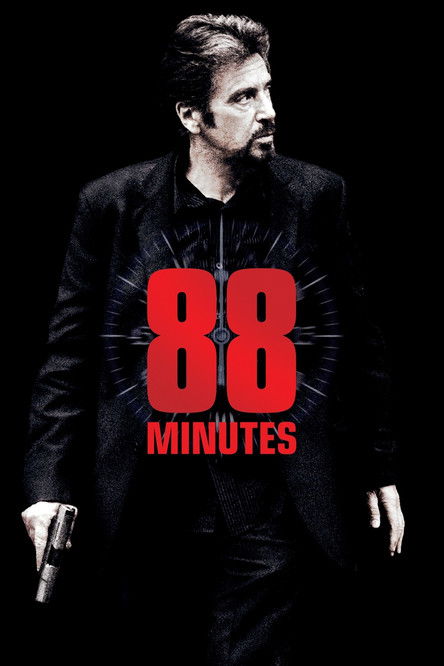
88 Minutes
Famed forensic psychiatrist Dr. Jack Gramm enjoys a reputation as one of the most sought-after profilers around. His expert testimony has resulted in the conviction of many criminals, including serial killer Jon Forster. On the eve of Forster's execution, one of Gramm's students is murdered in a vicious copycat crime, and Gramm himself receives an ominous message informing him that he has less than 90 minutes to live.
Working with a moderate budget of $30.0M, the film achieved a respectable showing with $32.6M in global revenue (+9% profit margin).


Plot Structure
Story beats plotted across runtime


Narrative Arc
Emotional journey through the story's key moments
Story Circle
Blueprint 15-beat structure
Arcplot Score Breakdown
Weighted: Precision (70%) + Arc (15%) + Theme (15%)
88 Minutes (2007) showcases strategically placed dramatic framework, characteristic of Jon Avnet's storytelling approach. This structural analysis examines how the film's 15-point plot structure maps to proven narrative frameworks across 1 hour and 48 minutes. With an Arcplot score of 7.6, the film showcases strong structural fundamentals.
Characters
Cast & narrative archetypes

Dr. Jack Gramm
Kim Cummings
Shelly Barnes
Jon Forster
Sara Pollard
FBI Agent Frank Parks
Lauren Douglas
Main Cast & Characters
Dr. Jack Gramm
Played by Al Pacino
A forensic psychiatrist who receives a death threat saying he has 88 minutes to live
Kim Cummings
Played by Alicia Witt
Jack's teaching assistant and potential suspect in the threatening calls
Shelly Barnes
Played by Amy Brenneman
Jack's secretary and close confidante who helps him investigate
Jon Forster
Played by Neal McDonough
A serial killer on death row whose case Jack testified in
Sara Pollard
Played by Leelee Sobieski
One of Jack's students who becomes involved in the mystery
FBI Agent Frank Parks
Played by William Forsythe
FBI agent investigating the threats against Jack
Lauren Douglas
Played by Deborah Kara Unger
Jack's former lover and colleague who may be involved
Structural Analysis
The Status Quo at 1 minutes (1% through the runtime) establishes Dr. Jack Gramm, renowned forensic psychiatrist, teaches at university and testifies in court cases. He's respected, confident, living his orderly professional life.. The analysis reveals that this early placement immediately immerses viewers in the story world.
The inciting incident occurs at 12 minutes when Jack receives an anonymous phone call telling him he has 88 minutes to live. A new murder occurs matching Forster's signature style, throwing Jack's testimony into question.. At 12% through the film, this Disruption aligns precisely with traditional story structure. This beat shifts the emotional landscape, launching the protagonist into the central conflict.
The First Threshold at 27 minutes marks the transition into Act II, occurring at 25% of the runtime. This illustrates the protagonist's commitment to Another murder victim is discovered and Jack realizes the threat is genuine. He actively chooses to investigate and find the killer rather than hide, entering a deadly cat-and-mouse game., moving from reaction to action.
At 54 minutes, the Midpoint arrives at 50% of the runtime—precisely centered, creating perfect narrative symmetry. Significantly, this crucial beat False defeat: Jack discovers someone close to him is involved in the conspiracy. His safe world is completely compromised. Time is half gone and he's no closer to the truth. Stakes raise dramatically., fundamentally raising what's at risk. The emotional intensity shifts, dividing the narrative into clear before-and-after phases.
The Collapse moment at 81 minutes (75% through) represents the emotional nadir. Here, Jack is cornered and nearly killed. Someone he trusted betrays him. His time is almost up and he appears to have failed - both to save himself and to prevent Forster's execution of an innocent man if he was wrong., demonstrates the protagonist at their lowest point. This beat's placement in the final quarter sets up the climactic reversal.
The Second Threshold at 86 minutes initiates the final act resolution at 80% of the runtime. Jack synthesizes the clues and realizes the true identity of his tormentor. He understands the personal motivation behind the elaborate scheme. Armed with this knowledge, he makes his final move., demonstrating the transformation achieved throughout the journey.
Emotional Journey
88 Minutes's emotional architecture traces a deliberate progression across 15 carefully calibrated beats.
Narrative Framework
This structural analysis employs systematic plot point analysis that identifies crucial turning points. By mapping 88 Minutes against these established plot points, we can identify how Jon Avnet utilizes or subverts traditional narrative conventions. The plot point approach reveals not only adherence to structural principles but also creative choices that distinguish 88 Minutes within the thriller genre.
Jon Avnet's Structural Approach
Among the 5 Jon Avnet films analyzed on Arcplot, the average structural score is 7.0, reflecting strong command of classical structure. 88 Minutes represents one of the director's most structurally precise works. For comparative analysis, explore the complete Jon Avnet filmography.
Comparative Analysis
Additional thriller films include The Warriors, Thunderball and Rustom. For more Jon Avnet analyses, see Righteous Kill, Fried Green Tomatoes and Red Corner.
Plot Points by Act
Act I
SetupStatus Quo
Dr. Jack Gramm, renowned forensic psychiatrist, teaches at university and testifies in court cases. He's respected, confident, living his orderly professional life.
Theme
Discussion of time, mortality, and how we spend our final moments - "What would you do if you had 88 minutes to live?" The theme of racing against time and confronting death.
Worldbuilding
Establishing Jack's world: his university position, his relationships with students and colleagues, his history with serial killer Jon Forster (on death row due to Jack's testimony), his womanizing lifestyle, and his professional reputation.
Disruption
Jack receives an anonymous phone call telling him he has 88 minutes to live. A new murder occurs matching Forster's signature style, throwing Jack's testimony into question.
Resistance
Jack debates whether the threat is real, contacts FBI agent Sherry, investigates who might want him dead. He's resistant to leaving his routine, tries to maintain control while the clock ticks down.
Act II
ConfrontationFirst Threshold
Another murder victim is discovered and Jack realizes the threat is genuine. He actively chooses to investigate and find the killer rather than hide, entering a deadly cat-and-mouse game.
Mirror World
Kim Cummings, his teaching assistant, becomes increasingly important. Their relationship represents trust and vulnerability - themes Jack must learn as he questions everyone around him.
Premise
The thriller premise delivers: Jack races through Seattle pursuing leads, suspects emerge (students, colleagues, Forster's associates), tension builds as the clock counts down, multiple attempts on his life occur.
Midpoint
False defeat: Jack discovers someone close to him is involved in the conspiracy. His safe world is completely compromised. Time is half gone and he's no closer to the truth. Stakes raise dramatically.
Opposition
Paranoia intensifies as Jack can trust no one. Multiple suspects are revealed as complicit. The clock ticks down relentlessly. Jack's professional judgment and past decisions are questioned. Physical threats escalate.
Collapse
Jack is cornered and nearly killed. Someone he trusted betrays him. His time is almost up and he appears to have failed - both to save himself and to prevent Forster's execution of an innocent man if he was wrong.
Crisis
Jack's darkest moment as minutes remain. He processes the betrayal and confronts his own arrogance and assumptions. He must let go of control and see the truth he's been missing.
Act III
ResolutionSecond Threshold
Jack synthesizes the clues and realizes the true identity of his tormentor. He understands the personal motivation behind the elaborate scheme. Armed with this knowledge, he makes his final move.
Synthesis
Final confrontation with the real killer. Jack uses both his psychological expertise and newfound humility to survive. The conspiracy unravels, the true mastermind is revealed and stopped as the clock reaches zero.
Transformation
Jack survives but is changed - more humble, aware of his vulnerability and the value of trust. The confident, untouchable psychiatrist has learned mortality and connection matter more than control.