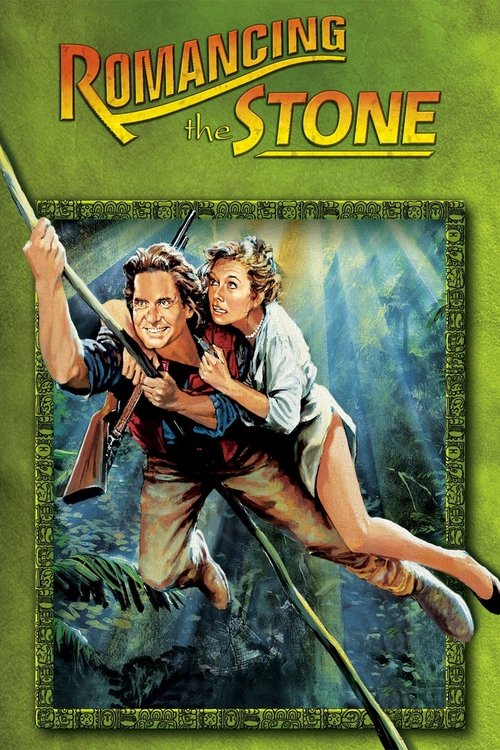
Romancing the Stone
Though she can spin wild tales of passionate romance, novelist Joan Wilder has no life of her own. Then one day adventure comes her way in the form of a mysterious package. It turns out that the parcel is the ransom she'll need to free her abducted sister, so Joan flies to South America to hand it over. But she gets on the wrong bus and winds up hopelessly stranded in the jungle.
Despite its modest budget of $10.0M, Romancing the Stone became a box office phenomenon, earning $86.6M worldwide—a remarkable 766% return. The film's unique voice attracted moviegoers, confirming that strong storytelling can transcend budget limitations.
Nominated for 1 Oscar. 9 wins & 7 nominations


Plot Structure
Story beats plotted across runtime


Narrative Arc
Emotional journey through the story's key moments
Story Circle
Blueprint 15-beat structure
Arcplot Score Breakdown
Weighted: Precision (70%) + Arc (15%) + Theme (15%)
Romancing the Stone (1984) demonstrates meticulously timed plot construction, characteristic of Robert Zemeckis's storytelling approach. This structural analysis examines how the film's 15-point plot structure maps to proven narrative frameworks across 1 hour and 46 minutes. With an Arcplot score of 6.8, the film balances conventional beats with creative variation.
Characters
Cast & narrative archetypes

Joan Wilder
Jack Colton
Ralph
Zolo
Elaine Wilder
Main Cast & Characters
Joan Wilder
Played by Kathleen Turner
A lonely romance novelist thrust into a real-life adventure in Colombia while trying to rescue her sister.
Jack Colton
Played by Michael Douglas
A rugged, opportunistic American bird smuggler who becomes Joan's reluctant guide through the Colombian jungle.
Ralph
Played by Danny DeVito
A charming but treacherous antiquities smuggler who betrays Joan to obtain the treasure map.
Zolo
Played by Manuel Ojeda
A corrupt Colombian military officer and ruthless antagonist pursuing the treasure and willing to kill for it.
Elaine Wilder
Played by Mary Ellen Trainor
Joan's sister who is kidnapped in Colombia and held for ransom in exchange for a treasure map.
Structural Analysis
The Status Quo at 1 minutes (1% through the runtime) establishes Joan finishes typing her romance novel, crying at her own happy ending. She lives vicariously through her fictional characters' adventures while her own life is isolated and mundane in her New York apartment.. Of particular interest, this early placement immediately immerses viewers in the story world.
The inciting incident occurs at 12 minutes when Joan receives a frantic phone call from her sister Elaine in Colombia. Elaine has been kidnapped, her husband Eduardo murdered. The kidnappers demand Joan bring a treasure map (sent by Eduardo before his death) to Colombia in exchange for Elaine's life.. At 12% through the film, this Disruption aligns precisely with traditional story structure. This beat shifts the emotional landscape, launching the protagonist into the central conflict.
The First Threshold at 26 minutes marks the transition into Act II, occurring at 24% of the runtime. This demonstrates the protagonist's commitment to Joan boards the plane to Colombia, actively choosing to leave her safe world behind and enter the dangerous unknown to save her sister. This choice launches her into the adventure world she's only written about., moving from reaction to action.
At 52 minutes, the Midpoint arrives at 50% of the runtime—precisely centered, creating perfect narrative symmetry. Notably, this crucial beat Joan and Jack find the hidden treasure cave and discover El Corazon, an enormous emerald. False victory - they have the treasure that could save Elaine and make them rich, but this raises the stakes as now everyone will be hunting them even more intensely., fundamentally raising what's at risk. The emotional intensity shifts, dividing the narrative into clear before-and-after phases.
The Collapse moment at 79 minutes (75% through) represents the emotional nadir. Here, Joan is captured by Zolo and Ralph at the ransom exchange. Jack appears to abandon her, sailing away with the emerald. Joan feels utterly betrayed and alone - her sister is still captive, Jack seemingly chose money over her, and all hope seems lost. The romance appears dead., illustrates the protagonist at their lowest point. This beat's placement in the final quarter sets up the climactic reversal.
The Second Threshold at 84 minutes initiates the final act resolution at 80% of the runtime. Jack crashes through the ship's sail on a rope, revealing he came back for Joan, not the emerald. Joan realizes real love is about trust and action. She synthesizes her old writing imagination with her new courage - she's ready to fight for her life and love., demonstrating the transformation achieved throughout the journey.
Emotional Journey
Romancing the Stone's emotional architecture traces a deliberate progression across 15 carefully calibrated beats.
Narrative Framework
This structural analysis employs proven narrative structure principles that track dramatic progression. By mapping Romancing the Stone against these established plot points, we can identify how Robert Zemeckis utilizes or subverts traditional narrative conventions. The plot point approach reveals not only adherence to structural principles but also creative choices that distinguish Romancing the Stone within the romance genre.
Robert Zemeckis's Structural Approach
Among the 20 Robert Zemeckis films analyzed on Arcplot, the average structural score is 6.9, demonstrating varied approaches to story architecture. Romancing the Stone takes a more unconventional approach compared to the director's typical style. For comparative analysis, explore the complete Robert Zemeckis filmography.
Comparative Analysis
Additional romance films include South Pacific, Dirty Dancing: Havana Nights and The Evening Star. For more Robert Zemeckis analyses, see Who Framed Roger Rabbit, Beowulf and Welcome to Marwen.
Plot Points by Act
Act I
SetupStatus Quo
Joan finishes typing her romance novel, crying at her own happy ending. She lives vicariously through her fictional characters' adventures while her own life is isolated and mundane in her New York apartment.
Theme
Joan's publisher Gloria tells her "You're a world-class hopeless romantic" and encourages her to get out and live life, not just write about it - foreshadowing Joan's need to become the adventurer she writes about.
Worldbuilding
Joan is established as a lonely romance novelist in New York City. We see her safe, solitary world - her cat Romeo, her apartment, her publisher. She writes passionate adventures but has never lived one herself.
Disruption
Joan receives a frantic phone call from her sister Elaine in Colombia. Elaine has been kidnapped, her husband Eduardo murdered. The kidnappers demand Joan bring a treasure map (sent by Eduardo before his death) to Colombia in exchange for Elaine's life.
Resistance
Joan debates whether she can handle going to Colombia. She's terrified and out of her element. She receives the mysterious package with the map, fends off her creepy neighbor, and prepares for the journey despite her fears and complete lack of real-world adventure experience.
Act II
ConfrontationFirst Threshold
Joan boards the plane to Colombia, actively choosing to leave her safe world behind and enter the dangerous unknown to save her sister. This choice launches her into the adventure world she's only written about.
Mirror World
Joan meets Jack Colton after being chased through the Colombian jungle. He's a rugged American bird exporter - the living embodiment of the romantic heroes she writes about. Their relationship will teach her to become brave and trust in real love, not just fictional romance.
Premise
The "fun and games" of the adventure Joan always wrote about - trudging through the jungle, being chased by Zolo, getting caught in a raging river, experiencing the mudslide, and gradually falling for Jack while searching for the treasure to save her sister. Joan begins transforming from timid writer to active adventurer.
Midpoint
Joan and Jack find the hidden treasure cave and discover El Corazon, an enormous emerald. False victory - they have the treasure that could save Elaine and make them rich, but this raises the stakes as now everyone will be hunting them even more intensely.
Opposition
The bad guys close in from all sides. Zolo, Ralph, and the Federales all pursue Joan and Jack. Their relationship deepens but complications arise - Jack wants the stone, Joan must get to Cartagena for the ransom exchange. Trust issues surface. The romance and adventure both become more difficult.
Collapse
Joan is captured by Zolo and Ralph at the ransom exchange. Jack appears to abandon her, sailing away with the emerald. Joan feels utterly betrayed and alone - her sister is still captive, Jack seemingly chose money over her, and all hope seems lost. The romance appears dead.
Crisis
Joan is taken aboard Zolo's ship with Elaine, facing their dark night. She must process that Jack is gone, she's powerless, and she may die. But she's no longer the timid woman from New York - the adventure has changed her.
Act III
ResolutionSecond Threshold
Jack crashes through the ship's sail on a rope, revealing he came back for Joan, not the emerald. Joan realizes real love is about trust and action. She synthesizes her old writing imagination with her new courage - she's ready to fight for her life and love.
Synthesis
The finale action sequence - Joan and Jack fight together against Zolo and Ralph. Joan actively participates in the combat, using both wit and bravery. Zolo is defeated (eaten by crocodiles), Ralph is arrested, Elaine is saved. Joan and Jack escape together, both transformed by love and adventure.
Transformation
Back in New York, Joan sits in her apartment writing - but now it's different. Jack arrives in a yacht named "Angelina" (her novel heroine), having bought it with a smaller emerald he kept. Joan runs to embrace him, choosing real adventure over safe fantasy. She's become the woman she always wrote about.