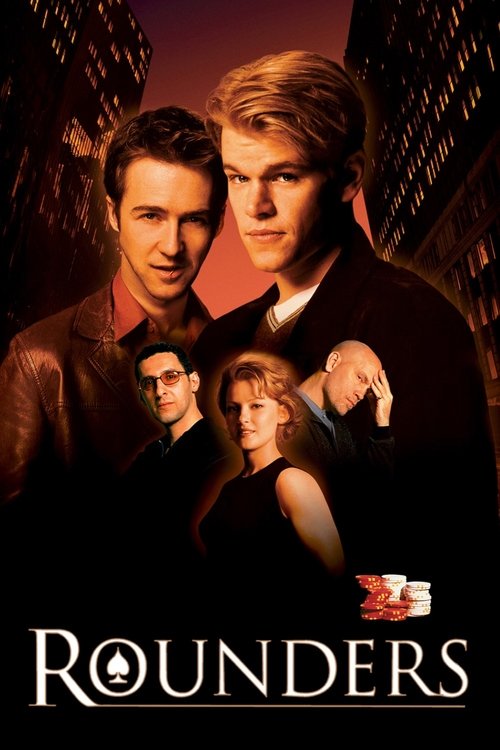
Rounders
Poker addict Mike McDermott knows the game inside out, but loses his money one night in a game to Russian-American gangster Teddy KGB. Promising his partner Jo he'll give up, he meets up with best friend Lester 'Worm' Murphy, just out of prison and owing lots of money to the wrong kind of people. McDermott becomes his co-guarantor and now there's only one way to raise the money, the pair have to get back into the game.
Working with a small-scale budget of $12.0M, the film achieved a modest success with $22.9M in global revenue (+91% profit margin).
1 win & 1 nomination







Plot Structure
Story beats plotted across runtime


Narrative Arc
Emotional journey through the story's key moments
Story Circle
Blueprint 15-beat structure
Arcplot Score Breakdown
Weighted: Precision (70%) + Arc (15%) + Theme (15%)
Rounders (1998) reveals meticulously timed plot construction, characteristic of John Dahl's storytelling approach. This structural analysis examines how the film's 15-point plot structure maps to proven narrative frameworks across 2 hours and 1 minutes. With an Arcplot score of 6.6, the film balances conventional beats with creative variation.
Characters
Cast & narrative archetypes

Mike McDermott
Lester 'Worm' Murphy
Teddy KGB
Jo
Joey Knish
Professor Abe Petrovsky
Main Cast & Characters
Mike McDermott
Played by Matt Damon
A reformed poker player and law student who is drawn back into the high-stakes poker world to help his friend pay off a dangerous debt.
Lester 'Worm' Murphy
Played by Edward Norton
Mike's reckless childhood friend who gets released from prison with a massive debt to the Russian mob.
Teddy KGB
Played by John Malkovich
A dangerous Russian mobster and poker club owner who is Mike's ultimate opponent at the card table.
Jo
Played by Gretchen Mol
Mike's girlfriend and fellow law student who wants him to leave his gambling life behind.
Joey Knish
Played by John Turturro
A veteran poker grinder who plays it safe and serves as Mike's mentor and voice of reason.
Professor Abe Petrovsky
Played by Martin Landau
Mike's law professor who sees his potential and tries to guide him toward a legitimate legal career.
Structural Analysis
The Status Quo at 1 minutes (1% through the runtime) establishes Mike McDermott narrates his love for poker as we see him at a high-stakes game against Teddy KGB. He's a skilled law student and poker player living in his element, confident in his abilities at the table.. Structural examination shows that this early placement immediately immerses viewers in the story world.
The inciting incident occurs at 15 minutes when Worm is released from prison and immediately seeks out Mike. His return disrupts Mike's carefully constructed straight life, bringing the temptation of poker back into focus and threatening his relationship with Jo and his legal career.. At 12% through the film, this Disruption aligns precisely with traditional story structure. This beat shifts the emotional landscape, launching the protagonist into the central conflict.
The First Threshold at 30 minutes marks the transition into Act II, occurring at 25% of the runtime. This illustrates the protagonist's commitment to Mike makes the active choice to help Worm pay off his $15,000 debt to Grama, committing to a poker grind. This decision puts him fully back into the poker world and sets him on a collision course with his relationship, his law career, and eventually Teddy KGB., moving from reaction to action.
At 61 minutes, the Midpoint arrives at 50% of the runtime—precisely centered, creating perfect narrative symmetry. Structural examination shows that this crucial beat Mike and Worm get caught cheating at a Chesterfield game and are severely beaten. The false victory of their earnings is destroyed. Mike discovers Worm has been cheating all along, and the debt has grown to $25,000 owed to Grama, now due to Teddy KGB in five days. The stakes raise dramatically., fundamentally raising what's at risk. The emotional intensity shifts, dividing the narrative into clear before-and-after phases.
The Collapse moment at 91 minutes (75% through) represents the emotional nadir. Here, Mike sits alone in his empty apartment after Jo has left, Worm has abandoned him, and his law career is destroyed. He's broke, the debt deadline looms, and Teddy KGB's enforcers are hunting him. This is his darkest moment—the death of his dream of having both worlds., reveals the protagonist at their lowest point. This beat's placement in the final quarter sets up the climactic reversal.
The Second Threshold at 97 minutes initiates the final act resolution at 80% of the runtime. Mike has his realization: "I'm not going to hide anymore. This is who I am." He accepts his true identity as a poker player and decides to face Teddy KGB head-on, using his skill and knowledge. He combines everything he's learned—about himself, about reading opponents, about commitment., demonstrating the transformation achieved throughout the journey.
Emotional Journey
Rounders's emotional architecture traces a deliberate progression across 15 carefully calibrated beats.
Narrative Framework
This structural analysis employs a 15-point narrative structure framework that maps key story moments. By mapping Rounders against these established plot points, we can identify how John Dahl utilizes or subverts traditional narrative conventions. The plot point approach reveals not only adherence to structural principles but also creative choices that distinguish Rounders within the drama genre.
John Dahl's Structural Approach
Among the 4 John Dahl films analyzed on Arcplot, the average structural score is 6.8, demonstrating varied approaches to story architecture. Rounders takes a more unconventional approach compared to the director's typical style. For comparative analysis, explore the complete John Dahl filmography.
Comparative Analysis
Additional drama films include After Thomas, South Pacific and Dirty Dancing: Havana Nights. For more John Dahl analyses, see The Last Seduction, Joy Ride and The Great Raid.
Plot Points by Act
Act I
SetupStatus Quo
Mike McDermott narrates his love for poker as we see him at a high-stakes game against Teddy KGB. He's a skilled law student and poker player living in his element, confident in his abilities at the table.
Theme
Professor Petrovsky tells Mike's class: "The key to No Limit poker is to put a man to a decision for all his chips." This becomes the central theme about risk, commitment, and going all-in on your true path in life.
Worldbuilding
Mike loses his entire bankroll to Teddy KGB and quits poker. Nine months later, he's grinding through law school, working a delivery job, in a stable relationship with Jo. We see his world of underground poker clubs, his friendship with Worm still in prison, and his mentor Judge Petrovsky.
Disruption
Worm is released from prison and immediately seeks out Mike. His return disrupts Mike's carefully constructed straight life, bringing the temptation of poker back into focus and threatening his relationship with Jo and his legal career.
Resistance
Mike resists returning to poker, trying to help Worm go straight while maintaining his own reformed life. But he's drawn into small games, experiencing the thrill again. Jo warns him about Worm. Mike debates internally whether he can have both worlds, but the pull of poker intensifies.
Act II
ConfrontationFirst Threshold
Mike makes the active choice to help Worm pay off his $15,000 debt to Grama, committing to a poker grind. This decision puts him fully back into the poker world and sets him on a collision course with his relationship, his law career, and eventually Teddy KGB.
Mirror World
Mike reconnins with Joey Knish, the grinder who plays safe, steady poker and never risks his bankroll. Knish represents the alternative path—staying in the game but never truly going all-in, the thematic counterpoint to Mike's need to embrace risk.
Premise
Mike and Worm grind through New York's poker underground, making money and experiencing the thrill of the game. This is the "promise of the premise"—watching skilled players navigate high-stakes games, read opponents, and live the poker life the audience came to see.
Midpoint
Mike and Worm get caught cheating at a Chesterfield game and are severely beaten. The false victory of their earnings is destroyed. Mike discovers Worm has been cheating all along, and the debt has grown to $25,000 owed to Grama, now due to Teddy KGB in five days. The stakes raise dramatically.
Opposition
Everything falls apart. Jo leaves Mike after he chooses poker over their relationship. He loses his position with Judge Petrovsky. Worm bails, leaving Mike with the full debt. Mike grinds desperately but can't make enough money. His flaws—loyalty to Worm, addiction to poker—catch up with him as he faces losing everything.
Collapse
Mike sits alone in his empty apartment after Jo has left, Worm has abandoned him, and his law career is destroyed. He's broke, the debt deadline looms, and Teddy KGB's enforcers are hunting him. This is his darkest moment—the death of his dream of having both worlds.
Crisis
Mike contemplates his situation in the darkness. He visits Knish, who offers him the money but challenges him to be honest about who he really is. Mike processes the loss of his old life and faces the truth about himself and his path.
Act III
ResolutionSecond Threshold
Mike has his realization: "I'm not going to hide anymore. This is who I am." He accepts his true identity as a poker player and decides to face Teddy KGB head-on, using his skill and knowledge. He combines everything he's learned—about himself, about reading opponents, about commitment.
Synthesis
Mike plays Teddy KGB in an epic heads-up match. He pays off the debt, then plays double-or-nothing for his future. Using his ability to read Teddy's tell and his newfound self-acceptance, Mike wins enough to stake his move to Vegas and become a professional poker player.
Transformation
Mike narrates his plan to play in the World Series of Poker as he drives away from New York toward Las Vegas. Unlike the opening where he lost everything by overconfidence, he now goes all-in on his true self with wisdom, skill, and self-knowledge. He has transformed into who he was meant to be.