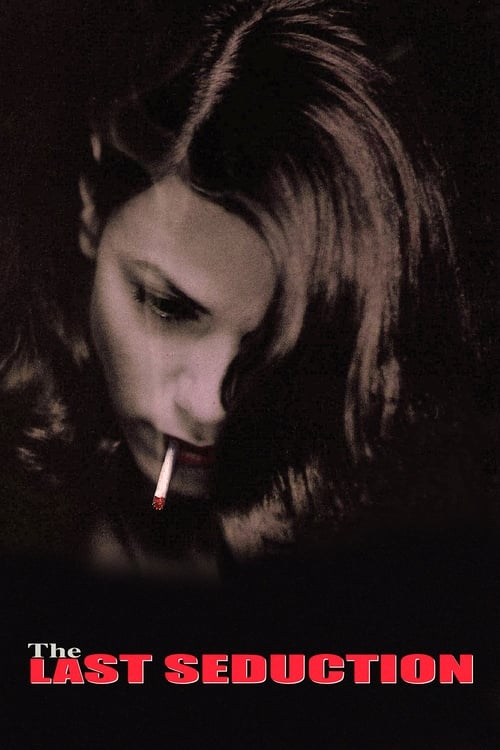
The Last Seduction
A devious femme fatale steals her husband’s drug money and hides out in a small town where she meets the perfect dupe for her next scheme.
Despite its tight budget of $2.5M, The Last Seduction became a solid performer, earning $5.8M worldwide—a 134% return.
Nominated for 1 BAFTA Award9 wins & 10 nominations


Plot Structure
Story beats plotted across runtime


Narrative Arc
Emotional journey through the story's key moments
Story Circle
Blueprint 15-beat structure
Arcplot Score Breakdown
Weighted: Precision (70%) + Arc (15%) + Theme (15%)
The Last Seduction (1994) demonstrates meticulously timed story structure, characteristic of John Dahl's storytelling approach. This structural analysis examines how the film's 15-point plot structure maps to proven narrative frameworks across 1 hour and 50 minutes. With an Arcplot score of 6.5, the film balances conventional beats with creative variation.
Structural Analysis
The Status Quo at 1 minutes (1% through the runtime) establishes Bridget Gregory commands a room of telemarketing scammers in New York, establishing her as a cold, calculating woman who manipulates people for profit. Her marriage to Clay is revealed as transactional.. Significantly, this early placement immediately immerses viewers in the story world.
The inciting incident occurs at 13 minutes when Bridget steals the $700,000 and flees New York while Clay is in the shower, abandoning her marriage and old life. She drives into the night with the cash, seizing her opportunity for freedom.. At 12% through the film, this Disruption aligns precisely with traditional story structure. This beat shifts the emotional landscape, launching the protagonist into the central conflict.
The First Threshold at 28 minutes marks the transition into Act II, occurring at 25% of the runtime. This demonstrates the protagonist's commitment to Bridget decides to stay in Beston and takes a job at the local insurance company, committing to her new identity as Wendy Kroy. She begins her seduction of Mike in earnest, choosing manipulation over escape., moving from reaction to action.
At 55 minutes, the Midpoint arrives at 50% of the runtime—precisely centered, creating perfect narrative symmetry. Significantly, this crucial beat Bridget discovers Mike's dark secret: he was briefly married to a person who turned out to be transgender, and he's haunted by the scandal. She realizes she can use this vulnerability to manipulate him into committing murder for her—a false victory that reveals her true depths of manipulation., fundamentally raising what's at risk. The emotional intensity shifts, dividing the narrative into clear before-and-after phases.
The Collapse moment at 83 minutes (75% through) represents the emotional nadir. Here, Clay confronts Bridget directly, and Mike witnesses their interaction, learning that "Wendy" is actually married. Her carefully constructed lies begin unraveling as both men now pose threats to her scheme and her freedom., demonstrates the protagonist at their lowest point. This beat's placement in the final quarter sets up the climactic reversal.
The Second Threshold at 88 minutes initiates the final act resolution at 80% of the runtime. Bridget commits fully to her darkest scheme: she will manipulate Mike into killing Clay, framing it as self-defense and eliminating both threats simultaneously. She synthesizes seduction and murder into one final masterstroke., demonstrating the transformation achieved throughout the journey.
Emotional Journey
The Last Seduction's emotional architecture traces a deliberate progression across 15 carefully calibrated beats.
Narrative Framework
This structural analysis employs a 15-point narrative structure framework that maps key story moments. By mapping The Last Seduction against these established plot points, we can identify how John Dahl utilizes or subverts traditional narrative conventions. The plot point approach reveals not only adherence to structural principles but also creative choices that distinguish The Last Seduction within the thriller genre.
John Dahl's Structural Approach
Among the 4 John Dahl films analyzed on Arcplot, the average structural score is 6.8, demonstrating varied approaches to story architecture. The Last Seduction takes a more unconventional approach compared to the director's typical style. For comparative analysis, explore the complete John Dahl filmography.
Comparative Analysis
Additional thriller films include The Warriors, Thunderball and Rustom. For more John Dahl analyses, see Rounders, Joy Ride and The Great Raid.
Plot Points by Act
Act I
SetupStatus Quo
Bridget Gregory commands a room of telemarketing scammers in New York, establishing her as a cold, calculating woman who manipulates people for profit. Her marriage to Clay is revealed as transactional.
Theme
Clay tells Bridget "You're my wife, not my adversary" after the drug deal, unknowingly stating the film's thematic question: in a world of manipulation, can anyone truly be trusted, or is everyone an adversary?
Worldbuilding
We see Bridget and Clay's toxic marriage, Clay's dangerous drug deal that nets $700,000, and the violent world of loan sharks threatening Clay. Bridget is established as smarter and more ruthless than her husband.
Disruption
Bridget steals the $700,000 and flees New York while Clay is in the shower, abandoning her marriage and old life. She drives into the night with the cash, seizing her opportunity for freedom.
Resistance
Bridget stops in the small town of Beston and adopts the alias "Wendy Kroy." She encounters Mike Swale at a bar and tests his usefulness. Meanwhile, Clay hires private detective Harlan to find her.
Act II
ConfrontationFirst Threshold
Bridget decides to stay in Beston and takes a job at the local insurance company, committing to her new identity as Wendy Kroy. She begins her seduction of Mike in earnest, choosing manipulation over escape.
Mirror World
Mike pursues Bridget despite her coldness, offering genuine romantic interest. His small-town sincerity and desire for real connection contrasts sharply with Bridget's calculating nature, representing the love she could have but will exploit.
Premise
Bridget manipulates Mike into a relationship while evading Harlan's investigation. She discovers Mike's secret past and begins formulating a plan to use him. The cat-and-mouse game with Clay escalates as she enjoys her dangerous freedom.
Midpoint
Bridget discovers Mike's dark secret: he was briefly married to a person who turned out to be transgender, and he's haunted by the scandal. She realizes she can use this vulnerability to manipulate him into committing murder for her—a false victory that reveals her true depths of manipulation.
Opposition
Bridget grooms Mike for murder while Clay closes in. Harlan nearly catches her multiple times. Mike grows suspicious but remains under Bridget's spell. Clay arrives in Beston, raising the stakes as Bridget's two worlds threaten to collide.
Collapse
Clay confronts Bridget directly, and Mike witnesses their interaction, learning that "Wendy" is actually married. Her carefully constructed lies begin unraveling as both men now pose threats to her scheme and her freedom.
Crisis
Bridget must now manage both Clay's demands and Mike's wounded feelings. She appears trapped between returning the money to Clay or facing his wrath, while Mike questions everything about their relationship.
Act III
ResolutionSecond Threshold
Bridget commits fully to her darkest scheme: she will manipulate Mike into killing Clay, framing it as self-defense and eliminating both threats simultaneously. She synthesizes seduction and murder into one final masterstroke.
Synthesis
Bridget executes her plan with terrifying precision. She lures Clay to a confrontation, manipulates Mike into killing him while making it appear as rape-defense, then watches as Mike is arrested for murder. She provides testimony that seals his fate.
Transformation
Bridget rides away in a limousine, wealthy and free, having destroyed everyone who trusted her. The final image mirrors the opening—she remains unchanged, a predator who has perfected her craft. Her "transformation" is the complete absence of transformation: she was always this monster.