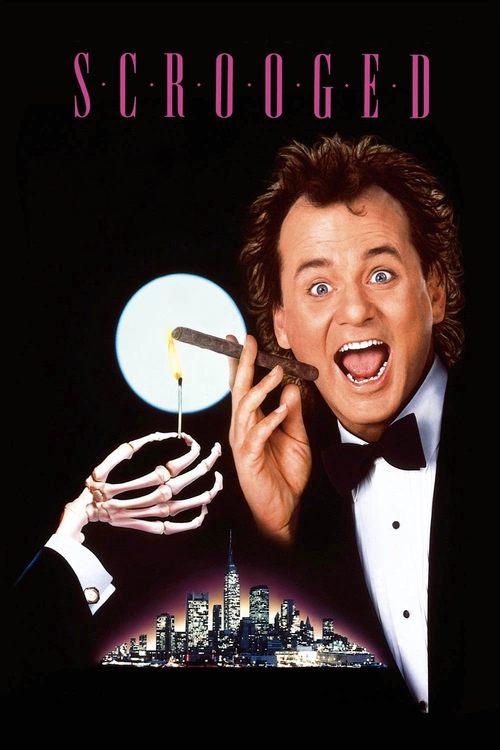
Scrooged
Frank Cross is a wildly successful television executive whose cold ambition and curmudgeonly nature has driven away the love of his life. But after firing a staff member on Christmas Eve, Frank is visited by a series of ghosts who give him a chance to re-evaluate his actions and right the wrongs of his past.
Working with a respectable budget of $32.0M, the film achieved a steady performer with $60.3M in global revenue (+88% profit margin).
Nominated for 1 Oscar. 1 win & 5 nominations


Plot Structure
Story beats plotted across runtime


Narrative Arc
Emotional journey through the story's key moments
Story Circle
Blueprint 15-beat structure
Arcplot Score Breakdown
Weighted: Precision (70%) + Arc (15%) + Theme (15%)
Scrooged (1988) exhibits carefully calibrated narrative architecture, characteristic of Richard Donner's storytelling approach. This structural analysis examines how the film's 15-point plot structure maps to proven narrative frameworks across 1 hour and 41 minutes. With an Arcplot score of 7.5, the film showcases strong structural fundamentals.
Characters
Cast & narrative archetypes

Frank Cross
Claire Phillips
Lew Hayward
Ghost of Christmas Past
Ghost of Christmas Present
Eliot Loudermilk
Preston Rhinelander
Grace Cooley
Main Cast & Characters
Frank Cross
Played by Bill Murray
Cynical, ruthless television executive who undergoes supernatural redemption on Christmas Eve
Claire Phillips
Played by Karen Allen
Frank's kind-hearted ex-girlfriend who works at a homeless shelter and represents the warmth he abandoned
Lew Hayward
Played by John Forsythe
Frank's deceased former boss who returns as a ghost to warn him of his fate
Ghost of Christmas Past
Played by David Johansen
A manic, cigarette-smoking cabbie who forcefully shows Frank his earlier life
Ghost of Christmas Present
Played by Carol Kane
A boisterous, violent fairy who beats Frank while showing him the present
Eliot Loudermilk
Played by Bobcat Goldthwait
Timid, browbeaten executive assistant to Frank who endures constant abuse
Preston Rhinelander
Played by Robert Mitchum
Frank's sleazy, sycophantic boss at the television network
Grace Cooley
Played by Alfre Woodard
Eliot's struggling wife who remains optimistic despite their poverty
Structural Analysis
The Status Quo at 1 minutes (1% through the runtime) establishes Frank Cross terrorizes his network staff while producing a live Christmas Carol broadcast, showing him as a cruel, heartless TV executive who values ratings over people.. The analysis reveals that this early placement immediately immerses viewers in the story world.
The inciting incident occurs at 12 minutes when The ghost of Frank's former mentor Lew Hayward appears in a terrifying sequence, warning Frank that he will be visited by three ghosts and must change his ways or face eternal damnation.. At 12% through the film, this Disruption aligns precisely with traditional story structure. This beat shifts the emotional landscape, launching the protagonist into the central conflict.
The First Threshold at 26 minutes marks the transition into Act II, occurring at 25% of the runtime. This reveals the protagonist's commitment to The Ghost of Christmas Past forcibly takes Frank on a journey through his memories, beginning the supernatural transformation process he can no longer avoid or deny., moving from reaction to action.
At 51 minutes, the Midpoint arrives at 50% of the runtime—precisely centered, creating perfect narrative symmetry. Structural examination shows that this crucial beat The Ghost of Christmas Present reveals the harsh reality of how Frank's cruelty affects those around him: Grace's struggling family with her mute son, Eliot's desperation, and the staff's genuine hatred of him., fundamentally raising what's at risk. The emotional intensity shifts, dividing the narrative into clear before-and-after phases.
The Collapse moment at 74 minutes (74% through) represents the emotional nadir. Here, The Ghost of Christmas Future shows Frank his own death: unmourned, his body cremated and used as an ashtray at a business meeting, utterly forgotten and unloved, followed by seeing himself in a grave., illustrates the protagonist at their lowest point. This beat's placement in the final quarter sets up the climactic reversal.
The Second Threshold at 80 minutes initiates the final act resolution at 79% of the runtime. Frank awakens on Christmas morning transformed, realizing he's been given another chance and immediately resolving to change everything, embracing joy and compassion with manic enthusiasm., demonstrating the transformation achieved throughout the journey.
Emotional Journey
Scrooged's emotional architecture traces a deliberate progression across 15 carefully calibrated beats.
Narrative Framework
This structural analysis employs systematic plot point analysis that identifies crucial turning points. By mapping Scrooged against these established plot points, we can identify how Richard Donner utilizes or subverts traditional narrative conventions. The plot point approach reveals not only adherence to structural principles but also creative choices that distinguish Scrooged within the fantasy genre.
Richard Donner's Structural Approach
Among the 16 Richard Donner films analyzed on Arcplot, the average structural score is 6.9, demonstrating varied approaches to story architecture. Scrooged represents one of the director's most structurally precise works. For comparative analysis, explore the complete Richard Donner filmography.
Comparative Analysis
Additional fantasy films include Thinner, Ella Enchanted and Conan the Barbarian. For more Richard Donner analyses, see Assassins, Superman and Lethal Weapon 2.
Plot Points by Act
Act I
SetupStatus Quo
Frank Cross terrorizes his network staff while producing a live Christmas Carol broadcast, showing him as a cruel, heartless TV executive who values ratings over people.
Theme
Frank's assistant Grace tells him "It's Christmas Eve, you could be nice," hinting at the film's theme about compassion and human connection versus cold business cynicism.
Worldbuilding
Establishment of Frank's ruthless world: firing Eliot on Christmas Eve, rejecting his brother's invitation, refusing charity, and showing cruelty to everyone around him including his ex-girlfriend Claire.
Disruption
The ghost of Frank's former mentor Lew Hayward appears in a terrifying sequence, warning Frank that he will be visited by three ghosts and must change his ways or face eternal damnation.
Resistance
Frank tries to rationalize the ghost encounter as stress or bad food while continuing his selfish behavior, resisting the supernatural warning and maintaining his cruel persona through meetings and interactions.
Act II
ConfrontationFirst Threshold
The Ghost of Christmas Past forcibly takes Frank on a journey through his memories, beginning the supernatural transformation process he can no longer avoid or deny.
Mirror World
Frank reconnects with memories of Claire, his lost love, seeing how his ambition destroyed their relationship and representing the compassionate human connection he abandoned for success.
Premise
The Ghost of Christmas Past shows Frank his lonely childhood, his transformation from idealistic young man to ruthless executive, and the moment he chose career over love with Claire.
Midpoint
The Ghost of Christmas Present reveals the harsh reality of how Frank's cruelty affects those around him: Grace's struggling family with her mute son, Eliot's desperation, and the staff's genuine hatred of him.
Opposition
Frank witnesses the pain he's caused while the Ghost of Christmas Present becomes increasingly aggressive and violent, showing Frank the consequences of his actions including Claire now helping others while he remains alone.
Collapse
The Ghost of Christmas Future shows Frank his own death: unmourned, his body cremated and used as an ashtray at a business meeting, utterly forgotten and unloved, followed by seeing himself in a grave.
Crisis
Frank desperately pleads for another chance as he's dragged toward hell, clawing his way out of his own grave, begging to be allowed to change and promising to embrace the spirit of Christmas.
Act III
ResolutionSecond Threshold
Frank awakens on Christmas morning transformed, realizing he's been given another chance and immediately resolving to change everything, embracing joy and compassion with manic enthusiasm.
Synthesis
Frank rushes to make amends: giving money to the homeless, showering gifts on Grace's family, rehiring Eliot, and interrupting the live Christmas broadcast to deliver an impassioned speech about love and human connection.
Transformation
Frank celebrates with Claire, Grace's family, and his staff in a joyous Christmas gathering, having transformed from a cruel misanthrope into a loving, generous man who values people over profit.