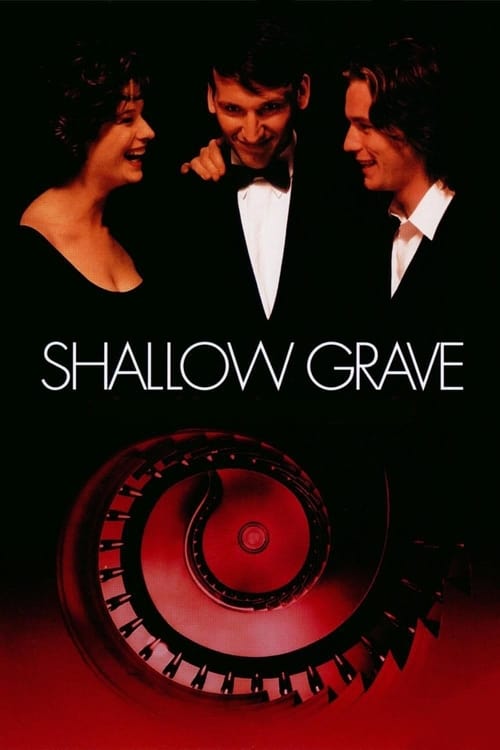
Shallow Grave
When David, Juliet, and Alex find their new roommate dead with a large sum of money, they agree to hide the body and keep the cash. However, this newfound fortune gradually corrodes their friendship.
Despite its limited budget of $2.5M, Shallow Grave became a runaway success, earning $19.8M worldwide—a remarkable 691% return. The film's innovative storytelling resonated with audiences, proving that strong storytelling can transcend budget limitations.
1 BAFTA Award14 wins & 1 nomination


Plot Structure
Story beats plotted across runtime


Narrative Arc
Emotional journey through the story's key moments
Story Circle
Blueprint 15-beat structure
Arcplot Score Breakdown
Weighted: Precision (70%) + Arc (15%) + Theme (15%)
Shallow Grave (1994) reveals strategically placed narrative design, characteristic of Danny Boyle's storytelling approach. This structural analysis examines how the film's 15-point plot structure maps to proven narrative frameworks across 1 hour and 33 minutes. With an Arcplot score of 6.8, the film balances conventional beats with creative variation.
Characters
Cast & narrative archetypes

David Stephens
Alex Law
Juliet Miller
Main Cast & Characters
David Stephens
Played by Kerry Fox
A charming, manipulative accountant who becomes increasingly ruthless after finding money on a dead tenant.
Alex Law
Played by Ewan McGregor
A cynical, sharp-tongued journalist who initiates the dark pact and gradually loses moral control.
Juliet Miller
Played by Christopher Eccleston
A principled doctor who reluctantly participates in the scheme and struggles with her conscience throughout.
Structural Analysis
The Status Quo at 1 minutes (1% through the runtime) establishes Three flatmates conduct cruel, mocking interviews with prospective tenants, establishing their smug superiority and tight bond.. Structural examination shows that this early placement immediately immerses viewers in the story world.
The inciting incident occurs at 10 minutes when Hugo, their new tenant, is found dead in his locked room with a suitcase containing a fortune in cash, disrupting their comfortable existence.. At 11% through the film, this Disruption aligns precisely with traditional story structure. This beat shifts the emotional landscape, launching the protagonist into the central conflict.
The First Threshold at 23 minutes marks the transition into Act II, occurring at 25% of the runtime. This illustrates the protagonist's commitment to They actively choose to dismember Hugo's body, bury it in the woods, and keep the money—crossing into criminality and moral darkness., moving from reaction to action.
At 46 minutes, the Midpoint arrives at 49% of the runtime—precisely centered, creating perfect narrative symmetry. The analysis reveals that this crucial beat David moves into the attic to guard the money alone, physically and psychologically separating from the group. The friendship fractures., fundamentally raising what's at risk. The emotional intensity shifts, dividing the narrative into clear before-and-after phases.
The Collapse moment at 68 minutes (73% through) represents the emotional nadir. Here, David murders one of the criminals who breaks into the flat, completing his transformation into a killer and destroying any remaining innocence., shows the protagonist at their lowest point. This beat's placement in the final quarter sets up the climactic reversal.
The Second Threshold at 74 minutes initiates the final act resolution at 80% of the runtime. Juliet and Alex realize David won't share the money and has become dangerous. They must act against their former friend to survive., demonstrating the transformation achieved throughout the journey.
Emotional Journey
Shallow Grave's emotional architecture traces a deliberate progression across 15 carefully calibrated beats.
Narrative Framework
This structural analysis employs structural analysis methodology used to understand storytelling architecture. By mapping Shallow Grave against these established plot points, we can identify how Danny Boyle utilizes or subverts traditional narrative conventions. The plot point approach reveals not only adherence to structural principles but also creative choices that distinguish Shallow Grave within the crime genre.
Danny Boyle's Structural Approach
Among the 12 Danny Boyle films analyzed on Arcplot, the average structural score is 6.6, demonstrating varied approaches to story architecture. Shallow Grave represents one of the director's most structurally precise works. For comparative analysis, explore the complete Danny Boyle filmography.
Comparative Analysis
Additional crime films include The Bad Guys, Rustom and The Whole Ten Yards. For more Danny Boyle analyses, see Yesterday, Millions and T2 Trainspotting.
Plot Points by Act
Act I
SetupStatus Quo
Three flatmates conduct cruel, mocking interviews with prospective tenants, establishing their smug superiority and tight bond.
Theme
During tenant interviews, discussion about trust and character reveals the thematic question: what defines who we really are when tested?
Worldbuilding
Introduction to the three friends' comfortable Edinburgh life: David the accountant, Juliet the doctor, Alex the journalist. Their arrogant dynamic and shared apartment establish the world before disruption.
Disruption
Hugo, their new tenant, is found dead in his locked room with a suitcase containing a fortune in cash, disrupting their comfortable existence.
Resistance
The three debate what to do with the body and money. Initial resistance to keeping the cash gradually erodes as they rationalize and plan.
Act II
ConfrontationFirst Threshold
They actively choose to dismember Hugo's body, bury it in the woods, and keep the money—crossing into criminality and moral darkness.
Mirror World
Two violent criminals arrive searching for Hugo and the money, representing the external threat that will test the friends' bond.
Premise
The trio attempts to enjoy their new wealth while hiding the money and dealing with police inquiries. Paranoia begins creeping in as they live the criminal life.
Midpoint
David moves into the attic to guard the money alone, physically and psychologically separating from the group. The friendship fractures.
Opposition
David becomes increasingly paranoid and violent in the attic. The criminals intensify their search. Juliet and Alex's relationship deteriorates as suspicion grows.
Collapse
David murders one of the criminals who breaks into the flat, completing his transformation into a killer and destroying any remaining innocence.
Crisis
The friends must dispose of another body while David's sanity completely unravels. Trust evaporates as they realize what they've become.
Act III
ResolutionSecond Threshold
Juliet and Alex realize David won't share the money and has become dangerous. They must act against their former friend to survive.
Synthesis
Final confrontation in the attic. Violence erupts between the three former friends as greed and paranoia reach their conclusion.
Transformation
Alex, having survived and taken the money, laughs manically—transformed from smug journalist to isolated, paranoid criminal, mirroring the opening but corrupted.