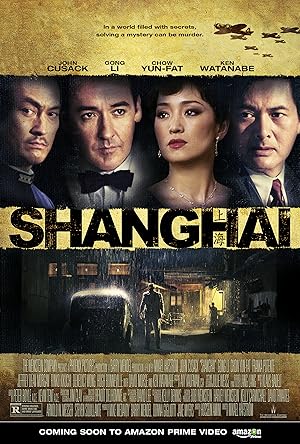
Shanghai
An American man returns to a corrupt, Japanese-occupied Shanghai four months before Pearl Harbor and discovers his friend has been killed. While he unravels the mysteries of the death, he falls in love and discovers a much larger secret.
The film financial setback against its respectable budget of $50.0M, earning $15.3M globally (-69% loss). While initial box office returns were modest, the film has gained appreciation for its innovative storytelling within the crime genre.


Plot Structure
Story beats plotted across runtime


Narrative Arc
Emotional journey through the story's key moments
Story Circle
Blueprint 15-beat structure
Arcplot Score Breakdown
Weighted: Precision (70%) + Arc (15%) + Theme (15%)
Shanghai (2010) exemplifies strategically placed narrative architecture, characteristic of Mikael Håfström's storytelling approach. This structural analysis examines how the film's 15-point plot structure maps to proven narrative frameworks across 1 hour and 45 minutes. With an Arcplot score of 7.0, the film balances conventional beats with creative variation.
Characters
Cast & narrative archetypes

Paul Soames
Anna Lan-Ting
Captain Tanaka
Anthony Lan-Ting
Conner
Sumiko
Main Cast & Characters
Paul Soames
Played by John Cusack
American intelligence agent investigating a friend's murder in 1941 Shanghai during the Japanese occupation.
Anna Lan-Ting
Played by Gong Li
Mysterious Chinese resistance fighter and smuggler who becomes romantically involved with Soames.
Captain Tanaka
Played by Ken Watanabe
Japanese intelligence officer hunting resistance fighters and investigating the same murder case.
Anthony Lan-Ting
Played by Chow Yun-fat
Anna's husband, a wealthy Chinese businessman collaborating with the Japanese occupation forces.
Conner
Played by Jeffrey Dean Morgan
Soames' murdered friend whose death triggers the investigation and reveals deeper conspiracies.
Sumiko
Played by Rinko Kikuchi
Japanese woman connected to both Tanaka and the resistance, navigating complex loyalties.
Structural Analysis
The Status Quo at 1 minutes (1% through the runtime) establishes Paul Soames arrives in Shanghai in October 1941, posing as a journalist while working as a U.S. Naval Intelligence officer. The city is a powder keg of international intrigue under Japanese occupation threat.. Of particular interest, this early placement immediately immerses viewers in the story world.
The inciting incident occurs at 13 minutes when Paul discovers that his close friend and fellow agent Conner has been killed. The official story doesn't add up, and Paul realizes he must investigate the murder himself.. At 12% through the film, this Disruption aligns precisely with traditional story structure. This beat shifts the emotional landscape, launching the protagonist into the central conflict.
The First Threshold at 26 minutes marks the transition into Act II, occurring at 25% of the runtime. This demonstrates the protagonist's commitment to Paul actively decides to pursue the truth about Conner's death by attending a party at the Lan-Ting estate, fully entering the dangerous world of Shanghai's power brokers despite warnings about the risks., moving from reaction to action.
At 53 minutes, the Midpoint arrives at 50% of the runtime—precisely centered, creating perfect narrative symmetry. The analysis reveals that this crucial beat Paul discovers that Anna is secretly working with the Chinese resistance and that Conner was killed because he uncovered something dangerous about the Japanese plans. The stakes rise dramatically as Paul realizes the conspiracy runs deeper than he imagined., fundamentally raising what's at risk. The emotional intensity shifts, dividing the narrative into clear before-and-after phases.
The Collapse moment at 79 minutes (75% through) represents the emotional nadir. Here, Anna is captured by Japanese forces, and Paul's cover is blown. His network is compromised, contacts are killed, and the attack on Pearl Harbor is imminent. All seems lost as Paul faces the consequences of his choices., indicates the protagonist at their lowest point. This beat's placement in the final quarter sets up the climactic reversal.
The Second Threshold at 84 minutes initiates the final act resolution at 80% of the runtime. Paul commits to rescuing Anna and exposing the truth, synthesizing his spy skills with the emotional commitment he's developed. He formulates a desperate plan to confront Tanaka and save Anna before Pearl Harbor changes everything., demonstrating the transformation achieved throughout the journey.
Emotional Journey
Shanghai's emotional architecture traces a deliberate progression across 15 carefully calibrated beats.
Narrative Framework
This structural analysis employs systematic plot point analysis that identifies crucial turning points. By mapping Shanghai against these established plot points, we can identify how Mikael Håfström utilizes or subverts traditional narrative conventions. The plot point approach reveals not only adherence to structural principles but also creative choices that distinguish Shanghai within the crime genre.
Mikael Håfström's Structural Approach
Among the 8 Mikael Håfström films analyzed on Arcplot, the average structural score is 7.3, reflecting strong command of classical structure. Shanghai takes a more unconventional approach compared to the director's typical style. For comparative analysis, explore the complete Mikael Håfström filmography.
Comparative Analysis
Additional crime films include The Bad Guys, Rustom and The Whole Ten Yards. For more Mikael Håfström analyses, see The Rite, Stockholm Bloodbath and Derailed.
Plot Points by Act
Act I
SetupStatus Quo
Paul Soames arrives in Shanghai in October 1941, posing as a journalist while working as a U.S. Naval Intelligence officer. The city is a powder keg of international intrigue under Japanese occupation threat.
Theme
A character remarks on how in Shanghai, everyone wears a mask and plays a role—foreshadowing the theme that true identity and loyalty will be tested when survival is at stake.
Worldbuilding
The dangerous world of 1941 Shanghai is established: Japanese military presence, Chinese resistance, Western expatriates, opium trade, and espionage networks. Paul learns his friend Conner has been murdered.
Disruption
Paul discovers that his close friend and fellow agent Conner has been killed. The official story doesn't add up, and Paul realizes he must investigate the murder himself.
Resistance
Paul debates how to proceed with his investigation. He connects with contacts, gathers intelligence on the major players including Anthony Lan-Ting and Captain Tanaka, and prepares to infiltrate Shanghai's elite social circles.
Act II
ConfrontationFirst Threshold
Paul actively decides to pursue the truth about Conner's death by attending a party at the Lan-Ting estate, fully entering the dangerous world of Shanghai's power brokers despite warnings about the risks.
Mirror World
Paul meets Anna Lan-Ting, the beautiful and mysterious wife of powerful businessman Anthony Lan-Ting. Their instant connection begins the romantic subplot that will embody the film's themes of loyalty and sacrifice.
Premise
Paul navigates Shanghai's shadowy underworld, attending lavish parties, gathering intelligence, and growing closer to Anna. He uncovers connections between Conner, the Japanese, the Chinese resistance, and discovers Anna is not who she appears to be.
Midpoint
Paul discovers that Anna is secretly working with the Chinese resistance and that Conner was killed because he uncovered something dangerous about the Japanese plans. The stakes rise dramatically as Paul realizes the conspiracy runs deeper than he imagined.
Opposition
Captain Tanaka closes in on Paul and Anna. Anthony Lan-Ting becomes suspicious. Paul's investigation puts everyone in danger. The Japanese tighten their grip on Shanghai, and Paul must balance his mission, his feelings for Anna, and his own survival.
Collapse
Anna is captured by Japanese forces, and Paul's cover is blown. His network is compromised, contacts are killed, and the attack on Pearl Harbor is imminent. All seems lost as Paul faces the consequences of his choices.
Crisis
Paul grapples with the devastating turn of events. He must decide whether to save himself and flee Shanghai or risk everything to rescue Anna and complete his mission despite the overwhelming odds.
Act III
ResolutionSecond Threshold
Paul commits to rescuing Anna and exposing the truth, synthesizing his spy skills with the emotional commitment he's developed. He formulates a desperate plan to confront Tanaka and save Anna before Pearl Harbor changes everything.
Synthesis
Paul executes his plan, confronting the Japanese and Anthony Lan-Ting. The truth about Conner's death is revealed. Pearl Harbor is attacked, transforming the geopolitical landscape. Paul and Anna face the final reckoning of their choices.
Transformation
Paul, transformed from a detached intelligence officer to a man capable of genuine love and sacrifice, must say goodbye to Shanghai. He has learned that in a world of masks, authentic connection requires the courage to be vulnerable.