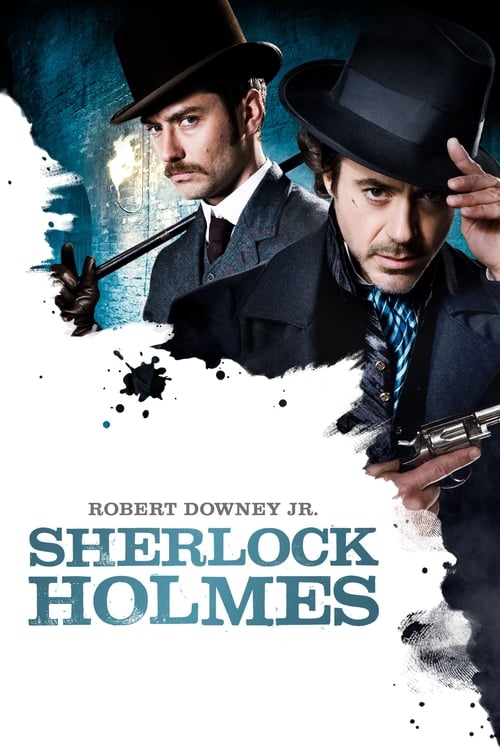
Sherlock Holmes
Detective Sherlock Holmes and his stalwart partner Watson engage in a battle of wits and brawn with a nemesis whose plot is a threat to all of England.
Despite a significant budget of $90.0M, Sherlock Holmes became a solid performer, earning $524.0M worldwide—a 482% return.
Nominated for 2 Oscars. 10 wins & 31 nominations


Plot Structure
Story beats plotted across runtime


Narrative Arc
Emotional journey through the story's key moments
Story Circle
Blueprint 15-beat structure
Structural Analysis
The Status Quo at 1 minutes (1% through the runtime) establishes Holmes and Watson burst into a dark ritual chamber, establishing Holmes as a brilliant, eccentric detective who operates outside conventional methods. His unorthodox genius and Watson's loyal partnership are immediately demonstrated.. Notably, this early placement immediately immerses viewers in the story world.
The inciting incident occurs at 16 minutes when Lord Blackwood requests to see Holmes before his execution, warning him cryptically about more deaths to come and claiming supernatural power. This disrupts Holmes' assumption that the case was closed.. At 12% through the film, this Disruption aligns precisely with traditional story structure. This beat shifts the emotional landscape, launching the protagonist into the central conflict.
The First Threshold at 33 minutes marks the transition into Act II, occurring at 25% of the runtime. This indicates the protagonist's commitment to Holmes chooses to investigate Blackwood's apparent resurrection despite the supernatural implications. He commits to the case fully, examining the tomb and Reordan's workshop. Watson reluctantly agrees to help one last time before his wedding., moving from reaction to action.
At 65 minutes, the Midpoint arrives at 50% of the runtime—precisely centered, creating perfect narrative symmetry. Significantly, this crucial beat Blackwood demonstrates his power before Parliament, seemingly killing a member through supernatural means and declaring he will take control of the British Empire. The stakes raise dramatically—this is no longer just a murder case but a threat to the nation. False defeat: Blackwood appears unstoppable., fundamentally raising what's at risk. The emotional intensity shifts, dividing the narrative into clear before-and-after phases.
The Collapse moment at 96 minutes (75% through) represents the emotional nadir. Here, Irene is poisoned and apparently killed by Moriarty's agent (the dwarf), representing the death of Holmes' ability to trust and connect. Simultaneously, Blackwood's plan reaches its final stage at Tower Bridge. Holmes' isolation is complete—Watson is married, Irene is dead, and he's alone against impossible odds., indicates the protagonist at their lowest point. This beat's placement in the final quarter sets up the climactic reversal.
The Second Threshold at 103 minutes initiates the final act resolution at 80% of the runtime. Holmes deduces the final piece: Blackwood's device at Tower Bridge will transmit poison gas to Parliament. Watson chooses to abandon his honeymoon and returns to help Holmes. The synthesis moment—Holmes accepts he needs Watson, and Watson chooses the partnership. Together they move into Act 3., demonstrating the transformation achieved throughout the journey.
Emotional Journey
Sherlock Holmes's emotional architecture traces a deliberate progression across 15 carefully calibrated beats.
Narrative Framework
This structural analysis employs systematic plot point analysis that identifies crucial turning points. By mapping Sherlock Holmes against these established plot points, we can identify how Guy Ritchie utilizes or subverts traditional narrative conventions. The plot point approach reveals not only adherence to structural principles but also creative choices that distinguish Sherlock Holmes within the action genre.
Guy Ritchie's Structural Approach
Among the 14 Guy Ritchie films analyzed on Arcplot, the average structural score is 6.4, demonstrating varied approaches to story architecture. Sherlock Holmes exemplifies the director's characteristic narrative technique. For comparative analysis, explore the complete Guy Ritchie filmography.
Comparative Analysis
Additional action films include The Bad Guys, Puss in Boots and Venom: The Last Dance. For more Guy Ritchie analyses, see RocknRolla, The Man from U.N.C.L.E. and Guy Ritchie's The Covenant.
Plot Points by Act
Act I
SetupStatus Quo
Holmes and Watson burst into a dark ritual chamber, establishing Holmes as a brilliant, eccentric detective who operates outside conventional methods. His unorthodox genius and Watson's loyal partnership are immediately demonstrated.
Theme
Watson states he's moving out to marry Mary, telling Holmes "You've never complained about my methods before." The theme emerges: the tension between logic/science and the supernatural, between isolation and connection, between old methods and new partnerships.
Worldbuilding
Holmes and Watson stop Lord Blackwood's dark ritual and arrest him. We see their partnership dynamic, Holmes' relationship with Irene Adler, Watson's impending marriage to Mary, and Lestrade's reliance on Holmes. Victorian London's underworld and Holmes' unconventional detective methods are established.
Disruption
Lord Blackwood requests to see Holmes before his execution, warning him cryptically about more deaths to come and claiming supernatural power. This disrupts Holmes' assumption that the case was closed.
Resistance
Blackwood is executed and pronounced dead by multiple witnesses. Holmes spirals into boredom and destructive behavior without a case. Irene Adler reappears with a mysterious client offering a new case: finding a missing person, Luke Reordan. When Blackwood's tomb is found broken open from the inside, Holmes must confront the impossible.
Act II
ConfrontationFirst Threshold
Holmes chooses to investigate Blackwood's apparent resurrection despite the supernatural implications. He commits to the case fully, examining the tomb and Reordan's workshop. Watson reluctantly agrees to help one last time before his wedding.
Mirror World
Watson brings Mary to meet Holmes, creating a triangle that highlights the Mirror World subplot. Mary represents connection, partnership, and emotional openness—everything Holmes struggles with. The romantic/partnership subplot will teach Holmes what he needs: that he cannot work alone.
Premise
The fun detective work: Holmes and Watson investigate Reordan's laboratory, discovering experiments with biological warfare. They uncover connections to the Temple of the Four Orders and a plot involving Parliament. Action sequences at the shipyard, narrow escapes, and classic Holmes deductions deliver the promised premise of Victorian-era detective adventure.
Midpoint
Blackwood demonstrates his power before Parliament, seemingly killing a member through supernatural means and declaring he will take control of the British Empire. The stakes raise dramatically—this is no longer just a murder case but a threat to the nation. False defeat: Blackwood appears unstoppable.
Opposition
Blackwood's power grows as he takes control of the Temple and threatens Parliament. Holmes discovers Irene is working for Professor Moriarty, complicating his trust issues. Watson's wedding approaches, meaning Holmes will lose his partner. Every lead seems to strengthen Blackwood's position. The opposition closes in from all sides.
Collapse
Irene is poisoned and apparently killed by Moriarty's agent (the dwarf), representing the death of Holmes' ability to trust and connect. Simultaneously, Blackwood's plan reaches its final stage at Tower Bridge. Holmes' isolation is complete—Watson is married, Irene is dead, and he's alone against impossible odds.
Crisis
Holmes processes the loss and realizes the full scope of Blackwood's technological (not supernatural) plot. He understands the machinery hidden beneath Parliament and Tower Bridge. This dark period forces Holmes to synthesize everything he's learned.
Act III
ResolutionSecond Threshold
Holmes deduces the final piece: Blackwood's device at Tower Bridge will transmit poison gas to Parliament. Watson chooses to abandon his honeymoon and returns to help Holmes. The synthesis moment—Holmes accepts he needs Watson, and Watson chooses the partnership. Together they move into Act 3.
Synthesis
The finale at Tower Bridge: Holmes and Watson work together to stop Blackwood's machine and confront him. Holmes defeats Blackwood by exposing his "magic" as mere technology and physics. Blackwood dies caught in his own machinery. Holmes saves Irene (who survived) and ensures Moriarty knows he's aware of him. The partnership proves stronger than isolation.
Transformation
Holmes and Watson walk together discussing their next case, with Watson agreeing to continue their partnership despite marriage. The final image mirrors the opening but shows transformation: Holmes now accepts partnership and connection rather than isolated genius. The dynamic has evolved from dependence to true collaboration.