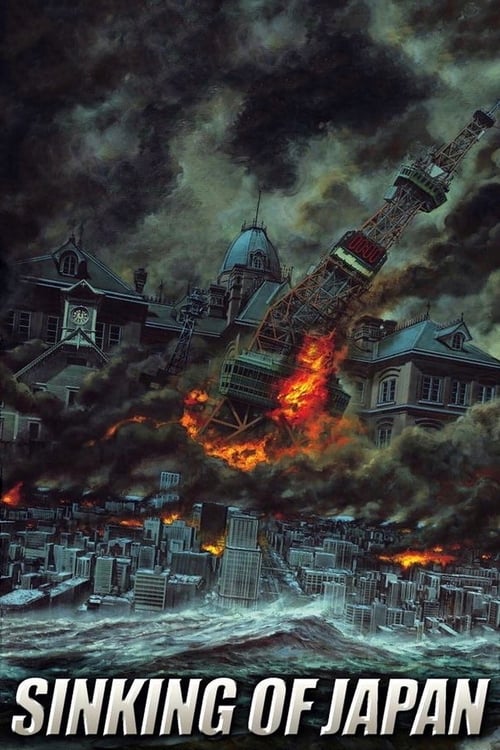
Japan Sinks
In the aftermath of a major earthquake, scientists predict that Japan will sink into the sea. As further disasters follow, politicians plead with other countries to take refugees, while scientists struggle to save Japan itself.
The film earned $47.6M at the global box office.
Plot Structure
Story beats plotted across runtime


Narrative Arc
Emotional journey through the story's key moments
Story Circle
Blueprint 15-beat structure
Arcplot Score Breakdown
Weighted: Precision (70%) + Arc (15%) + Theme (15%)
Japan Sinks (2006) reveals deliberately positioned dramatic framework, characteristic of Shinji Higuchi's storytelling approach. This structural analysis examines how the film's 15-point plot structure maps to proven narrative frameworks across 2 hours and 15 minutes. With an Arcplot score of 7.0, the film balances conventional beats with creative variation.
Characters
Cast & narrative archetypes

Toshio Onodera
Reiko Abe
Yusuke Tadokoro
Prime Minister Yamamoto
Saori Takamori
Main Cast & Characters
Toshio Onodera
Played by Tsuyoshi Kusanagi
A submarine pilot who becomes central to rescue operations as Japan faces catastrophic seismic activity and must evacuate its population.
Reiko Abe
Played by Kou Shibasaki
A government scientist studying seismic activity who discovers the terrifying truth about Japan's impending geological collapse.
Yusuke Tadokoro
Played by Etsushi Toyokawa
A geologist who has predicted Japan's sinking and works desperately to convince authorities and save as many lives as possible.
Prime Minister Yamamoto
Played by Mao Daichi
Japan's leader who must make impossible decisions about evacuating 120 million people as the nation literally crumbles beneath them.
Saori Takamori
Played by Mayuko Fukuda
Toshio's love interest who becomes separated from him during the escalating disasters and evacuation chaos.
Structural Analysis
The Status Quo at 1 minutes (1% through the runtime) establishes Reiko works as a diving technician in the deep ocean trenches while her daughter Misaki prepares for a school trip, establishing their ordinary life in modern Japan.. Significantly, this early placement immediately immerses viewers in the story world.
The inciting incident occurs at 16 minutes when A massive earthquake strikes during Misaki's school trip, causing widespread destruction. The incident confirms Tadokoro's worst fears about accelerating tectonic instability.. At 12% through the film, this Disruption aligns precisely with traditional story structure. This beat shifts the emotional landscape, launching the protagonist into the central conflict.
The First Threshold at 33 minutes marks the transition into Act II, occurring at 24% of the runtime. This demonstrates the protagonist's commitment to The government acknowledges the threat and launches Project D-Plan to evacuate Japan's population. Reiko volunteers to continue deep-sea research missions to help predict the disaster timeline., moving from reaction to action.
At 68 minutes, the Midpoint arrives at 50% of the runtime—precisely centered, creating perfect narrative symmetry. The analysis reveals that this crucial beat Mount Fuji erupts catastrophically, confirming that the sinking is accelerating faster than predicted. The timeline for Japan's destruction collapses from months to weeks., fundamentally raising what's at risk. The emotional intensity shifts, dividing the narrative into clear before-and-after phases.
The Collapse moment at 101 minutes (75% through) represents the emotional nadir. Here, Onodera sacrifices himself in a submarine accident to save Reiko during a critical mission. His death represents the cost of their struggle and the loss of hope as Japan literally crumbles around them., indicates the protagonist at their lowest point. This beat's placement in the final quarter sets up the climactic reversal.
The Second Threshold at 108 minutes initiates the final act resolution at 80% of the runtime. Reiko chooses to honor Onodera's sacrifice by completing their mission. She realizes that even in the face of certain destruction, their data might help humanity understand and survive future catastrophes., demonstrating the transformation achieved throughout the journey.
Emotional Journey
Japan Sinks's emotional architecture traces a deliberate progression across 15 carefully calibrated beats.
Narrative Framework
This structural analysis employs structural analysis methodology used to understand storytelling architecture. By mapping Japan Sinks against these established plot points, we can identify how Shinji Higuchi utilizes or subverts traditional narrative conventions. The plot point approach reveals not only adherence to structural principles but also creative choices that distinguish Japan Sinks within the drama genre.
Shinji Higuchi's Structural Approach
Among the 5 Shinji Higuchi films analyzed on Arcplot, the average structural score is 7.1, reflecting strong command of classical structure. Japan Sinks takes a more unconventional approach compared to the director's typical style. For comparative analysis, explore the complete Shinji Higuchi filmography.
Comparative Analysis
Additional drama films include After Thomas, South Pacific and Dirty Dancing: Havana Nights. For more Shinji Higuchi analyses, see Shin Godzilla, Lorelei: The Witch of the Pacific Ocean and Attack on Titan.
Plot Points by Act
Act I
SetupStatus Quo
Reiko works as a diving technician in the deep ocean trenches while her daughter Misaki prepares for a school trip, establishing their ordinary life in modern Japan.
Theme
Professor Tadokoro warns colleagues about seismic data suggesting catastrophic tectonic activity: "When the earth decides to move, there's nothing we can do but accept it and adapt."
Worldbuilding
Introduction to key characters: Reiko and her family, pilot Onodera, scientist Tadokoro, and government officials. Establishes Japan's vulnerability to seismic activity and the deep-sea research operation.
Disruption
A massive earthquake strikes during Misaki's school trip, causing widespread destruction. The incident confirms Tadokoro's worst fears about accelerating tectonic instability.
Resistance
Tadokoro presents his catastrophic hypothesis to the government: the Japanese archipelago will sink within a year. Officials debate whether to believe the science or dismiss it as alarmist. Reiko reunites with her traumatized daughter.
Act II
ConfrontationFirst Threshold
The government acknowledges the threat and launches Project D-Plan to evacuate Japan's population. Reiko volunteers to continue deep-sea research missions to help predict the disaster timeline.
Mirror World
Reiko works closely with pilot Onodera on dangerous underwater missions. Their partnership represents human connection and duty in the face of apocalypse, embodying the film's theme of perseverance.
Premise
Escalating disaster sequences as earthquakes increase in frequency and intensity. The team conducts desperate research missions while the government manages mass evacuations. Reiko struggles to balance her duty to science with protecting her daughter.
Midpoint
Mount Fuji erupts catastrophically, confirming that the sinking is accelerating faster than predicted. The timeline for Japan's destruction collapses from months to weeks.
Opposition
Desperate evacuation efforts as millions flee Japan. Infrastructure collapses, social order breaks down, and international tensions rise over refugee acceptance. Reiko and Onodera continue perilous missions despite mounting casualties.
Collapse
Onodera sacrifices himself in a submarine accident to save Reiko during a critical mission. His death represents the cost of their struggle and the loss of hope as Japan literally crumbles around them.
Crisis
Reiko grieves Onodera's death while Tokyo experiences catastrophic subsidence. She faces the reality that her mission may be futile and contemplates giving up to be with her daughter in their final moments.
Act III
ResolutionSecond Threshold
Reiko chooses to honor Onodera's sacrifice by completing their mission. She realizes that even in the face of certain destruction, their data might help humanity understand and survive future catastrophes.
Synthesis
Final evacuation as the Japanese islands collapse into the ocean. Reiko reunites with Misaki and boards an evacuation vessel. Tokyo Bay sinks beneath the waves as the nation faces diaspora and an uncertain future.
Transformation
Reiko and Misaki stand on the deck of an evacuation ship, watching the last remnants of Japan disappear beneath the ocean. Despite everything lost, they hold each other, embodying resilience and the continuation of the Japanese people.