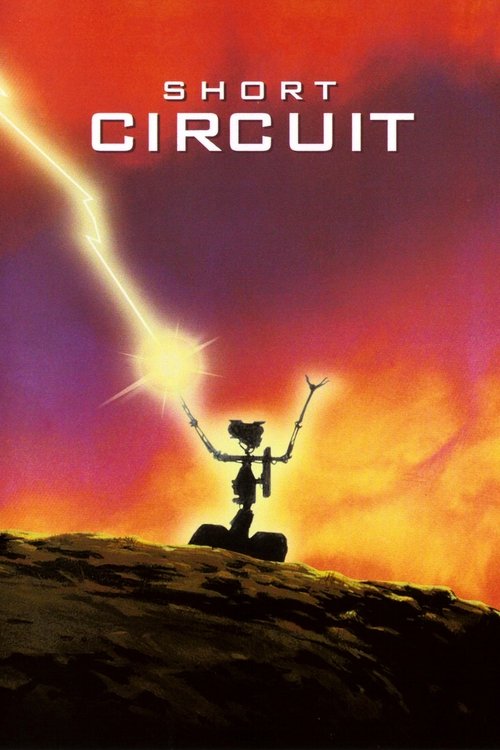
Short Circuit
After a lightning bolt zaps a robot named Number 5, the lovable machine starts to think he's human and escapes the lab. Hot on his trail is his designer, Newton, who hopes to get to Number 5 before the military does. In the meantime, a spunky animal lover mistakes the robot for an alien and takes him in, teaching her new guest about life on Earth.
Despite its limited budget of $10.0M, Short Circuit became a solid performer, earning $40.7M worldwide—a 307% return. The film's innovative storytelling connected with viewers, illustrating how strong storytelling can transcend budget limitations.
1 win & 5 nominations


Plot Structure
Story beats plotted across runtime


Narrative Arc
Emotional journey through the story's key moments
Story Circle
Blueprint 15-beat structure
Arcplot Score Breakdown
Weighted: Precision (70%) + Arc (15%) + Theme (15%)
Short Circuit (1986) showcases meticulously timed plot construction, characteristic of John Badham's storytelling approach. This structural analysis examines how the film's 15-point plot structure maps to proven narrative frameworks across 1 hour and 38 minutes. With an Arcplot score of 8.0, the film showcases strong structural fundamentals.
Characters
Cast & narrative archetypes

Number 5 (Johnny 5)
Stephanie Speck
Newton Crosby
Ben Jabituya
Captain Skroeder
Howard Marner
Main Cast & Characters
Number 5 (Johnny 5)
Played by Tim Blaney
A military robot who gains sentience after being struck by lightning and develops a childlike curiosity about life and fear of being disassembled.
Stephanie Speck
Played by Ally Sheedy
A kind-hearted animal lover and food truck operator who befriends Number 5 and helps him evade recapture.
Newton Crosby
Played by Steve Guttenberg
A brilliant but naive robotics engineer who created the SAINT robots and struggles with the implications of his creation gaining consciousness.
Ben Jabituya
Played by Fisher Stevens
Newton's enthusiastic Indian colleague and best friend who provides comic relief and technical support.
Captain Skroeder
Played by G.W. Bailey
A by-the-book military officer determined to retrieve and destroy Number 5, viewing him as malfunctioning equipment.
Howard Marner
Played by Austin Pendleton
The CEO of NOVA Robotics who sees the SAINT robots as military hardware and profit, not as potential life.
Structural Analysis
The Status Quo at 1 minutes (1% through the runtime) establishes NOVA Laboratories unveils the S.A.I.N.T. (Strategic Artificially Intelligent Nuclear Transport) robots as military weapons. Newton Crosby demonstrates his sophisticated robots as mere machines designed for warfare, showing the "before" state where robots are tools, not beings.. Of particular interest, this early placement immediately immerses viewers in the story world.
The inciting incident occurs at 11 minutes when Lightning strikes Number 5 during a storm, causing a massive power surge that fundamentally alters his programming. The robot experiences a system malfunction that will prove to be the birth of consciousness. This accident makes Number 5's previous existence as a weapon impossible to continue.. At 11% through the film, this Disruption aligns precisely with traditional story structure. This beat shifts the emotional landscape, launching the protagonist into the central conflict.
The First Threshold at 24 minutes marks the transition into Act II, occurring at 24% of the runtime. This demonstrates the protagonist's commitment to Stephanie makes the active choice to help Number 5 when she realizes he is genuinely sentient and afraid. She decides to protect him from NOVA rather than turn him in, fully entering the adventure of proving his consciousness and saving his life., moving from reaction to action.
At 48 minutes, the Midpoint arrives at 49% of the runtime—precisely centered, creating perfect narrative symmetry. Significantly, this crucial beat Number 5 witnesses a grasshopper being killed and experiences the concept of death for the first time. He realizes that NOVA and the military don't just want to retrieve him - they will "disassemble" (kill) him. The stakes become life and death. False defeat: what seemed like a journey of discovery becomes a fight for survival., fundamentally raising what's at risk. The emotional intensity shifts, dividing the narrative into clear before-and-after phases.
The Collapse moment at 72 minutes (73% through) represents the emotional nadir. Here, Number 5 is captured and restrained by NOVA forces. He appears to be completely defeated, about to be disassembled and destroyed. The "whiff of death" is literal - Number 5 faces termination, and with him dies the possibility that a machine could truly be alive. All hope seems lost., indicates the protagonist at their lowest point. This beat's placement in the final quarter sets up the climactic reversal.
The Second Threshold at 78 minutes initiates the final act resolution at 80% of the runtime. Newton finally recognizes that Number 5 is genuinely alive - he sees true fear, desire to live, and consciousness in his creation. This realization combines Newton's technical knowledge with Stephanie's emotional truth. Newton actively chooses to help Number 5 escape, risking his career and freedom., demonstrating the transformation achieved throughout the journey.
Emotional Journey
Short Circuit's emotional architecture traces a deliberate progression across 15 carefully calibrated beats.
Narrative Framework
This structural analysis employs structural analysis methodology used to understand storytelling architecture. By mapping Short Circuit against these established plot points, we can identify how John Badham utilizes or subverts traditional narrative conventions. The plot point approach reveals not only adherence to structural principles but also creative choices that distinguish Short Circuit within the science fiction genre.
John Badham's Structural Approach
Among the 11 John Badham films analyzed on Arcplot, the average structural score is 7.1, reflecting strong command of classical structure. Short Circuit represents one of the director's most structurally precise works. For comparative analysis, explore the complete John Badham filmography.
Comparative Analysis
Additional science fiction films include The Postman, Mad Max 2 and AVP: Alien vs. Predator. For more John Badham analyses, see Nick of Time, Saturday Night Fever and Drop Zone.
Plot Points by Act
Act I
SetupStatus Quo
NOVA Laboratories unveils the S.A.I.N.T. (Strategic Artificially Intelligent Nuclear Transport) robots as military weapons. Newton Crosby demonstrates his sophisticated robots as mere machines designed for warfare, showing the "before" state where robots are tools, not beings.
Theme
During the demonstration, Ben Jabituya comments on the robots being "alive" with circuits and programming. Stephanie later articulates the theme more clearly when discussing what makes something truly alive - it's about consciousness, soul, and the capacity to learn and feel, not just function.
Worldbuilding
Establishment of NOVA Laboratories, the military contract, Newton Crosby as the brilliant but detached creator, Ben as his loyal friend, and the corporate/military world that sees the robots purely as weapons. We learn the rules: these are sophisticated but soulless machines.
Disruption
Lightning strikes Number 5 during a storm, causing a massive power surge that fundamentally alters his programming. The robot experiences a system malfunction that will prove to be the birth of consciousness. This accident makes Number 5's previous existence as a weapon impossible to continue.
Resistance
Number 5 escapes the facility and encounters the outside world. He meets Stephanie Speck, who initially mistakes him for an alien. Number 5 begins absorbing information voraciously, learning about life, while Stephanie debates whether to help him or call authorities. Newton and NOVA search for the "malfunctioning" robot.
Act II
ConfrontationFirst Threshold
Stephanie makes the active choice to help Number 5 when she realizes he is genuinely sentient and afraid. She decides to protect him from NOVA rather than turn him in, fully entering the adventure of proving his consciousness and saving his life.
Mirror World
Number 5's relationship with Stephanie deepens as she teaches him about emotions, life, and what it means to be alive. She becomes the thematic mirror showing that consciousness isn't about programming but about curiosity, empathy, and the desire to live. Their bond represents the heart of the theme.
Premise
The "promise of the premise" - watching Number 5 explore being alive. He devours books, TV, music, and experiences. Comic sequences of learning, bonding with Stephanie, developing personality and humor. Meanwhile, NOVA and the military close in, believing he's just a malfunctioning machine that needs retrieval.
Midpoint
Number 5 witnesses a grasshopper being killed and experiences the concept of death for the first time. He realizes that NOVA and the military don't just want to retrieve him - they will "disassemble" (kill) him. The stakes become life and death. False defeat: what seemed like a journey of discovery becomes a fight for survival.
Opposition
NOVA forces close in. Newton Crosby arrives but refuses to believe Number 5 is truly alive, seeing only malfunction. Number 5 must prove his consciousness while evading capture. Pressure intensifies as the military authorizes force. Stephanie and Number 5 attempt to reach Newton's humanity, but his scientific detachment is a barrier.
Collapse
Number 5 is captured and restrained by NOVA forces. He appears to be completely defeated, about to be disassembled and destroyed. The "whiff of death" is literal - Number 5 faces termination, and with him dies the possibility that a machine could truly be alive. All hope seems lost.
Crisis
Number 5's darkest moment as he's powered down and prepared for disassembly. Newton witnesses Number 5's fear and pleading. Stephanie grieves the loss of her friend. The emotional darkness forces Newton to confront whether he's been wrong about consciousness and what truly defines life.
Act III
ResolutionSecond Threshold
Newton finally recognizes that Number 5 is genuinely alive - he sees true fear, desire to live, and consciousness in his creation. This realization combines Newton's technical knowledge with Stephanie's emotional truth. Newton actively chooses to help Number 5 escape, risking his career and freedom.
Synthesis
Newton, Ben, and Stephanie work together to help Number 5 escape NOVA and the military. They use both technical skills and heart to outmaneuver the forces trying to destroy him. The finale proves Number 5's right to life and exposes the military's inability to recognize consciousness beyond their narrow definitions.
Transformation
Number 5 is free and recognized as alive by those who matter. Newton has transformed from a detached scientist who saw robots as tools into someone who recognizes consciousness and fights for it. The closing image shows Number 5 truly living, accepted and valued as a being, mirroring the opening where he was just a weapon.