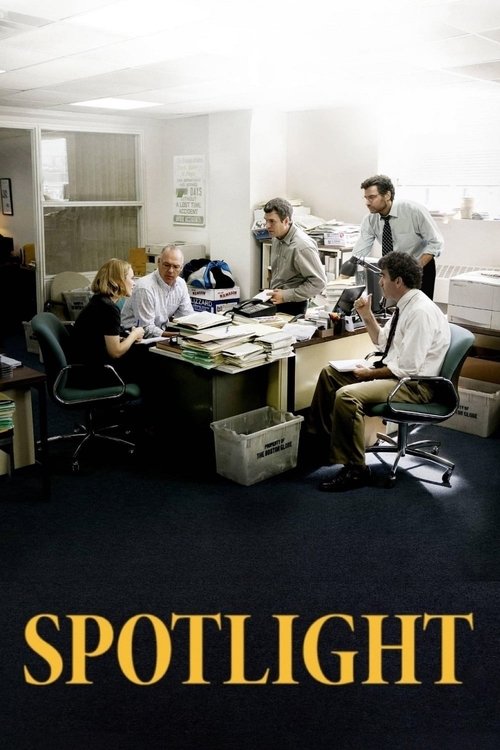
Spotlight
The true story of how the Boston Globe uncovered the massive scandal of child molestation and cover-up within the local Catholic Archdiocese, shaking the entire Catholic Church to its core.
Despite a respectable budget of $20.0M, Spotlight became a solid performer, earning $98.7M worldwide—a 393% return.
2 Oscars. 124 wins & 145 nominations


Plot Structure
Story beats plotted across runtime


Narrative Arc
Emotional journey through the story's key moments
Story Circle
Blueprint 15-beat structure
Arcplot Score Breakdown
Weighted: Precision (70%) + Arc (15%) + Theme (15%)
Spotlight (2015) showcases precise narrative design, characteristic of Tom McCarthy's storytelling approach. This structural analysis examines how the film's 15-point plot structure maps to proven narrative frameworks across 2 hours and 9 minutes. With an Arcplot score of 6.5, the film balances conventional beats with creative variation.
Characters
Cast & narrative archetypes

Walter "Robby" Robinson
Michael Rezendes
Sacha Pfeiffer
Marty Baron
Ben Bradlee Jr.
Mitchell Garabedian
Phil Saviano
Matt Carroll
Main Cast & Characters
Walter "Robby" Robinson
Played by Michael Keaton
Editor of the Boston Globe's Spotlight team who leads the investigation into Catholic Church abuse with methodical determination.
Michael Rezendes
Played by Mark Ruffalo
Tenacious Spotlight reporter who relentlessly pursues sources and documents, driven by moral outrage at the injustice.
Sacha Pfeiffer
Played by Rachel McAdams
Compassionate Spotlight reporter who interviews survivors with empathy while maintaining journalistic integrity.
Marty Baron
Played by Liev Schreiber
New Boston Globe editor-in-chief who pushes the team to investigate the Church despite being an outsider to Boston Catholic culture.
Ben Bradlee Jr.
Played by John Slattery
Assistant managing editor who supports the Spotlight team and navigates institutional pressures.
Mitchell Garabedian
Played by Stanley Tucci
Abrasive but principled attorney representing abuse victims who initially distrusts the press but becomes key source.
Phil Saviano
Played by Neal Huff
Survivor and activist with SNAP who has been trying to expose the abuse for years and validates the team's scope.
Matt Carroll
Played by Brian d'Arcy James
Spotlight team researcher and reporter who provides data analysis and discovers a rehabilitation house near his home.
Structural Analysis
The Status Quo at 1 minutes (1% through the runtime) establishes 1976 prologue: A young priest is quietly escorted from a police station after allegations of child abuse, with officers and a church lawyer ensuring the matter is suppressed. This establishes the long history of institutional cover-up that the story will eventually expose.. The analysis reveals that this early placement immediately immerses viewers in the story world.
The inciting incident occurs at 15 minutes when Marty Baron, in his first editorial meeting, asks why the Globe isn't pursuing the Geoghan case more aggressively and suggests the Spotlight team investigate whether the Church systematically covered up abuse. This outsider's question disrupts the status quo and sets the investigation in motion.. At 12% through the film, this Disruption aligns precisely with traditional story structure. This beat shifts the emotional landscape, launching the protagonist into the central conflict.
The First Threshold at 32 minutes marks the transition into Act II, occurring at 25% of the runtime. This illustrates the protagonist's commitment to Robby commits the Spotlight team fully to the investigation, deciding to pursue not just individual priests but the systemic cover-up by the Archdiocese. The team begins coordinating their approach: Rezendes will work Garabedian, Pfeiffer will interview victims, and Carroll will research patterns. They've crossed into active investigation mode., moving from reaction to action.
At 65 minutes, the Midpoint arrives at 50% of the runtime—precisely centered, creating perfect narrative symmetry. Of particular interest, this crucial beat The team confirms there are approximately 87 priests in Boston alone who have been credibly accused. The false victory of making progress transforms into false defeat as they realize the magnitude: this is not a few bad apples but a systematic, institutional conspiracy far larger than anyone imagined. The scope is overwhelming., fundamentally raising what's at risk. The emotional intensity shifts, dividing the narrative into clear before-and-after phases.
The Collapse moment at 97 minutes (75% through) represents the emotional nadir. Here, The team discovers they had evidence years earlier—Phil Saviano's materials and prior tips about Porter—but failed to act on it. Robby confronts the painful truth that the Globe itself was part of the institutional failure, complicit in not pursuing the story sooner. The journalists must face their own role in allowing the abuse to continue., indicates the protagonist at their lowest point. This beat's placement in the final quarter sets up the climactic reversal.
The Second Threshold at 103 minutes initiates the final act resolution at 80% of the runtime. Judge Sweeney unseals the Church documents. Rezendes obtains the proof that Cardinal Law knew about the abuse and systematically covered it up. With documentary evidence of institutional complicity at the highest level, the team has everything they need to publish a story that can't be dismissed or suppressed., demonstrating the transformation achieved throughout the journey.
Emotional Journey
Spotlight's emotional architecture traces a deliberate progression across 15 carefully calibrated beats.
Narrative Framework
This structural analysis employs systematic plot point analysis that identifies crucial turning points. By mapping Spotlight against these established plot points, we can identify how Tom McCarthy utilizes or subverts traditional narrative conventions. The plot point approach reveals not only adherence to structural principles but also creative choices that distinguish Spotlight within the drama genre.
Tom McCarthy's Structural Approach
Among the 5 Tom McCarthy films analyzed on Arcplot, the average structural score is 7.2, reflecting strong command of classical structure. Spotlight takes a more unconventional approach compared to the director's typical style. For comparative analysis, explore the complete Tom McCarthy filmography.
Comparative Analysis
Additional drama films include After Thomas, South Pacific and Dirty Dancing: Havana Nights. For more Tom McCarthy analyses, see Stillwater, The Visitor and The Station Agent.
Plot Points by Act
Act I
SetupStatus Quo
1976 prologue: A young priest is quietly escorted from a police station after allegations of child abuse, with officers and a church lawyer ensuring the matter is suppressed. This establishes the long history of institutional cover-up that the story will eventually expose.
Theme
New editor Marty Baron tells Robby that he wants the paper to pursue the Geoghan story systemically: "We need to focus on the institution, not the individual priests." This articulates the film's central theme about institutional accountability versus protecting individual wrongdoers.
Worldbuilding
We meet the Spotlight team at the Boston Globe: editor Robby Robinson, reporters Mike Rezendes, Sacha Pfeiffer, and Matt Carroll. The newsroom dynamics, Boston's Catholic culture, and the paper's relationship with the community are established. Baron arrives as the new editor from Miami, an outsider to Boston's tight-knit Catholic establishment.
Disruption
Marty Baron, in his first editorial meeting, asks why the Globe isn't pursuing the Geoghan case more aggressively and suggests the Spotlight team investigate whether the Church systematically covered up abuse. This outsider's question disrupts the status quo and sets the investigation in motion.
Resistance
The team debates taking on the story, weighing the risks of investigating the Catholic Church in Boston. They meet with lawyer Mitchell Garabedian, who represents abuse victims and has been fighting the Church for years. Phil Saviano from SNAP provides crucial early guidance, sharing his research and survivor contacts, though the team initially underestimates the scope.
Act II
ConfrontationFirst Threshold
Robby commits the Spotlight team fully to the investigation, deciding to pursue not just individual priests but the systemic cover-up by the Archdiocese. The team begins coordinating their approach: Rezendes will work Garabedian, Pfeiffer will interview victims, and Carroll will research patterns. They've crossed into active investigation mode.
Mirror World
Sacha Pfeiffer conducts her first victim interview with Joe Crowley, who describes his abuse and its devastating aftermath. The human cost becomes viscerally real. These survivor stories become the emotional and moral heart of the investigation, teaching the journalists what this story truly means beyond documents and numbers.
Premise
The investigative journalism unfolds: the team digs through court records, interviews survivors, builds databases of accused priests, and uncovers the Church's pattern of quietly reassigning abusers. They discover Richard Sipe's research suggesting 6% of priests are abusers and work to identify the 87 priests in Boston. Each lead reveals the conspiracy's scope.
Midpoint
The team confirms there are approximately 87 priests in Boston alone who have been credibly accused. The false victory of making progress transforms into false defeat as they realize the magnitude: this is not a few bad apples but a systematic, institutional conspiracy far larger than anyone imagined. The scope is overwhelming.
Opposition
The Church and its allies push back. Jim Sullivan, the team's former colleague now working for the Church, warns them off. Sources grow reluctant. Legal obstacles mount around sealed documents. The team faces pressure from prominent Catholic community members. Then 9/11 occurs, threatening to derail the investigation as resources shift. Internal debates arise about when to publish.
Collapse
The team discovers they had evidence years earlier—Phil Saviano's materials and prior tips about Porter—but failed to act on it. Robby confronts the painful truth that the Globe itself was part of the institutional failure, complicit in not pursuing the story sooner. The journalists must face their own role in allowing the abuse to continue.
Crisis
Mike Rezendes pushes to publish immediately, arguing they have enough. Robby insists they need the documents proving Cardinal Law knew. The team grapples with their own failures and the weight of what they're about to expose. They must reconcile the need for comprehensive proof with the urgency of stopping ongoing abuse.
Act III
ResolutionSecond Threshold
Judge Sweeney unseals the Church documents. Rezendes obtains the proof that Cardinal Law knew about the abuse and systematically covered it up. With documentary evidence of institutional complicity at the highest level, the team has everything they need to publish a story that can't be dismissed or suppressed.
Synthesis
The team finalizes the story, working through the night. Baron makes the call to run it on the front page. The story publishes on January 6, 2002, detailing not just the abuse but the systematic cover-up by Cardinal Law and the Archdiocese. The phones begin ringing immediately with more victims calling to share their stories.
Transformation
In the Spotlight office, phones ring continuously as survivors finally come forward. Title cards reveal the global impact: Cardinal Law resigned, investigations spread to cities worldwide, and over 600 stories followed. The journalists' dogged pursuit of institutional truth catalyzed a worldwide reckoning with clerical abuse.