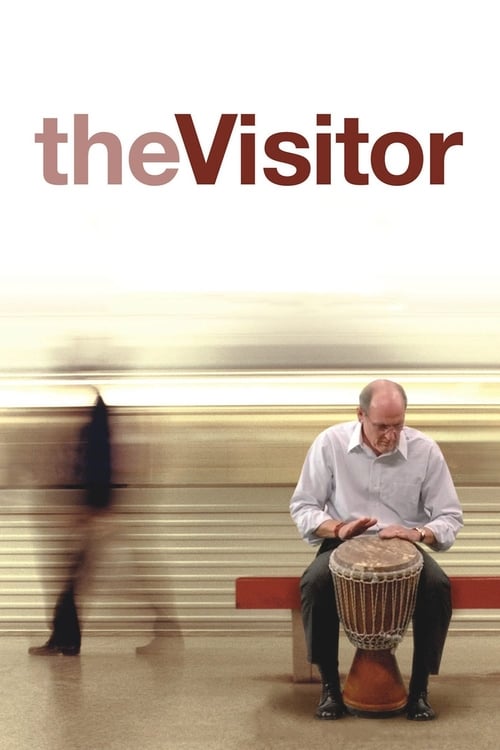
The Visitor
A college professor travels to New York City to attend a conference and finds a young couple living in his apartment.
Despite its modest budget of $4.0M, The Visitor became a box office success, earning $18.2M worldwide—a 355% return. The film's innovative storytelling found its audience, proving that strong storytelling can transcend budget limitations.
Nominated for 1 Oscar. 19 wins & 35 nominations


Plot Structure
Story beats plotted across runtime


Narrative Arc
Emotional journey through the story's key moments
Story Circle
Blueprint 15-beat structure
Arcplot Score Breakdown
Weighted: Precision (70%) + Arc (15%) + Theme (15%)
The Visitor (2008) exhibits deliberately positioned story structure, characteristic of Tom McCarthy's storytelling approach. This structural analysis examines how the film's 15-point plot structure maps to proven narrative frameworks across 1 hour and 44 minutes. With an Arcplot score of 7.4, the film balances conventional beats with creative variation.
Characters
Cast & narrative archetypes

Walter Vale
Tarek Khalil
Zainab
Mouna Khalil
Main Cast & Characters
Walter Vale
Played by Richard Jenkins
A widowed economics professor going through the motions of life who rediscovers passion through unexpected friendship.
Tarek Khalil
Played by Haaz Sleiman
A Syrian immigrant and djembe drummer full of life and warmth who befriends Walter.
Zainab
Played by Danai Gurira
Tarek's girlfriend, a Senegalese jewelry maker who is cautious and protective.
Mouna Khalil
Played by Hiam Abbass
Tarek's mother who travels from Michigan after her son's detention, dignified and resilient.
Structural Analysis
The Status Quo at 1 minutes (1% through the runtime) establishes Walter Vale, a disconnected economics professor, mechanically goes through his isolated Connecticut life - attempting piano lessons he doesn't care about, teaching classes by rote, emotionally shut down since his wife's death.. Significantly, this early placement immediately immerses viewers in the story world.
The inciting incident occurs at 12 minutes when Walter arrives at his rarely-used Manhattan apartment to discover Tarek and Zainab, undocumented immigrants, living there - victims of a rental scam. The confrontation disrupts his orderly, isolated world.. At 12% through the film, this Disruption aligns precisely with traditional story structure. This beat shifts the emotional landscape, launching the protagonist into the central conflict.
The First Threshold at 25 minutes marks the transition into Act II, occurring at 24% of the runtime. This illustrates the protagonist's commitment to Walter makes the active choice to invite Tarek and Zainab to stay in the apartment, stepping outside his comfortable isolation and into connection with others., moving from reaction to action.
At 51 minutes, the Midpoint arrives at 50% of the runtime—precisely centered, creating perfect narrative symmetry. Of particular interest, this crucial beat Tarek is arrested by immigration police after jumping a subway turnstile. False defeat - what seemed like a blossoming friendship and Walter's renewal is suddenly threatened. The stakes dramatically escalate., fundamentally raising what's at risk. The emotional intensity shifts, dividing the narrative into clear before-and-after phases.
The Collapse moment at 78 minutes (75% through) represents the emotional nadir. Here, Walter learns that Tarek has been deported to Syria. The friendship that awakened him is ripped away. Death of hope - his efforts have failed, and he cannot save the person who saved him from his emotional death., demonstrates the protagonist at their lowest point. This beat's placement in the final quarter sets up the climactic reversal.
The Second Threshold at 85 minutes initiates the final act resolution at 82% of the runtime. Walter realizes he cannot return to his old numbness. He chooses to stay connected, to stay engaged, to honor what Tarek taught him. He says goodbye to Mouna, fully present and emotionally alive., demonstrating the transformation achieved throughout the journey.
Emotional Journey
The Visitor's emotional architecture traces a deliberate progression across 15 carefully calibrated beats.
Narrative Framework
This structural analysis employs a 15-point narrative structure framework that maps key story moments. By mapping The Visitor against these established plot points, we can identify how Tom McCarthy utilizes or subverts traditional narrative conventions. The plot point approach reveals not only adherence to structural principles but also creative choices that distinguish The Visitor within the crime genre.
Tom McCarthy's Structural Approach
Among the 5 Tom McCarthy films analyzed on Arcplot, the average structural score is 7.2, reflecting strong command of classical structure. The Visitor represents one of the director's most structurally precise works. For comparative analysis, explore the complete Tom McCarthy filmography.
Comparative Analysis
Additional crime films include The Bad Guys, Rustom and The Whole Ten Yards. For more Tom McCarthy analyses, see Stillwater, Spotlight and The Station Agent.
Plot Points by Act
Act I
SetupStatus Quo
Walter Vale, a disconnected economics professor, mechanically goes through his isolated Connecticut life - attempting piano lessons he doesn't care about, teaching classes by rote, emotionally shut down since his wife's death.
Theme
Walter's colleague mentions the academic conference, emphasizing "it would be good for you to get out" - hinting at the theme of awakening from emotional isolation and reconnecting with life.
Worldbuilding
Establishment of Walter's numb existence: failed piano lessons, disinterested teaching, his colleague pushing him to present at the NYU conference, his reluctance to engage with the world.
Disruption
Walter arrives at his rarely-used Manhattan apartment to discover Tarek and Zainab, undocumented immigrants, living there - victims of a rental scam. The confrontation disrupts his orderly, isolated world.
Resistance
Initial awkwardness as Tarek and Zainab prepare to leave. Walter debates internally whether to maintain his isolation or take a risk. Tarek's warmth begins to penetrate Walter's defenses.
Act II
ConfrontationFirst Threshold
Walter makes the active choice to invite Tarek and Zainab to stay in the apartment, stepping outside his comfortable isolation and into connection with others.
Mirror World
Tarek teaches Walter to play the djembe drum in the park - the beginning of their friendship and the thematic relationship that will teach Walter to feel rhythm, joy, and passion again.
Premise
Walter's awakening: drumming sessions with Tarek, attending his performances, forming friendships, rediscovering passion and spontaneity. The promise of the premise - a closed-off man learning to live again through unexpected connection.
Midpoint
Tarek is arrested by immigration police after jumping a subway turnstile. False defeat - what seemed like a blossoming friendship and Walter's renewal is suddenly threatened. The stakes dramatically escalate.
Opposition
Walter fights the immigration system to help Tarek - hiring lawyers, visiting detention centers, confronting bureaucratic indifference. Tarek's mother Mouna arrives. Walter's old passivity battles his newfound commitment to others.
Collapse
Walter learns that Tarek has been deported to Syria. The friendship that awakened him is ripped away. Death of hope - his efforts have failed, and he cannot save the person who saved him from his emotional death.
Crisis
Walter processes his grief and rage. Mouna prepares to leave to find Tarek. Walter faces returning to his old isolated life, but he has been fundamentally changed.
Act III
ResolutionSecond Threshold
Walter realizes he cannot return to his old numbness. He chooses to stay connected, to stay engaged, to honor what Tarek taught him. He says goodbye to Mouna, fully present and emotionally alive.
Synthesis
Walter remains in New York rather than fleeing back to Connecticut. He integrates his transformation - no longer able to be the disconnected man he was, even in the face of injustice and loss.
Transformation
Walter plays the djembe alone in a subway station - the same place where Tarek was taken. Mirror to the opening: no longer mechanically attempting piano, but passionately drumming, alive with feeling, connected to the world despite its pain.