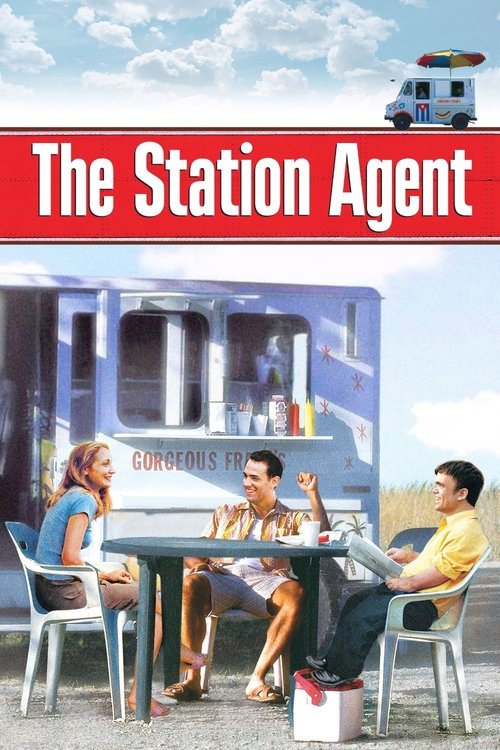
The Station Agent
When his only friend dies, a man born with dwarfism moves to rural New Jersey to live a life of solitude, only to meet a chatty hot dog vendor and a woman dealing with her own personal loss.
Despite its extremely modest budget of $500K, The Station Agent became a massive hit, earning $8.7M worldwide—a remarkable 1640% return. The film's compelling narrative resonated with audiences, demonstrating that strong storytelling can transcend budget limitations.
1 BAFTA Award29 wins & 31 nominations


Plot Structure
Story beats plotted across runtime


Narrative Arc
Emotional journey through the story's key moments
Story Circle
Blueprint 15-beat structure
Arcplot Score Breakdown
Weighted: Precision (70%) + Arc (15%) + Theme (15%)
The Station Agent (2003) exhibits deliberately positioned story structure, characteristic of Tom McCarthy's storytelling approach. This structural analysis examines how the film's 15-point plot structure maps to proven narrative frameworks across 1 hour and 28 minutes. With an Arcplot score of 7.5, the film showcases strong structural fundamentals.
Characters
Cast & narrative archetypes

Finbar McBride
Joe Oramas
Olivia Harris
Emily
Cleo
Henry Styles
David Harris
Main Cast & Characters
Finbar McBride
Played by Peter Dinklage
A reserved, train-obsessed dwarf who inherits an abandoned train depot in rural New Jersey and seeks solitude after the death of his only friend.
Joe Oramas
Played by Bobby Cannavale
An extroverted, talkative Cuban-American food truck vendor who persistently befriends Fin despite his desire for isolation.
Olivia Harris
Played by Patricia Clarkson
A grieving artist and separated wife processing the recent death of her young son, who nearly hits Fin with her car multiple times.
Emily
Played by Michelle Williams
A curious, intelligent young girl who befriends Fin and shares his fascination with trains while struggling with her overprotective mother.
Cleo
Played by Raven Goodwin
Emily's protective librarian mother who is initially wary of Fin but comes to accept his friendship with her daughter.
Henry Styles
Played by Paul Benjamin
Fin's elderly employer and only friend who owns a model train shop and whose death sets the story in motion by leaving Fin the depot.
David Harris
Played by John Slattery
Olivia's estranged husband who occasionally visits, representing her inability to fully let go of her past life and marriage.
Structural Analysis
The Status Quo at 1 minutes (1% through the runtime) establishes Fin works quietly at a model train shop in Hoboken, enduring stares and isolation. His life is solitary, orderly, and emotionally closed off.. The analysis reveals that this early placement immediately immerses viewers in the story world.
The inciting incident occurs at 9 minutes when Henry dies suddenly. Fin loses his only friend, his job, and his home above the shop. The disruption is complete loss.. At 10% through the film, this Disruption aligns precisely with traditional story structure. This beat shifts the emotional landscape, launching the protagonist into the central conflict.
The First Threshold at 21 minutes marks the transition into Act II, occurring at 24% of the runtime. This shows the protagonist's commitment to Fin arrives at the isolated depot and begins living there alone. He actively chooses complete solitude in this rural setting., moving from reaction to action.
At 43 minutes, the Midpoint arrives at 48% of the runtime—precisely centered, creating perfect narrative symmetry. Of particular interest, this crucial beat Fin, Joe, and Olivia share drinks and laughter together. For the first time, Fin experiences genuine friendship. This false victory shows connection is possible, raising the stakes., fundamentally raising what's at risk. The emotional intensity shifts, dividing the narrative into clear before-and-after phases.
The Collapse moment at 64 minutes (73% through) represents the emotional nadir. Here, After being filmed by teenagers treating him as a curiosity, Fin explodes in anger and pushes away both Joe and Olivia. The friendships appear dead., illustrates the protagonist at their lowest point. This beat's placement in the final quarter sets up the climactic reversal.
The Second Threshold at 69 minutes initiates the final act resolution at 79% of the runtime. Fin realizes that Joe and Olivia accept him as he is, not as a curiosity. He understands that real friendship requires vulnerability, not walls. He chooses to reconnect., demonstrating the transformation achieved throughout the journey.
Emotional Journey
The Station Agent's emotional architecture traces a deliberate progression across 15 carefully calibrated beats.
Narrative Framework
This structural analysis employs structural analysis methodology used to understand storytelling architecture. By mapping The Station Agent against these established plot points, we can identify how Tom McCarthy utilizes or subverts traditional narrative conventions. The plot point approach reveals not only adherence to structural principles but also creative choices that distinguish The Station Agent within the drama genre.
Tom McCarthy's Structural Approach
Among the 5 Tom McCarthy films analyzed on Arcplot, the average structural score is 7.2, reflecting strong command of classical structure. The Station Agent represents one of the director's most structurally precise works. For comparative analysis, explore the complete Tom McCarthy filmography.
Comparative Analysis
Additional drama films include After Thomas, South Pacific and Dirty Dancing: Havana Nights. For more Tom McCarthy analyses, see Stillwater, Spotlight and The Visitor.
Plot Points by Act
Act I
SetupStatus Quo
Fin works quietly at a model train shop in Hoboken, enduring stares and isolation. His life is solitary, orderly, and emotionally closed off.
Theme
Henry, Fin's boss and only friend, mentions that people need connection. The theme of isolation versus community is quietly introduced.
Worldbuilding
We see Fin's daily routine in Hoboken: working at the train shop, riding the train, reading train books. He has no real relationships and prefers solitude.
Disruption
Henry dies suddenly. Fin loses his only friend, his job, and his home above the shop. The disruption is complete loss.
Resistance
Fin learns Henry left him an abandoned train depot in Newfoundland, New Jersey. He debates whether to accept this inheritance and isolation or stay in the city. He chooses isolation.
Act II
ConfrontationFirst Threshold
Fin arrives at the isolated depot and begins living there alone. He actively chooses complete solitude in this rural setting.
Mirror World
Joe, the talkative hot dog vendor, relentlessly pursues friendship with Fin despite repeated rejection. Joe represents the opposite of isolation—unbridled connection.
Premise
Fin tries to maintain his solitude while Joe and Olivia (a grieving artist) persistently intrude. The premise: can this isolated man remain alone? Small moments of connection begin to crack his shell.
Midpoint
Fin, Joe, and Olivia share drinks and laughter together. For the first time, Fin experiences genuine friendship. This false victory shows connection is possible, raising the stakes.
Opposition
Fin's fear of vulnerability intensifies. Outside forces intrude: locals treat him as a spectacle, Olivia's grief threatens their friendship, Joe's father becomes ill. Emotional walls go back up.
Collapse
After being filmed by teenagers treating him as a curiosity, Fin explodes in anger and pushes away both Joe and Olivia. The friendships appear dead.
Crisis
Fin sits alone in the depot, having chosen isolation again. He processes whether his fear of being hurt is worth the cost of connection.
Act III
ResolutionSecond Threshold
Fin realizes that Joe and Olivia accept him as he is, not as a curiosity. He understands that real friendship requires vulnerability, not walls. He chooses to reconnect.
Synthesis
Fin reaches out to Joe and Olivia, apologizing and opening himself to connection. The three form a genuine, unconventional family unit built on acceptance.
Transformation
Fin walks along the train tracks with Joe and Olivia, smiling. Unlike the opening image of solitude, he now walks with friends—transformed from isolation to connection.