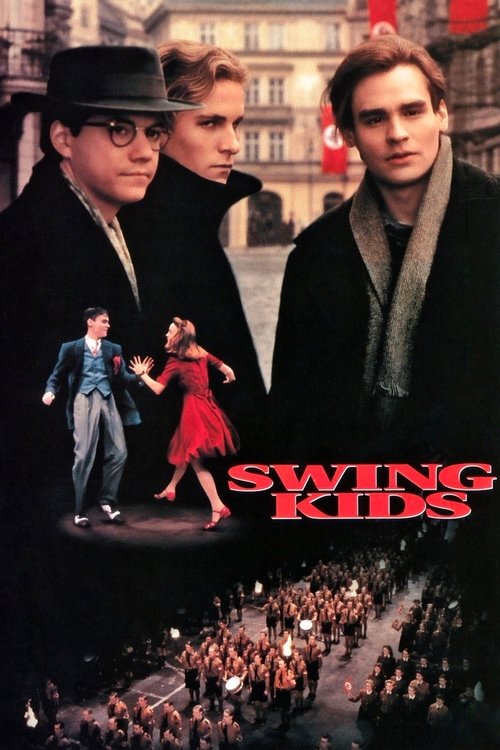
Swing Kids
The story of a close-knit group of young kids in Nazi Germany who listen to banned swing music from the US. Soon dancing and fun leads to more difficult choices as the Nazis begin tightening the grip on Germany. Each member of the group is forced to face some tough choices about right, wrong, and survival.
The film earned $5.6M at the global box office.
1 win & 1 nomination


Plot Structure
Story beats plotted across runtime


Narrative Arc
Emotional journey through the story's key moments
Story Circle
Blueprint 15-beat structure
Arcplot Score Breakdown
Weighted: Precision (70%) + Arc (15%) + Theme (15%)
Swing Kids (1993) demonstrates strategically placed narrative design, characteristic of Thomas Carter's storytelling approach. This structural analysis examines how the film's 15-point plot structure maps to proven narrative frameworks across 1 hour and 52 minutes. With an Arcplot score of 7.1, the film balances conventional beats with creative variation.
Characters
Cast & narrative archetypes

Peter Müller
Thomas Berger
Arvid
Evey
Herr Knopp
Frau Müller
Main Cast & Characters
Peter Müller
Played by Robert Sean Leonard
A passionate swing music enthusiast who resists Nazi indoctrination while struggling with family loyalty and friendship.
Thomas Berger
Played by Christian Bale
Peter's best friend who joins the Hitler Youth out of survival instinct and becomes increasingly seduced by Nazi ideology.
Arvid
Played by Frank Whaley
A rebellious swing kid and gifted guitarist who refuses to compromise his values despite brutal consequences.
Evey
Played by Barbara Hershey
A swing enthusiast and love interest who represents the idealism and freedom the boys are fighting to preserve.
Herr Knopp
Played by Kenneth Branagh
A sympathetic teacher who quietly resists Nazi education mandates and inspires critical thinking in his students.
Frau Müller
Played by Barbara Hershey
Peter's mother who falls in love with a Nazi officer, creating a devastating conflict of loyalty within the family.
Structural Analysis
The Status Quo at 1 minutes (1% through the runtime) establishes Peter and Thomas swing dancing at a forbidden jazz club, living for music and freedom in 1939 Hamburg, blissfully apolitical despite growing Nazi control.. Structural examination shows that this early placement immediately immerses viewers in the story world.
The inciting incident occurs at 12 minutes when Peter and Thomas are caught stealing a radio by the Gestapo. To avoid serious consequences, they are forced to join the Hitler Youth as an alternative to jail.. At 11% through the film, this Disruption aligns precisely with traditional story structure. This beat shifts the emotional landscape, launching the protagonist into the central conflict.
The First Threshold at 29 minutes marks the transition into Act II, occurring at 26% of the runtime. This illustrates the protagonist's commitment to Peter and Thomas actively choose to embrace their dual identity, deciding they can be both Swing Kids and HJ members, believing they can keep the worlds separate., moving from reaction to action.
At 56 minutes, the Midpoint arrives at 50% of the runtime—precisely centered, creating perfect narrative symmetry. The analysis reveals that this crucial beat False defeat: The HJ raid the swing club. Peter witnesses the brutality firsthand as his friends are beaten. The facade that he can keep his two worlds separate is shattered. Stakes raised: the Nazis are actively hunting swing culture., fundamentally raising what's at risk. The emotional intensity shifts, dividing the narrative into clear before-and-after phases.
The Collapse moment at 83 minutes (74% through) represents the emotional nadir. Here, Arvid commits suicide by jumping from a building, unable to live in a world that has no place for him. Peter finds his body. The "whiff of death" - innocence and hope die. Peter realizes the cost of compromise., illustrates the protagonist at their lowest point. This beat's placement in the final quarter sets up the climactic reversal.
The Second Threshold at 89 minutes initiates the final act resolution at 80% of the runtime. Peter makes his choice: at an HJ gathering, he refuses to participate in the beating of a swing kid. He openly defies the HJ, reclaiming his identity and honoring Arvid's memory. He synthesizes his realization with action., demonstrating the transformation achieved throughout the journey.
Emotional Journey
Swing Kids's emotional architecture traces a deliberate progression across 15 carefully calibrated beats.
Narrative Framework
This structural analysis employs proven narrative structure principles that track dramatic progression. By mapping Swing Kids against these established plot points, we can identify how Thomas Carter utilizes or subverts traditional narrative conventions. The plot point approach reveals not only adherence to structural principles but also creative choices that distinguish Swing Kids within the music genre.
Thomas Carter's Structural Approach
Among the 6 Thomas Carter films analyzed on Arcplot, the average structural score is 7.2, reflecting strong command of classical structure. Swing Kids takes a more unconventional approach compared to the director's typical style. For comparative analysis, explore the complete Thomas Carter filmography.
Comparative Analysis
Additional music films include South Pacific, Dirty Dancing: Havana Nights and Yesterday. For more Thomas Carter analyses, see When the Game Stands Tall, Metro and Coach Carter.
Plot Points by Act
Act I
SetupStatus Quo
Peter and Thomas swing dancing at a forbidden jazz club, living for music and freedom in 1939 Hamburg, blissfully apolitical despite growing Nazi control.
Theme
Arvid tells Peter: "It don't mean a thing if it ain't got that swing" - establishing the conflict between authentic expression and forced conformity.
Worldbuilding
Introduction to the Swing Kids subculture, their love of American jazz, the underground club scene, and the growing pressure from the Hitler Youth. Peter's home life with his mother and his friendship with Thomas and Arvid are established.
Disruption
Peter and Thomas are caught stealing a radio by the Gestapo. To avoid serious consequences, they are forced to join the Hitler Youth as an alternative to jail.
Resistance
Peter and Thomas debate whether to truly participate in the HJ or just go through the motions. They attend HJ meetings while trying to maintain their swing identity. Arvid (disabled, cannot join HJ) represents the resistance they're abandoning.
Act II
ConfrontationFirst Threshold
Peter and Thomas actively choose to embrace their dual identity, deciding they can be both Swing Kids and HJ members, believing they can keep the worlds separate.
Mirror World
Peter develops a relationship with Evey, and deepens his bond with Arvid, who represents pure resistance to Nazi ideology. Arvid embodies the thematic question: can you serve two masters?
Premise
The "fun" of trying to have it both ways: swinging at night, HJ by day. Peter and Thomas enjoy their music while slowly being indoctrinated. The seduction of belonging and power begins to work on Thomas.
Midpoint
False defeat: The HJ raid the swing club. Peter witnesses the brutality firsthand as his friends are beaten. The facade that he can keep his two worlds separate is shattered. Stakes raised: the Nazis are actively hunting swing culture.
Opposition
Thomas becomes increasingly radicalized by HJ ideology while Peter grows more disillusioned. Their friendship fractures. Peter sees the evil clearly now but feels trapped. Arvid is harassed and beaten. The pressure to conform intensifies from all sides.
Collapse
Arvid commits suicide by jumping from a building, unable to live in a world that has no place for him. Peter finds his body. The "whiff of death" - innocence and hope die. Peter realizes the cost of compromise.
Crisis
Peter mourns Arvid and faces his dark night. He must decide: continue the charade and live a lie, or stand for something and face the consequences. Thomas is now fully converted to Nazi ideology.
Act III
ResolutionSecond Threshold
Peter makes his choice: at an HJ gathering, he refuses to participate in the beating of a swing kid. He openly defies the HJ, reclaiming his identity and honoring Arvid's memory. He synthesizes his realization with action.
Synthesis
Peter is arrested and sent to a labor camp. In the finale, Thomas - now a true Nazi - confronts Peter one last time. Peter stands firm in his choice. The cost of integrity is shown but not regretted.
Transformation
Peter, head shaved, in prison uniform, dances and swings alone in his cell or on the truck to the camp. Mirror of opening: still dancing, but now with purpose and moral clarity. He has become who he needed to be - "Swing Heil."