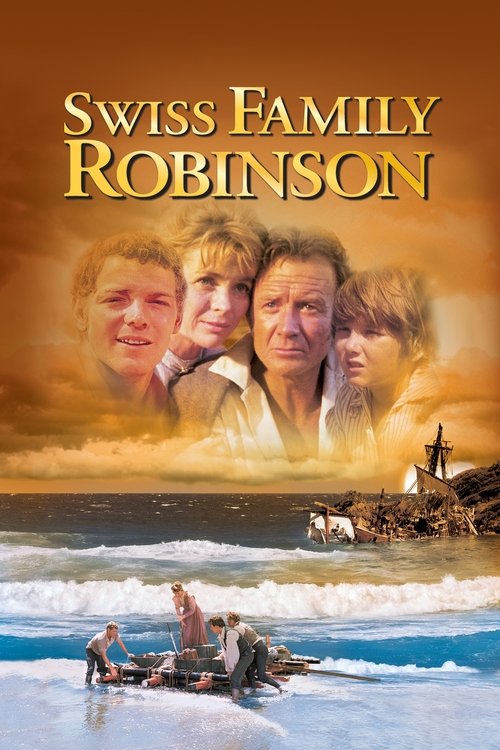
Swiss Family Robinson
After being shipwrecked, the Robinson family is marooned on an island inhabited only by an impressive array of wildlife. In true pioneer spirit, they quickly make themselves at home but soon face a danger even greater than nature: dastardly pirates.
Despite its small-scale budget of $5.0M, Swiss Family Robinson became a box office phenomenon, earning $40.4M worldwide—a remarkable 707% return. The film's bold vision attracted moviegoers, demonstrating that strong storytelling can transcend budget limitations.


Plot Structure
Story beats plotted across runtime


Narrative Arc
Emotional journey through the story's key moments
Story Circle
Blueprint 15-beat structure
Arcplot Score Breakdown
Weighted: Precision (70%) + Arc (15%) + Theme (15%)
Swiss Family Robinson (1960) demonstrates deliberately positioned narrative architecture, characteristic of Ken Annakin's storytelling approach. This structural analysis examines how the film's 15-point plot structure maps to proven narrative frameworks across 2 hours and 6 minutes. With an Arcplot score of 7.2, the film balances conventional beats with creative variation.
Characters
Cast & narrative archetypes

Father Robinson
Mother Robinson
Fritz Robinson
Ernst Robinson
Francis Robinson
Bertie (Roberta)
Captain Kuala
Main Cast & Characters
Father Robinson
Played by John Mills
Resourceful patriarch who leads his family to survival and prosperity on a deserted island through ingenuity and faith.
Mother Robinson
Played by Dorothy McGuire
Nurturing matriarch who maintains civilization and moral order while adapting to frontier life.
Fritz Robinson
Played by James MacArthur
Eldest son who matures into a capable young man, discovers love, and becomes his father's right hand.
Ernst Robinson
Played by Tommy Kirk
Scholarly middle son with scientific curiosity who adapts his knowledge to practical island challenges.
Francis Robinson
Played by Kevin Corcoran
Youngest son who befriends animals and brings youthful wonder to the family's adventure.
Bertie (Roberta)
Played by Janet Munro
Spirited young woman disguised as a boy who becomes Fritz's love interest after being rescued from pirates.
Captain Kuala
Played by Sessue Hayakawa
Ruthless pirate leader who threatens the family and kidnaps Bertie's grandfather.
Structural Analysis
The Status Quo at 1 minutes (1% through the runtime) establishes The Robinson family aboard their ship bound for New Guinea, living as civilized Europeans with their three sons, representing their orderly life before disruption.. Of particular interest, this early placement immediately immerses viewers in the story world.
The inciting incident occurs at 13 minutes when The ship is destroyed in the storm and runs aground. The crew abandons the family, forcing them to survive alone on an uncharted island with no hope of immediate rescue.. At 10% through the film, this Disruption aligns precisely with traditional story structure. This beat shifts the emotional landscape, launching the protagonist into the central conflict.
The First Threshold at 30 minutes marks the transition into Act II, occurring at 24% of the runtime. This shows the protagonist's commitment to The family makes the active choice to build a permanent treehouse home and fully commit to island life rather than waiting passively for rescue. They embrace their new world., moving from reaction to action.
At 64 minutes, the Midpoint arrives at 50% of the runtime—precisely centered, creating perfect narrative symmetry. Of particular interest, this crucial beat The family discovers evidence of pirates in the area - finding signs of their presence and realizing their island paradise is threatened by external danger. The stakes are raised; false sense of security is shattered., fundamentally raising what's at risk. The emotional intensity shifts, dividing the narrative into clear before-and-after phases.
The Collapse moment at 94 minutes (74% through) represents the emotional nadir. Here, The pirates launch a full-scale attack on the family. The family faces potential death or capture. Their peaceful paradise becomes a battlefield, and everything they've built is threatened with destruction., demonstrates the protagonist at their lowest point. This beat's placement in the final quarter sets up the climactic reversal.
The Second Threshold at 99 minutes initiates the final act resolution at 79% of the runtime. The family realizes that their cooperation, ingenuity, and the skills they've developed on the island - the very theme stated early on - give them the advantage. United, they execute a coordinated final defense., demonstrating the transformation achieved throughout the journey.
Emotional Journey
Swiss Family Robinson's emotional architecture traces a deliberate progression across 15 carefully calibrated beats.
Narrative Framework
This structural analysis employs systematic plot point analysis that identifies crucial turning points. By mapping Swiss Family Robinson against these established plot points, we can identify how Ken Annakin utilizes or subverts traditional narrative conventions. The plot point approach reveals not only adherence to structural principles but also creative choices that distinguish Swiss Family Robinson within the adventure genre.
Ken Annakin's Structural Approach
Among the 5 Ken Annakin films analyzed on Arcplot, the average structural score is 7.2, reflecting strong command of classical structure. Swiss Family Robinson exemplifies the director's characteristic narrative technique. For comparative analysis, explore the complete Ken Annakin filmography.
Comparative Analysis
Additional adventure films include The Black Stallion, The Bad Guys and Puss in Boots. For more Ken Annakin analyses, see Battle of the Bulge, The Longest Day and The Pirate Movie.
Plot Points by Act
Act I
SetupStatus Quo
The Robinson family aboard their ship bound for New Guinea, living as civilized Europeans with their three sons, representing their orderly life before disruption.
Theme
Father Robinson discusses with Mother the importance of family working together and relying on one another - the central theme that survival and happiness come from unity and cooperation.
Worldbuilding
Establishment of the Robinson family dynamics: Father as leader, Mother as nurturer, Fritz as eldest and responsible, Ernst as intellectual bookworm, and Francis as youngest and playful. The ship encounters a violent storm.
Disruption
The ship is destroyed in the storm and runs aground. The crew abandons the family, forcing them to survive alone on an uncharted island with no hope of immediate rescue.
Resistance
The family debates whether to stay on the wrecked ship or venture to the island. They salvage supplies, build a raft, and Father leads them in establishing basic survival protocols and exploring their new environment.
Act II
ConfrontationFirst Threshold
The family makes the active choice to build a permanent treehouse home and fully commit to island life rather than waiting passively for rescue. They embrace their new world.
Mirror World
Fritz and Ernst discover Bertie (later revealed to be Roberta), a young person from a shipwrecked grandfather's vessel. This introduces the romantic subplot and represents connection beyond the family unit.
Premise
The fun and games of island life: building elaborate treehouse additions, creating ingenious contraptions, taming wild animals, exploring the island, establishing a thriving homestead. The family thrives through cooperation and ingenuity.
Midpoint
The family discovers evidence of pirates in the area - finding signs of their presence and realizing their island paradise is threatened by external danger. The stakes are raised; false sense of security is shattered.
Opposition
The pirate threat intensifies. The family must balance their daily life with preparing defenses. Fritz's romance with Roberta creates tension between the brothers. The pirates get closer, scouts are spotted, and conflict seems inevitable.
Collapse
The pirates launch a full-scale attack on the family. The family faces potential death or capture. Their peaceful paradise becomes a battlefield, and everything they've built is threatened with destruction.
Crisis
The darkest moments of the battle as the family fights desperately using their homemade traps and defenses. They face the real possibility of losing everything - their home, their lives, their unity.
Act III
ResolutionSecond Threshold
The family realizes that their cooperation, ingenuity, and the skills they've developed on the island - the very theme stated early on - give them the advantage. United, they execute a coordinated final defense.
Synthesis
The finale battle where the family's traps, animal allies, and teamwork defeat the pirates. A British ship arrives offering rescue. The family must decide whether to return to civilization or stay in their paradise.
Transformation
The family chooses to remain on the island (except Ernst who leaves for education), demonstrating their complete transformation from civilized Europeans dependent on society to self-sufficient islanders who have found true home in family unity.