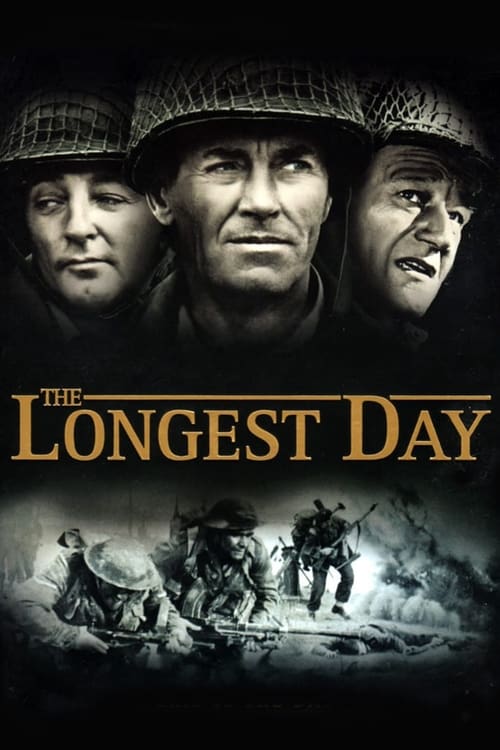
The Longest Day
The retelling of June 6, 1944, from the perspectives of the Germans, US, British, Canadians, and the Free French. Marshall Erwin Rommel, touring the defenses being established as part of the Reich's Atlantic Wall, notes to his officers that when the Allied invasion comes they must be stopped on the beach. "For the Allies as well as the Germans, it will be the longest day"
Despite its limited budget of $10.0M, The Longest Day became a financial success, earning $50.1M worldwide—a 401% return. The film's fresh perspective attracted moviegoers, showing that strong storytelling can transcend budget limitations.
2 Oscars. 8 wins & 6 nominations


Plot Structure
Story beats plotted across runtime


Narrative Arc
Emotional journey through the story's key moments
Story Circle
Blueprint 15-beat structure
Arcplot Score Breakdown
Weighted: Precision (70%) + Arc (15%) + Theme (15%)
The Longest Day (1962) exemplifies meticulously timed story structure, characteristic of Ken Annakin's storytelling approach. This structural analysis examines how the film's 15-point plot structure maps to proven narrative frameworks across 2 hours and 58 minutes. With an Arcplot score of 7.2, the film balances conventional beats with creative variation.
Structural Analysis
The Status Quo at 1 minutes (1% through the runtime) establishes June 5, 1944: Allied forces wait in England while German forces occupy Normandy. Eisenhower contemplates the weather, postponing the invasion. Both sides exist in tense anticipation of what's coming.. Significantly, this early placement immediately immerses viewers in the story world.
The inciting incident occurs at 21 minutes when Eisenhower makes the fateful decision: "OK, we'll go." Despite poor weather forecasts, the invasion is launched. The status quo of waiting ends; the machines of war are set irrevocably in motion.. At 12% through the film, this Disruption aligns precisely with traditional story structure. This beat shifts the emotional landscape, launching the protagonist into the central conflict.
The First Threshold at 45 minutes marks the transition into Act II, occurring at 25% of the runtime. This reveals the protagonist's commitment to Paratroopers jump into Normandy in darkness. The first Allied soldiers cross into occupied France, landing scattered and disorganized. There is no turning back; the invasion has begun in earnest., moving from reaction to action.
At 89 minutes, the Midpoint arrives at 50% of the runtime—precisely centered, creating perfect narrative symmetry. Structural examination shows that this crucial beat The first waves hit Omaha Beach and face devastating fire. Soldiers are pinned down, casualties mount catastrophically. What seemed achievable now appears impossible - a false defeat that raises the stakes enormously., fundamentally raising what's at risk. The emotional intensity shifts, dividing the narrative into clear before-and-after phases.
The Collapse moment at 134 minutes (75% through) represents the emotional nadir. Here, Multiple moments of potential failure converge: Omaha Beach remains contested, German reinforcements could arrive, objectives unmet. The literal "whiff of death" surrounds the operation as casualties mount and success remains uncertain., illustrates the protagonist at their lowest point. This beat's placement in the final quarter sets up the climactic reversal.
The Second Threshold at 142 minutes initiates the final act resolution at 80% of the runtime. Breakthrough: coordinated pressure across all sectors begins to overwhelm German defenses. Sheer weight of numbers, naval support, and individual determination combine. The realization: the Allies will hold and advance., demonstrating the transformation achieved throughout the journey.
Emotional Journey
The Longest Day's emotional architecture traces a deliberate progression across 15 carefully calibrated beats.
Narrative Framework
This structural analysis employs proven narrative structure principles that track dramatic progression. By mapping The Longest Day against these established plot points, we can identify how Ken Annakin utilizes or subverts traditional narrative conventions. The plot point approach reveals not only adherence to structural principles but also creative choices that distinguish The Longest Day within the war genre.
Ken Annakin's Structural Approach
Among the 5 Ken Annakin films analyzed on Arcplot, the average structural score is 7.2, reflecting strong command of classical structure. The Longest Day exemplifies the director's characteristic narrative technique. For comparative analysis, explore the complete Ken Annakin filmography.
Comparative Analysis
Additional war films include Fury, Shenandoah and More American Graffiti. For more Ken Annakin analyses, see Swiss Family Robinson, Battle of the Bulge and The Pirate Movie.
Plot Points by Act
Act I
SetupStatus Quo
June 5, 1944: Allied forces wait in England while German forces occupy Normandy. Eisenhower contemplates the weather, postponing the invasion. Both sides exist in tense anticipation of what's coming.
Theme
A French Resistance fighter states: "We've been waiting four years for this day." The theme emerges: liberation requires coordinated sacrifice across all levels, from command to individual soldier.
Worldbuilding
Introduction of key players across all sides: Eisenhower and Allied command planning the invasion, German officers debating Allied intentions, French Resistance preparing, paratroopers and infantry waiting. Establishes the massive scale and coordination required.
Disruption
Eisenhower makes the fateful decision: "OK, we'll go." Despite poor weather forecasts, the invasion is launched. The status quo of waiting ends; the machines of war are set irrevocably in motion.
Resistance
Preparation and movement phase: paratroopers board planes, resistance fighters receive orders, naval forces depart, troops brief and prepare. The machinery of the largest amphibious invasion in history begins its inexorable advance.
Act II
ConfrontationFirst Threshold
Paratroopers jump into Normandy in darkness. The first Allied soldiers cross into occupied France, landing scattered and disorganized. There is no turning back; the invasion has begun in earnest.
Mirror World
Introduction of the French commando subplot under Philippe Kieffer. French forces fighting for their own homeland embody the personal stakes and meaning behind the massive military operation.
Premise
The invasion unfolds: paratroopers capture key bridges and towns, resistance sabotages communications, naval bombardment begins, and landing craft approach the beaches. The "promise of the premise" - seeing D-Day from every angle.
Midpoint
The first waves hit Omaha Beach and face devastating fire. Soldiers are pinned down, casualties mount catastrophically. What seemed achievable now appears impossible - a false defeat that raises the stakes enormously.
Opposition
Intense combat across all beaches and objectives. German resistance strengthens, Allied forces struggle to advance inland from beachheads. Rangers assault Pointe du Hoc, British forces fight for bridges, paratroopers defend Sainte-Mère-Église. Progress is measured in yards and lives.
Collapse
Multiple moments of potential failure converge: Omaha Beach remains contested, German reinforcements could arrive, objectives unmet. The literal "whiff of death" surrounds the operation as casualties mount and success remains uncertain.
Crisis
The darkest hour: soldiers process losses, commanders weigh whether the invasion can succeed. Individual acts of courage are tested against the grinding machinery of total war. The human cost becomes fully apparent.
Act III
ResolutionSecond Threshold
Breakthrough: coordinated pressure across all sectors begins to overwhelm German defenses. Sheer weight of numbers, naval support, and individual determination combine. The realization: the Allies will hold and advance.
Synthesis
The finale: Allied forces secure beachheads, link up inland positions, and establish supply lines. German forces retreat. What was bought with blood is now consolidated. The invasion succeeds through the synthesis of planning, sacrifice, and execution.
Transformation
The closing image: Allied soldiers moving inland through liberated French villages, greeted by civilians. The transformation from occupied Europe to the beginning of liberation. The longest day has ended; the campaign for freedom continues.