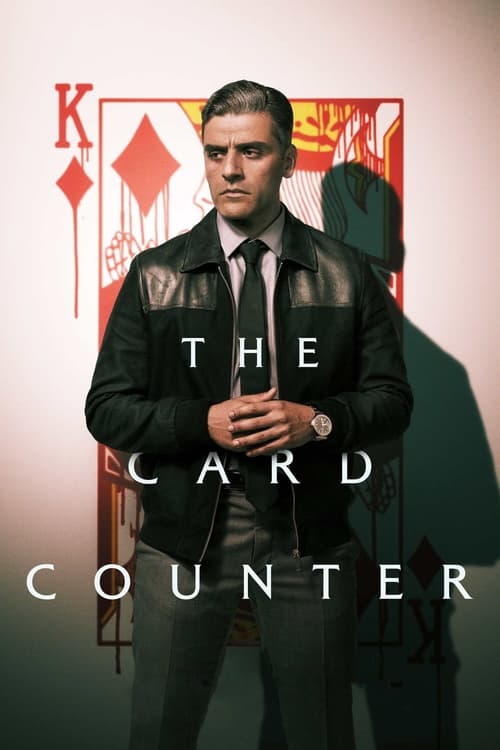
The Card Counter
William Tell just wants to play cards. His spartan existence on the casino trail is shattered when he is approached by Cirk, a vulnerable and angry young man seeking help to execute his plan for revenge on a military colonel. Tell sees a chance at redemption through his relationship with Cirk. But keeping Cirk on the straight-and-narrow proves impossible, dragging Tell back into the darkness of his past.
The film earned $5.0M at the global box office.


Plot Structure
Story beats plotted across runtime


Narrative Arc
Emotional journey through the story's key moments
Story Circle
Blueprint 15-beat structure
Arcplot Score Breakdown
Weighted: Precision (70%) + Arc (15%) + Theme (15%)
The Card Counter (2021) showcases strategically placed narrative architecture, characteristic of Paul Schrader's storytelling approach. This structural analysis examines how the film's 15-point plot structure maps to proven narrative frameworks across 1 hour and 51 minutes. With an Arcplot score of 6.8, the film balances conventional beats with creative variation.
Characters
Cast & narrative archetypes

William Tell
Cirk Baufort
La Linda
Major John Gordo
Main Cast & Characters
William Tell
Played by Oscar Isaac
A former military interrogator turned professional gambler who lives a controlled, solitary life counting cards at casinos while haunted by his past at Abu Ghraib.
Cirk Baufort
Played by Tye Sheridan
A troubled young man seeking revenge against a former military officer who trained his father, leading to his father's suicide and mother's abandonment.
La Linda
Played by Tiffany Haddish
A professional gambling manager who offers to stake Tell in high-stakes tournaments and develops a romantic connection with him.
Major John Gordo
Played by Willem Dafoe
Tell's former superior officer and instructor in "enhanced interrogation" at Abu Ghraib, now a wealthy military contractor living without consequence.
Structural Analysis
The Status Quo at 1 minutes (1% through the runtime) establishes William Tell methodically wraps motel furniture in white sheets, establishing his obsessive control and monk-like isolation as he narrates his philosophy of counting cards and staying invisible.. Of particular interest, this early placement immediately immerses viewers in the story world.
The inciting incident occurs at 13 minutes when At a security convention, Tell sees Major John Gordo speaking. Young Cirk Baufort approaches Tell, revealing he knows Tell's real identity and that Cirk's father, who served under Gordo, killed himself. Cirk wants revenge.. At 12% through the film, this Disruption aligns precisely with traditional story structure. This beat shifts the emotional landscape, launching the protagonist into the central conflict.
The First Threshold at 28 minutes marks the transition into Act II, occurring at 25% of the runtime. This demonstrates the protagonist's commitment to Tell agrees to La Linda's backing arrangement and, crucially, invites Cirk to travel with him on the poker circuit. He chooses connection over isolation, hoping to save Cirk from the path of vengeance., moving from reaction to action.
At 56 minutes, the Midpoint arrives at 50% of the runtime—precisely centered, creating perfect narrative symmetry. Significantly, this crucial beat Tell offers to pay off Cirk's mother's debts and fund his college education, a false victory where Tell believes he can buy Cirk's redemption and his own absolution. Cirk appears to accept., fundamentally raising what's at risk. The emotional intensity shifts, dividing the narrative into clear before-and-after phases.
The Collapse moment at 83 minutes (75% through) represents the emotional nadir. Here, Tell discovers that Cirk has gone to Gordo's house. He races there to find Cirk has killed Gordo and then himself. Tell's attempt at vicarious redemption has catastrophically failed—he couldn't save Cirk any more than he could save himself., reveals the protagonist at their lowest point. This beat's placement in the final quarter sets up the climactic reversal.
The Second Threshold at 89 minutes initiates the final act resolution at 80% of the runtime. Tell makes a choice: he will finish what Cirk started, but on his own terms. He tortures and kills Gordo (or ensures his death), accepting that he cannot escape his nature but can direct it toward justice. He surrenders to police., demonstrating the transformation achieved throughout the journey.
Emotional Journey
The Card Counter's emotional architecture traces a deliberate progression across 15 carefully calibrated beats.
Narrative Framework
This structural analysis employs a 15-point narrative structure framework that maps key story moments. By mapping The Card Counter against these established plot points, we can identify how Paul Schrader utilizes or subverts traditional narrative conventions. The plot point approach reveals not only adherence to structural principles but also creative choices that distinguish The Card Counter within the drama genre.
Paul Schrader's Structural Approach
Among the 6 Paul Schrader films analyzed on Arcplot, the average structural score is 6.9, demonstrating varied approaches to story architecture. The Card Counter takes a more unconventional approach compared to the director's typical style. For comparative analysis, explore the complete Paul Schrader filmography.
Comparative Analysis
Additional drama films include After Thomas, South Pacific and Dirty Dancing: Havana Nights. For more Paul Schrader analyses, see Blue Collar, Cat People and Affliction.
Plot Points by Act
Act I
SetupStatus Quo
William Tell methodically wraps motel furniture in white sheets, establishing his obsessive control and monk-like isolation as he narrates his philosophy of counting cards and staying invisible.
Theme
Tell's voiceover explains that prison taught him discipline and control: "One can learn to hold oneself at a remove." The theme of whether discipline can overcome guilt is established.
Worldbuilding
We see Tell's rigid routine across anonymous casinos, his small-stakes gambling approach, his journal writing, and flashbacks hint at his dark military past at Abu Ghraib. The world of gambling as purgatory is established.
Disruption
At a security convention, Tell sees Major John Gordo speaking. Young Cirk Baufort approaches Tell, revealing he knows Tell's real identity and that Cirk's father, who served under Gordo, killed himself. Cirk wants revenge.
Resistance
Tell resists involvement with Cirk while also meeting La Linda, a gambling backer who wants to stake him on the World Series of Poker circuit. Tell weighs whether to remain invisible or re-engage with the world.
Act II
ConfrontationFirst Threshold
Tell agrees to La Linda's backing arrangement and, crucially, invites Cirk to travel with him on the poker circuit. He chooses connection over isolation, hoping to save Cirk from the path of vengeance.
Mirror World
Tell and La Linda share an intimate dinner, and a genuine romantic connection emerges. She represents the possibility of grace and normalcy, the life Tell believes he doesn't deserve but secretly yearns for.
Premise
Tell travels the poker circuit with Cirk in tow, winning steadily while trying to mentor the young man away from violence. The trio of Tell, Cirk, and La Linda forms an unlikely surrogate family across anonymous casino towns.
Midpoint
Tell offers to pay off Cirk's mother's debts and fund his college education, a false victory where Tell believes he can buy Cirk's redemption and his own absolution. Cirk appears to accept.
Opposition
Tell continues winning but grows increasingly haunted by Abu Ghraib flashbacks. Cirk becomes distant and evasive. Tell's relationship with La Linda deepens even as he refuses to fully let her in. The past refuses to stay buried.
Collapse
Tell discovers that Cirk has gone to Gordo's house. He races there to find Cirk has killed Gordo and then himself. Tell's attempt at vicarious redemption has catastrophically failed—he couldn't save Cirk any more than he could save himself.
Crisis
Tell sits in stunned grief at the crime scene. The full weight of his failure crashes down. His controlled life, his careful discipline—none of it could prevent this violence or expiate his sins.
Act III
ResolutionSecond Threshold
Tell makes a choice: he will finish what Cirk started, but on his own terms. He tortures and kills Gordo (or ensures his death), accepting that he cannot escape his nature but can direct it toward justice. He surrenders to police.
Synthesis
Tell returns to prison, the place where he first found discipline. But this time he has La Linda. She visits him, representing the human connection he finally allowed himself to accept, even behind glass.
Transformation
In the final image, Tell and La Linda reach toward each other through the prison glass, their fingers almost touching. Unlike the opening isolation, Tell has chosen connection. Redemption remains uncertain, but grace is possible.