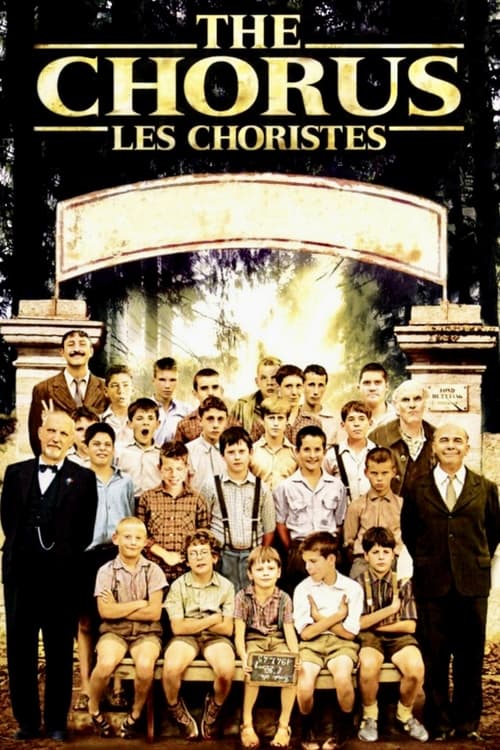
The Chorus
In 1940s France, a new teacher at a school for disruptive boys gives hope and inspiration.
Despite its small-scale budget of $5.3M, The Chorus became a massive hit, earning $83.6M worldwide—a remarkable 1477% return. The film's distinctive approach engaged audiences, demonstrating that strong storytelling can transcend budget limitations.

Plot Structure
Story beats plotted across runtime


Narrative Arc
Emotional journey through the story's key moments
Story Circle
Blueprint 15-beat structure
Arcplot Score Breakdown
Weighted: Precision (70%) + Arc (15%) + Theme (15%)
The Chorus (2004) demonstrates precise narrative architecture, characteristic of Christophe Barratier's storytelling approach. This structural analysis examines how the film's 15-point plot structure maps to proven narrative frameworks across 1 hour and 37 minutes. With an Arcplot score of 7.3, the film balances conventional beats with creative variation.
Structural Analysis
The Status Quo at 1 minutes (1% through the runtime) establishes Elderly Morhange receives news of his mother's death and discovers Mathieu's diary. Framing device establishes the retrospective tone and a life touched by someone now gone.. Notably, this early placement immediately immerses viewers in the story world.
The inciting incident occurs at 12 minutes when Maxence is severely injured when a booby trap left by Mondain explodes in his face. Rachin demands collective punishment. Mathieu witnesses the cycle of violence and realizes this system destroys rather than reforms.. At 13% through the film, this Disruption is delayed, allowing extended setup of the story world. This beat shifts the emotional landscape, launching the protagonist into the central conflict.
The First Threshold at 23 minutes marks the transition into Act II, occurring at 24% of the runtime. This indicates the protagonist's commitment to Mathieu makes the active choice to form a choir. He auditions the boys, discovering their voices and potential. This is his commitment to a new approach - using music to reach these damaged children rather than force., moving from reaction to action.
At 49 minutes, the Midpoint arrives at 51% of the runtime—precisely centered, creating perfect narrative symmetry. Notably, this crucial beat The choir performs publicly for the Countess and distinguished visitors. It's a triumphant success - Pierre's solo moves everyone. Mathieu's methods are validated. But this false victory attracts attention that will lead to consequences. Stakes are raised., fundamentally raising what's at risk. The emotional intensity shifts, dividing the narrative into clear before-and-after phases.
The Collapse moment at 72 minutes (75% through) represents the emotional nadir. Here, Mondain is expelled, returns and sets fire to the school in revenge. The building burns - a literal death of Mathieu's dream. Rachin blames Mathieu for the disaster and fires him. Everything Mathieu built is destroyed., illustrates the protagonist at their lowest point. This beat's placement in the final quarter sets up the climactic reversal.
The Second Threshold at 79 minutes initiates the final act resolution at 81% of the runtime. As Mathieu leaves, paper airplanes float down from the dormitory windows with messages of love and goodbye. The boys sing their song in defiance of Rachin's orders. Mathieu realizes: he DID matter. He changed their lives. The music remains., demonstrating the transformation achieved throughout the journey.
Emotional Journey
The Chorus's emotional architecture traces a deliberate progression across 15 carefully calibrated beats.
Narrative Framework
This structural analysis employs structural analysis methodology used to understand storytelling architecture. By mapping The Chorus against these established plot points, we can identify how Christophe Barratier utilizes or subverts traditional narrative conventions. The plot point approach reveals not only adherence to structural principles but also creative choices that distinguish The Chorus within the drama genre.
Christophe Barratier's Structural Approach
Among the 3 Christophe Barratier films analyzed on Arcplot, the average structural score is 7.2, reflecting strong command of classical structure. The Chorus represents one of the director's most structurally precise works. For comparative analysis, explore the complete Christophe Barratier filmography.
Comparative Analysis
Additional drama films include Eye for an Eye, South Pacific and Kiss of the Spider Woman. For more Christophe Barratier analyses, see War of the Buttons, Paris 36.
Plot Points by Act
Act I
SetupStatus Quo
Elderly Morhange receives news of his mother's death and discovers Mathieu's diary. Framing device establishes the retrospective tone and a life touched by someone now gone.
Theme
Mathieu arrives at Fond de l'Étang ('Bottom of the Pond') and witnesses a boy say: "Action, reaction." The headmaster Rachin's philosophy of punishment is stated - the thematic opposite of what Mathieu will prove.
Worldbuilding
Mathieu observes the harsh reality of the reform school: cruel punishments, troubled boys, Rachin's tyrannical rule. We meet key students including the defiant Morhange and loyal Pépinot. The world of systematic brutality is established.
Disruption
Maxence is severely injured when a booby trap left by Mondain explodes in his face. Rachin demands collective punishment. Mathieu witnesses the cycle of violence and realizes this system destroys rather than reforms.
Resistance
Mathieu debates how to respond. Instead of joining Rachin's brutality, he secretly identifies the culprit and makes a deal: the boy will care for the injured Maxence. Mathieu begins experimenting with compassion over punishment.
Act II
ConfrontationFirst Threshold
Mathieu makes the active choice to form a choir. He auditions the boys, discovering their voices and potential. This is his commitment to a new approach - using music to reach these damaged children rather than force.
Mirror World
Mathieu discovers Pierre Morhange has an angelic voice. Pierre becomes the embodiment of the theme - a seemingly irredeemable troublemaker who contains beauty and potential. Their relationship will teach Mathieu about belief and redemption.
Premise
The promise of the premise: the choir transforms the boys. Beautiful musical sequences show their growth. Mathieu builds trust, Pierre's talent blooms, even difficult students find their place. Romance subplot with Violette begins. The music creates joy.
Midpoint
The choir performs publicly for the Countess and distinguished visitors. It's a triumphant success - Pierre's solo moves everyone. Mathieu's methods are validated. But this false victory attracts attention that will lead to consequences. Stakes are raised.
Opposition
Rachin grows jealous and threatened by Mathieu's success. Mondain, the truly damaged delinquent, arrives and disrupts the choir. Mathieu's relationship with Violette complicates as she shows interest. The system pushes back against change.
Collapse
Mondain is expelled, returns and sets fire to the school in revenge. The building burns - a literal death of Mathieu's dream. Rachin blames Mathieu for the disaster and fires him. Everything Mathieu built is destroyed.
Crisis
Mathieu packs his belongings in despair. He is forbidden from saying goodbye to the boys. He walks away defeated, believing he failed. The dark night - has anything he did mattered? Will these boys remember? Was the music enough?
Act III
ResolutionSecond Threshold
As Mathieu leaves, paper airplanes float down from the dormitory windows with messages of love and goodbye. The boys sing their song in defiance of Rachin's orders. Mathieu realizes: he DID matter. He changed their lives. The music remains.
Synthesis
Resolution montage: Mathieu takes Pépinot with him (saving one boy). Pierre goes on to become a world-famous conductor. Rachin is removed for negligence. The diary ends. The transformed lives speak to Mathieu's lasting impact.
Transformation
Adult Morhange and Pépinot stand together at the funeral, united by their shared past. Morhange conducts a performance of the choir music - Mathieu's legacy lives on. The final image: music and compassion conquered brutality. Transformation complete.