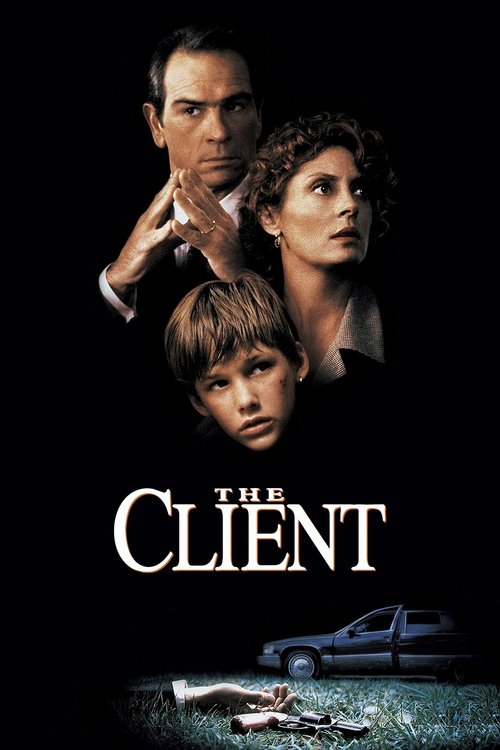
The Client
A street-wise kid, Mark Sway, sees the suicide of Jerome Clifford, a prominent Louisiana lawyer, whose current client is Barry 'The Blade' Muldano, a Mafia hit-man. Before Jerome shoots himself, he tells Mark where the body of a Senator is buried. Clifford shoots himself and Mark is found at the scene, and both the FBI and the Mafia quickly realize that Mark probably knows more than he says.
Despite a moderate budget of $45.0M, The Client became a solid performer, earning $117.6M worldwide—a 161% return.
Nominated for 1 Oscar. 3 wins & 4 nominations


Plot Structure
Story beats plotted across runtime


Narrative Arc
Emotional journey through the story's key moments
Story Circle
Blueprint 15-beat structure
Arcplot Score Breakdown
Weighted: Precision (70%) + Arc (15%) + Theme (15%)
The Client (1994) exemplifies deliberately positioned plot construction, characteristic of Joel Schumacher's storytelling approach. This structural analysis examines how the film's 15-point plot structure maps to proven narrative frameworks across 1 hour and 59 minutes. With an Arcplot score of 6.8, the film balances conventional beats with creative variation.
Characters
Cast & narrative archetypes

Mark Sway
Reggie Love
'Reverend' Roy Foltrigg
Barry 'The Blade' Muldano
Dianne Sway
Harry Roosevelt
Jason McThune
Main Cast & Characters
Mark Sway
Played by Brad Renfro
An 11-year-old boy who witnesses a mob lawyer's suicide and becomes the target of both the FBI and the mafia
Reggie Love
Played by Susan Sarandon
A recovering alcoholic lawyer who takes on Mark's case and fights to protect him from powerful forces
'Reverend' Roy Foltrigg
Played by Tommy Lee Jones
An ambitious U.S. Attorney determined to use Mark to advance his career and find a senator's body
Barry 'The Blade' Muldano
Played by Anthony LaPaglia
A ruthless mob hitman who murdered a senator and will kill anyone who threatens to expose the body's location
Dianne Sway
Played by Mary-Louise Parker
Mark's single mother working in a lamp factory, struggling to protect her sons while dealing with overwhelming circumstances
Harry Roosevelt
Played by Ossie Davis
A federal judge who must balance the law with protecting a child caught in dangerous circumstances
Jason McThune
Played by Anthony Edwards
An FBI agent working under Foltrigg to pressure Mark into revealing what he knows
Structural Analysis
The Status Quo at 1 minutes (1% through the runtime) establishes Mark and Ricky Sway sneak into the woods to smoke cigarettes, establishing them as resourceful kids from a troubled home with an absent father and struggling mother.. Notably, this early placement immediately immerses viewers in the story world.
The inciting incident occurs at 14 minutes when Jerome Clifford commits suicide after revealing to Mark where Senator Boyette's body is buried. Ricky witnesses the death and goes into traumatic shock, leaving Mark with deadly knowledge.. At 12% through the film, this Disruption aligns precisely with traditional story structure. This beat shifts the emotional landscape, launching the protagonist into the central conflict.
The First Threshold at 30 minutes marks the transition into Act II, occurring at 25% of the runtime. This illustrates the protagonist's commitment to Mark hires Reggie Love for one dollar, actively choosing to fight back against the system with legal representation rather than face the FBI and mob alone., moving from reaction to action.
At 60 minutes, the Midpoint arrives at 50% of the runtime—precisely centered, creating perfect narrative symmetry. Significantly, this crucial beat Mark is jailed for contempt of court when he refuses to reveal what he knows. The stakes escalate dramatically - he's now trapped between prison and the mob, with no safe option remaining., fundamentally raising what's at risk. The emotional intensity shifts, dividing the narrative into clear before-and-after phases.
The Collapse moment at 89 minutes (75% through) represents the emotional nadir. Here, The mob hitman attacks Mark's mother and threatens to kill the entire family. Mark escapes juvenile detention, becoming a fugitive. Everything has fallen apart - legal protection has failed to keep anyone safe., shows the protagonist at their lowest point. This beat's placement in the final quarter sets up the climactic reversal.
The Second Threshold at 95 minutes initiates the final act resolution at 80% of the runtime. Mark decides to verify the body's location himself, taking control of his fate. He convinces Reggie to drive him to New Orleans to find Senator Boyette's body before negotiating with the FBI., demonstrating the transformation achieved throughout the journey.
Emotional Journey
The Client's emotional architecture traces a deliberate progression across 15 carefully calibrated beats.
Narrative Framework
This structural analysis employs structural analysis methodology used to understand storytelling architecture. By mapping The Client against these established plot points, we can identify how Joel Schumacher utilizes or subverts traditional narrative conventions. The plot point approach reveals not only adherence to structural principles but also creative choices that distinguish The Client within the drama genre.
Joel Schumacher's Structural Approach
Among the 17 Joel Schumacher films analyzed on Arcplot, the average structural score is 7.0, reflecting strong command of classical structure. The Client takes a more unconventional approach compared to the director's typical style. For comparative analysis, explore the complete Joel Schumacher filmography.
Comparative Analysis
Additional drama films include After Thomas, South Pacific and Dirty Dancing: Havana Nights. For more Joel Schumacher analyses, see Batman Forever, The Phantom of the Opera and Trespass.
Plot Points by Act
Act I
SetupStatus Quo
Mark and Ricky Sway sneak into the woods to smoke cigarettes, establishing them as resourceful kids from a troubled home with an absent father and struggling mother.
Theme
Jerome Clifford, the suicidal lawyer, tells Mark that knowing too much can get you killed - foreshadowing the central conflict of dangerous knowledge and the question of who protects the innocent.
Worldbuilding
Establishes the Sway family's poverty and vulnerability, Mark's role as protector of his younger brother Ricky, and the dangerous world of mob-connected legal cases in Memphis and New Orleans.
Disruption
Jerome Clifford commits suicide after revealing to Mark where Senator Boyette's body is buried. Ricky witnesses the death and goes into traumatic shock, leaving Mark with deadly knowledge.
Resistance
Mark is interrogated by police and FBI. He lies about what Clifford told him. Federal prosecutor Roy Foltrigg arrives, pressuring Mark. Mark realizes he needs legal protection and searches for a lawyer he can afford.
Act II
ConfrontationFirst Threshold
Mark hires Reggie Love for one dollar, actively choosing to fight back against the system with legal representation rather than face the FBI and mob alone.
Mirror World
Reggie shares her own painful past with Mark - her failed marriage, lost children, and recovery from addiction. Their bond as two damaged survivors begins, showing Mark that adults can be trustworthy.
Premise
Reggie battles Foltrigg in court, protecting Mark from federal subpoenas. Mark visits Ricky in the psychiatric ward. The mob sends hitman Paul Gronke to intimidate Mark. Cat-and-mouse legal maneuvering ensues.
Midpoint
Mark is jailed for contempt of court when he refuses to reveal what he knows. The stakes escalate dramatically - he's now trapped between prison and the mob, with no safe option remaining.
Opposition
Mark is held in juvenile detention. Gronke and mob enforcers close in, even infiltrating the hospital to threaten Ricky. Foltrigg increases pressure. Reggie fights desperately to free Mark while the family becomes more vulnerable.
Collapse
The mob hitman attacks Mark's mother and threatens to kill the entire family. Mark escapes juvenile detention, becoming a fugitive. Everything has fallen apart - legal protection has failed to keep anyone safe.
Crisis
Mark and Reggie are on the run together. Mark grapples with the impossible choice: reveal the body's location and become a mob target forever, or stay silent and watch his family destroyed.
Act III
ResolutionSecond Threshold
Mark decides to verify the body's location himself, taking control of his fate. He convinces Reggie to drive him to New Orleans to find Senator Boyette's body before negotiating with the FBI.
Synthesis
Mark and Reggie break into the boathouse and find the senator's body. They are caught by Gronke but escape. Reggie negotiates with Foltrigg - witness protection for the Sway family in exchange for the body's location.
Transformation
The Sway family boards a plane to begin their new life in witness protection. Mark, no longer a powerless child, has saved his family through courage and trust. He and Reggie share a meaningful goodbye, both transformed.