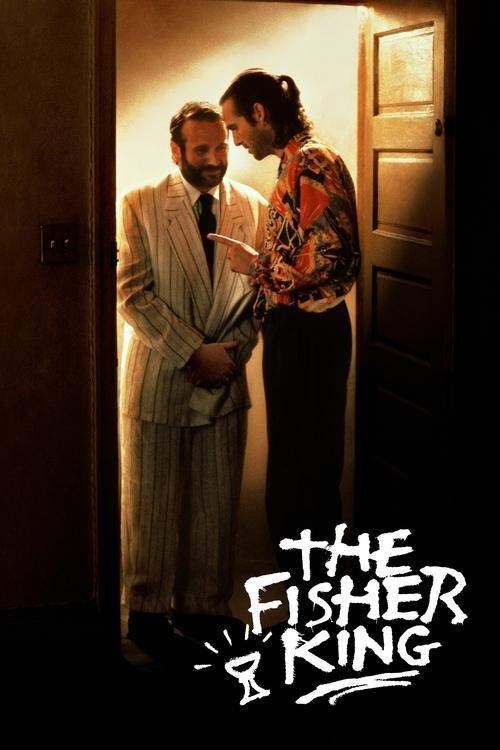
The Fisher King
Two troubled men face their terrible destinies and events of their past as they join together on a mission to find the Holy Grail and thus to save themselves.
Working with a moderate budget of $24.0M, the film achieved a steady performer with $41.9M in global revenue (+75% profit margin).
1 Oscar. 14 wins & 39 nominations


Plot Structure
Story beats plotted across runtime


Narrative Arc
Emotional journey through the story's key moments
Story Circle
Blueprint 15-beat structure
Arcplot Score Breakdown
Weighted: Precision (70%) + Arc (15%) + Theme (15%)
The Fisher King (1991) reveals deliberately positioned plot construction, characteristic of Terry Gilliam's storytelling approach. This structural analysis examines how the film's 15-point plot structure maps to proven narrative frameworks across 2 hours and 18 minutes. With an Arcplot score of 7.4, the film balances conventional beats with creative variation.
Characters
Cast & narrative archetypes

Jack Lucas
Parry
Anne Napolitano
Lydia Sinclair
The Red Knight
Main Cast & Characters
Jack Lucas
Played by Jeff Bridges
A cynical shock-jock radio host whose callous remarks inadvertently trigger a massacre, leading him on a journey of redemption through helping a homeless man.
Parry
Played by Robin Williams
A delusional homeless man and former medieval history professor traumatized by his wife's murder, who believes he must find the Holy Grail.
Anne Napolitano
Played by Mercedes Ruehl
Jack's loyal, no-nonsense girlfriend who runs a video store and keeps him grounded despite his self-destructive tendencies.
Lydia Sinclair
Played by Amanda Plummer
A shy, awkward publishing house employee who becomes the object of Parry's affection and represents hope for his recovery.
The Red Knight
Played by Chris Howell
A terrifying hallucinatory figure representing Parry's trauma and guilt over his wife's death, manifesting as a flaming medieval knight.
Structural Analysis
The Status Quo at 2 minutes (1% through the runtime) establishes Jack Lucas at the height of his success as a cynical shock-jock radio host, reveling in his power to manipulate and mock his callers from his luxurious studio.. Of particular interest, this early placement immediately immerses viewers in the story world.
The inciting incident occurs at 16 minutes when Jack attempts suicide by the river but is attacked by thugs. He is rescued by Parry, a delusional homeless man who believes Jack is destined to help him find the Holy Grail.. At 12% through the film, this Disruption aligns precisely with traditional story structure. This beat shifts the emotional landscape, launching the protagonist into the central conflict.
The First Threshold at 35 minutes marks the transition into Act II, occurring at 25% of the runtime. This illustrates the protagonist's commitment to Jack decides to help Parry by setting him up with Lydia, the woman Parry obsessively loves from afar, seeing it as a way to absolve his guilt without fully committing to genuine redemption., moving from reaction to action.
At 71 minutes, the Midpoint arrives at 51% of the runtime—precisely centered, creating perfect narrative symmetry. Notably, this crucial beat False victory: Parry and Lydia share a magical night in Central Park where commuters waltz to elegant music. Parry believes he's found love and his trauma seems healed. Jack thinks his debt is paid and prepares to return to his old life., fundamentally raising what's at risk. The emotional intensity shifts, dividing the narrative into clear before-and-after phases.
The Collapse moment at 103 minutes (75% through) represents the emotional nadir. Here, As Parry prepares to declare his love to Lydia, he encounters the Red Knight (hallucination of his trauma). Thugs attack and beat Parry nearly to death. He becomes catatonic, trapped in his trauma. Jack's superficial efforts have failed catastrophically., reveals the protagonist at their lowest point. This beat's placement in the final quarter sets up the climactic reversal.
The Second Threshold at 110 minutes initiates the final act resolution at 80% of the runtime. Jack realizes that genuine redemption requires completing Parry's quest on his terms - he must break into the billionaire's castle and retrieve the "Grail" trophy, embracing Parry's magical worldview rather than his own cynical reality., demonstrating the transformation achieved throughout the journey.
Emotional Journey
The Fisher King's emotional architecture traces a deliberate progression across 15 carefully calibrated beats.
Narrative Framework
This structural analysis employs a 15-point narrative structure framework that maps key story moments. By mapping The Fisher King against these established plot points, we can identify how Terry Gilliam utilizes or subverts traditional narrative conventions. The plot point approach reveals not only adherence to structural principles but also creative choices that distinguish The Fisher King within the comedy genre.
Terry Gilliam's Structural Approach
Among the 8 Terry Gilliam films analyzed on Arcplot, the average structural score is 7.1, reflecting strong command of classical structure. The Fisher King represents one of the director's most structurally precise works. For comparative analysis, explore the complete Terry Gilliam filmography.
Comparative Analysis
Additional comedy films include The Bad Guys, Ella Enchanted and The Evening Star. For more Terry Gilliam analyses, see Time Bandits, Monty Python and the Holy Grail and Fear and Loathing in Las Vegas.
Plot Points by Act
Act I
SetupStatus Quo
Jack Lucas at the height of his success as a cynical shock-jock radio host, reveling in his power to manipulate and mock his callers from his luxurious studio.
Theme
Jack's callous response to caller Edwin about "yuppies" and compassion foreshadows the theme: redemption requires genuine human connection and taking responsibility for the pain we cause others.
Worldbuilding
Establishing Jack's arrogant lifestyle, his relationship with girlfriend Anne, and the tragic consequences of his cruel on-air advice when Edwin commits a mass shooting at a restaurant. Three years later, Jack is broken, alcoholic, living above Anne's video store.
Disruption
Jack attempts suicide by the river but is attacked by thugs. He is rescued by Parry, a delusional homeless man who believes Jack is destined to help him find the Holy Grail.
Resistance
Parry takes Jack to his basement dwelling and reveals his quest for the Holy Grail (actually a trophy in a billionaire's mansion). Jack resists involvement but discovers Parry was a professor whose wife was killed in Edwin's shooting - making Jack indirectly responsible for Parry's trauma.
Act II
ConfrontationFirst Threshold
Jack decides to help Parry by setting him up with Lydia, the woman Parry obsessively loves from afar, seeing it as a way to absolve his guilt without fully committing to genuine redemption.
Mirror World
Jack observes Parry following Lydia and sees Parry's capacity for pure, innocent love despite his brokenness - a mirror showing Jack what genuine human connection looks like versus his cynical manipulation.
Premise
Jack orchestrates an awkward double date with Parry, Lydia, Anne, and himself. Despite disaster at a Chinese restaurant, Parry and Lydia connect. The "promise of the premise" plays out as Jack experiences Parry's magical worldview transforming mundane New York into wonder.
Midpoint
False victory: Parry and Lydia share a magical night in Central Park where commuters waltz to elegant music. Parry believes he's found love and his trauma seems healed. Jack thinks his debt is paid and prepares to return to his old life.
Opposition
Jack is offered his old radio show back and eagerly pursues returning to his former glory. But he's haunted by Parry's quest. Anne challenges Jack's superficiality. Jack realizes genuine redemption requires retrieving the "Grail" for Parry, not just playing matchmaker.
Collapse
As Parry prepares to declare his love to Lydia, he encounters the Red Knight (hallucination of his trauma). Thugs attack and beat Parry nearly to death. He becomes catatonic, trapped in his trauma. Jack's superficial efforts have failed catastrophically.
Crisis
Jack visits catatonic Parry in the hospital, devastated by guilt. Anne leaves Jack, disgusted by his inability to truly change. Jack confronts the depths of his responsibility and the inadequacy of his half-hearted redemption attempts.
Act III
ResolutionSecond Threshold
Jack realizes that genuine redemption requires completing Parry's quest on his terms - he must break into the billionaire's castle and retrieve the "Grail" trophy, embracing Parry's magical worldview rather than his own cynical reality.
Synthesis
Jack infiltrates the mansion during a party, naked and claiming to be a knight on a quest, fully committing to Parry's fantasy. He successfully retrieves the trophy/Grail. He brings it to catatonic Parry at the hospital, completing the quest with genuine love and belief.
Transformation
Parry awakens from his catatonia. Jack and Parry lie naked in Central Park, laughing and gazing at clouds together - both redeemed through genuine connection. Jack has transformed from cynical manipulator to someone capable of love, sacrifice, and seeing magic in the world.