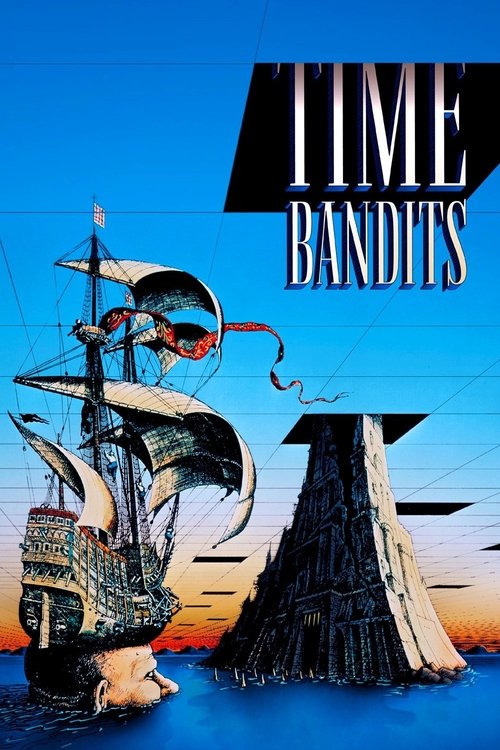
Time Bandits
Young history buff Kevin can scarcely believe it when six dwarfs emerge from his closet one night. Former employees of the Supreme Being, they've purloined a map charting all of the holes in the fabric of time and are using it to steal treasures from different historical eras. Taking Kevin with them, they variously drop in on Napoleon, Robin Hood and King Agamemnon before the Supreme Being catches up with them.
Despite its tight budget of $5.0M, Time Bandits became a runaway success, earning $42.4M worldwide—a remarkable 747% return. The film's unique voice found its audience, confirming that strong storytelling can transcend budget limitations.
1 win & 8 nominations


Plot Structure
Story beats plotted across runtime


Narrative Arc
Emotional journey through the story's key moments
Story Circle
Blueprint 15-beat structure
Arcplot Score Breakdown
Weighted: Precision (70%) + Arc (15%) + Theme (15%)
Time Bandits (1981) showcases precise story structure, characteristic of Terry Gilliam's storytelling approach. This structural analysis examines how the film's 15-point plot structure maps to proven narrative frameworks across 1 hour and 56 minutes. With an Arcplot score of 6.3, the film takes an unconventional approach to traditional narrative frameworks.
Characters
Cast & narrative archetypes

Kevin
Randall
Evil Genius
Fidgit
Strutter
Og
Wally
Vermin
Supreme Being
Main Cast & Characters
Kevin
Played by Craig Warnock
An imaginative 11-year-old boy who gets swept up in a time-traveling adventure with a band of dwarves, seeking excitement beyond his mundane suburban life.
Randall
Played by David Rappaport
The cynical, greedy leader of the Time Bandits who stole the map of time holes from the Supreme Being, constantly scheming for treasure.
Evil Genius
Played by David Warner
The embodiment of Evil itself, a sophisticated villain trapped in the Fortress of Ultimate Darkness who seeks the map to remake creation in his image.
Fidgit
Played by Kenny Baker
The most intelligent and cautious of the bandits, constantly worried about their reckless plans and trying to inject reason into chaos.
Strutter
Played by Malcolm Dixon
A vain, dandyish member of the Time Bandits who is preoccupied with appearances and fashion despite their desperate circumstances.
Og
Played by Mike Edmonds
A dimwitted, childlike member of the Time Bandits who often misunderstands situations but shows genuine affection for Kevin.
Wally
Played by Jack Purvis
An older, more thoughtful member of the bandits who shows occasional wisdom and serves as a voice of experience.
Vermin
Played by Tiny Ross
A grubby, pessimistic member of the Time Bandits who complains frequently and has a gloomy outlook on their adventures.
Supreme Being
Played by Ralph Richardson
The creator of the universe who appears as a stern, businesslike figure in a suit, treating creation as a vast enterprise.
Structural Analysis
The Status Quo at 1 minutes (1% through the runtime) establishes Kevin lies in bed, surrounded by modern appliances in his sterile suburban bedroom, ignored by his materialistic parents who are obsessed with kitchen gadgets. His world is one of loneliness and imagination as escape.. Notably, this early placement immediately immerses viewers in the story world.
The inciting incident occurs at 14 minutes when A knight on horseback crashes through Kevin's wardrobe from nowhere, followed by six dwarves who tumble into his bedroom through a hole in space-time. The ordinary world is shattered by the impossible made real.. At 12% through the film, this Disruption aligns precisely with traditional story structure. This beat shifts the emotional landscape, launching the protagonist into the central conflict.
The First Threshold at 29 minutes marks the transition into Act II, occurring at 25% of the runtime. This demonstrates the protagonist's commitment to Kevin actively chooses to help the dwarves by distracting Napoleon, allowing them to steal his treasure. He commits to the adventure, moving from passive observer to active participant in their quest across time., moving from reaction to action.
At 59 minutes, the Midpoint arrives at 50% of the runtime—precisely centered, creating perfect narrative symmetry. Structural examination shows that this crucial beat The group is captured and trapped in a cage suspended over water by King Agamemnon. Stakes raise dramatically—they face execution, and the Supreme Being's forces are closing in. The fun is over; real danger has arrived., fundamentally raising what's at risk. The emotional intensity shifts, dividing the narrative into clear before-and-after phases.
The Collapse moment at 88 minutes (76% through) represents the emotional nadir. Here, The dwarves are captured by Evil in the Fortress of Ultimate Darkness. All seems lost—they're trapped in cages, powerless, the map is in Evil's hands, and he prepares to remake creation. Hope dies; Kevin must watch helplessly., shows the protagonist at their lowest point. This beat's placement in the final quarter sets up the climactic reversal.
The Second Threshold at 94 minutes initiates the final act resolution at 81% of the runtime. Kevin realizes they can use a Polaroid photo of the map to find one last time-hole and tricks Evil into creating it. Combined with the dwarves' knowledge and Kevin's cleverness, they escape the cage and fight back against Evil., demonstrating the transformation achieved throughout the journey.
Emotional Journey
Time Bandits's emotional architecture traces a deliberate progression across 15 carefully calibrated beats.
Narrative Framework
This structural analysis employs systematic plot point analysis that identifies crucial turning points. By mapping Time Bandits against these established plot points, we can identify how Terry Gilliam utilizes or subverts traditional narrative conventions. The plot point approach reveals not only adherence to structural principles but also creative choices that distinguish Time Bandits within the family genre.
Terry Gilliam's Structural Approach
Among the 8 Terry Gilliam films analyzed on Arcplot, the average structural score is 7.1, reflecting strong command of classical structure. Time Bandits takes a more unconventional approach compared to the director's typical style. For comparative analysis, explore the complete Terry Gilliam filmography.
Comparative Analysis
Additional family films include The Black Stallion, The Bad Guys and Ella Enchanted. For more Terry Gilliam analyses, see Monty Python and the Holy Grail, Fear and Loathing in Las Vegas and The Adventures of Baron Munchausen.
Plot Points by Act
Act I
SetupStatus Quo
Kevin lies in bed, surrounded by modern appliances in his sterile suburban bedroom, ignored by his materialistic parents who are obsessed with kitchen gadgets. His world is one of loneliness and imagination as escape.
Theme
The Supreme Being discusses his creation with his colleagues: "Why does there have to be evil?" "I think it has something to do with free will." The central question: the nature of good, evil, and humanity's place in the cosmic order.
Worldbuilding
Kevin's mundane existence is established: neglectful parents, obsession with history and imagination, recurring dreams of a knight in the forest. The cosmic framework is introduced as the Supreme Being and his bureaucracy manage creation while Evil plots in the Fortress of Ultimate Darkness.
Disruption
A knight on horseback crashes through Kevin's wardrobe from nowhere, followed by six dwarves who tumble into his bedroom through a hole in space-time. The ordinary world is shattered by the impossible made real.
Resistance
Kevin learns about the time-holes map stolen from the Supreme Being. The dwarves debate where to go, arguing about treasure and riches. Kevin is swept along, uncertain, as they escape through time portals, landing in Napoleonic Italy. The dwarves serve as chaotic anti-mentors.
Act II
ConfrontationFirst Threshold
Kevin actively chooses to help the dwarves by distracting Napoleon, allowing them to steal his treasure. He commits to the adventure, moving from passive observer to active participant in their quest across time.
Mirror World
The group arrives in Sherwood Forest and meets Robin Hood, who represents genuine heroism and selflessness—the thematic opposite of the dwarves' greed. Robin's charity to the poor contrasts with Randall and the gang's materialistic obsession.
Premise
The promised fun: adventures through time visiting Napoleon, Robin Hood, and ancient Greece. Kevin bonds with the dwarves while they bumble through history seeking treasure. The map's power is demonstrated, Evil manipulates events from afar, and the cosmic game plays out.
Midpoint
The group is captured and trapped in a cage suspended over water by King Agamemnon. Stakes raise dramatically—they face execution, and the Supreme Being's forces are closing in. The fun is over; real danger has arrived.
Opposition
After escaping Agamemnon, the dwarves' greed intensifies. They argue more, trust fractures. Evil's influence grows stronger, manipulating their path. The Titanic sinks beneath them, they barely survive the Time of Legends with monsters, and tension escalates toward catastrophe.
Collapse
The dwarves are captured by Evil in the Fortress of Ultimate Darkness. All seems lost—they're trapped in cages, powerless, the map is in Evil's hands, and he prepares to remake creation. Hope dies; Kevin must watch helplessly.
Crisis
Imprisoned and desperate, the group faces their darkest hour. Evil gloats about his imminent victory. Kevin and the dwarves are forced to confront their failures and helplessness while Evil's power seems absolute.
Act III
ResolutionSecond Threshold
Kevin realizes they can use a Polaroid photo of the map to find one last time-hole and tricks Evil into creating it. Combined with the dwarves' knowledge and Kevin's cleverness, they escape the cage and fight back against Evil.
Synthesis
The final battle against Evil. The Supreme Being arrives, warriors fight incarnations of Evil, and ultimately Evil is reduced to charcoal. Kevin is returned home through time. The cosmic order is restored, but a piece of concentrated Evil remains as a test.
Transformation
Kevin awakens in his bedroom as it burns—his parents have touched the Evil remnant and exploded. Firefighters carry him out. He calls for them, but they're gone. The adventure was real; he's transformed but alone, having lost his innocence and his parents.