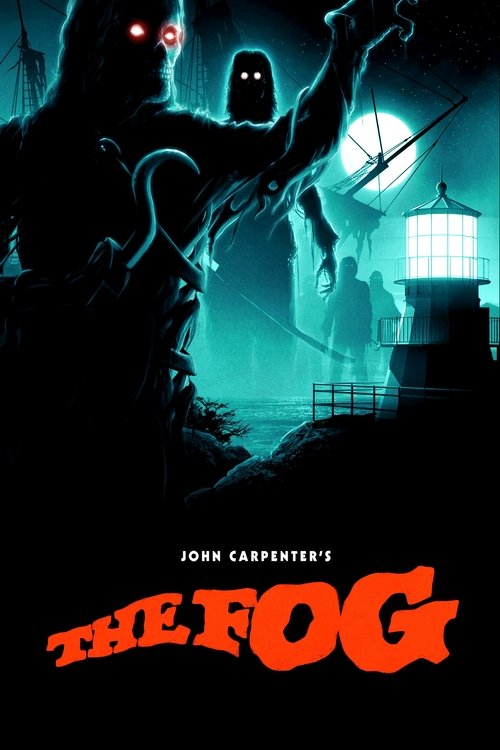
The Fog
Strange things begin to occur as a tiny California coastal town prepares to commemorate its centenary. Inanimate objects spring eerily to life; Rev. Malone stumbles upon a dark secret about the town's founding; radio announcer Stevie witnesses a mystical fire; and hitchhiker Elizabeth discovers the mutilated corpse of a fisherman. Then a mysterious iridescent fog descends upon the village, and more people start to die.
Despite its modest budget of $1.0M, The Fog became a runaway success, earning $21.4M worldwide—a remarkable 2045% return. The film's fresh perspective found its audience, proving that strong storytelling can transcend budget limitations.
1 win & 3 nominations


Plot Structure
Story beats plotted across runtime


Narrative Arc
Emotional journey through the story's key moments
Story Circle
Blueprint 15-beat structure
Arcplot Score Breakdown
Weighted: Precision (70%) + Arc (15%) + Theme (15%)
The Fog (1980) exemplifies carefully calibrated story structure, characteristic of John Carpenter's storytelling approach. This structural analysis examines how the film's 15-point plot structure maps to proven narrative frameworks across 1 hour and 30 minutes. With an Arcplot score of 7.4, the film balances conventional beats with creative variation.
Characters
Cast & narrative archetypes

Stevie Wayne
Elizabeth Solley
Nick Castle
Kathy Williams
Father Malone
Dan O'Bannon
Main Cast & Characters
Stevie Wayne
Played by Adrienne Barbeau
Local radio DJ who broadcasts warnings from her lighthouse station as supernatural fog threatens Antonio Bay.
Elizabeth Solley
Played by Jamie Lee Curtis
Hitchhiker who arrives in Antonio Bay and becomes connected to the town's haunted past.
Nick Castle
Played by Tom Atkins
Local fisherman who picks up Elizabeth and becomes involved in the supernatural events.
Kathy Williams
Played by Janet Leigh
Assistant to the town historian, helping organize the centennial celebration.
Father Malone
Played by Hal Holbrook
Town priest who discovers his grandfather's journal revealing Antonio Bay's dark founding secret.
Dan O'Bannon
Played by Charles Cyphers
Weatherman at the radio station, providing updates on the mysterious fog.
Structural Analysis
The Status Quo at 1 minutes (1% through the runtime) establishes Mr. Machen tells a ghost story around a beach campfire about the deliberate shipwreck and murder of the Elizabeth Dane's crew 100 years ago. The coastal town of Antonio Bay exists in relative peace before the centennial.. Of particular interest, this early placement immediately immerses viewers in the story world.
The inciting incident occurs at 11 minutes when Three fishermen aboard the Sea Grass encounter a glowing supernatural fog bank that engulfs their boat. They are killed by unseen ghostly figures wielding hooks and swords, becoming the fog's first victims.. At 12% through the film, this Disruption aligns precisely with traditional story structure. This beat shifts the emotional landscape, launching the protagonist into the central conflict.
The First Threshold at 23 minutes marks the transition into Act II, occurring at 26% of the runtime. This illustrates the protagonist's commitment to The fog returns to shore and attacks the town. Dan the weatherman is killed at the weather station, demonstrating that the supernatural threat is real, active, and targeting Antonio Bay's residents. The ghost story becomes horrifying reality., moving from reaction to action.
At 45 minutes, the Midpoint arrives at 50% of the runtime—precisely centered, creating perfect narrative symmetry. Of particular interest, this crucial beat The fog reaches Stevie's lighthouse and attacks her son Andy. Despite her desperate warnings over the radio, the supernatural force nearly claims the child. The threat is now personal and can reach anyone, even in supposedly safe locations., fundamentally raising what's at risk. The emotional intensity shifts, dividing the narrative into clear before-and-after phases.
The Collapse moment at 68 minutes (76% through) represents the emotional nadir. Here, The fog breaches the church. Captain Blake and his ghost crew materialize inside, weapons drawn. They have systematically murdered five victims and now seek their sixth. All defenses have failed and the supernatural forces have penetrated their final refuge., demonstrates the protagonist at their lowest point. This beat's placement in the final quarter sets up the climactic reversal.
The Second Threshold at 72 minutes initiates the final act resolution at 80% of the runtime. Father Malone realizes he is the sixth descendant—his grandfather was one of the original conspirators. He offers himself to the ghosts, holding up the gold cross made from the stolen gold, acknowledging the sin and accepting responsibility for his ancestor's crime., demonstrating the transformation achieved throughout the journey.
Emotional Journey
The Fog's emotional architecture traces a deliberate progression across 15 carefully calibrated beats.
Narrative Framework
This structural analysis employs a 15-point narrative structure framework that maps key story moments. By mapping The Fog against these established plot points, we can identify how John Carpenter utilizes or subverts traditional narrative conventions. The plot point approach reveals not only adherence to structural principles but also creative choices that distinguish The Fog within the horror genre.
John Carpenter's Structural Approach
Among the 16 John Carpenter films analyzed on Arcplot, the average structural score is 6.9, demonstrating varied approaches to story architecture. The Fog represents one of the director's most structurally precise works. For comparative analysis, explore the complete John Carpenter filmography.
Comparative Analysis
Additional horror films include Thinner, A Nightmare on Elm Street and Mary Reilly. For more John Carpenter analyses, see Halloween, In the Mouth of Madness and Escape from L.A..
Plot Points by Act
Act I
SetupStatus Quo
Mr. Machen tells a ghost story around a beach campfire about the deliberate shipwreck and murder of the Elizabeth Dane's crew 100 years ago. The coastal town of Antonio Bay exists in relative peace before the centennial.
Theme
Father Malone discovers his grandfather's journal revealing the town's dark founding: six conspirators deliberately lured the Elizabeth Dane to its doom for gold, and used that blood money to build Antonio Bay. "The sins of the fathers" will be visited upon the town.
Worldbuilding
Introduction to Antonio Bay's residents: Stevie Wayne broadcasting from her lighthouse, Nick Castle picking up hitchhiker Elizabeth, the town preparing centennial celebrations, Father Malone at the church, and various strange phenomena occurring at midnight (electronics malfunctioning, gas pumps activating, car alarms).
Disruption
Three fishermen aboard the Sea Grass encounter a glowing supernatural fog bank that engulfs their boat. They are killed by unseen ghostly figures wielding hooks and swords, becoming the fog's first victims.
Resistance
The town reacts to strange events: the Sea Grass is found abandoned and drifting, Father Malone struggles with the journal's revelations about his grandfather's crime, Nick and Elizabeth grow closer, and townspeople debate the meaning of mysterious occurrences as the centennial celebration approaches.
Act II
ConfrontationFirst Threshold
The fog returns to shore and attacks the town. Dan the weatherman is killed at the weather station, demonstrating that the supernatural threat is real, active, and targeting Antonio Bay's residents. The ghost story becomes horrifying reality.
Mirror World
Stevie Wayne at the lighthouse becomes the town's watchful guardian and conscience, warning residents of danger through her radio broadcasts. She represents vigilance and responsibility, the opposite of the founding fathers' greed and betrayal.
Premise
The fog's attacks escalate as residents attempt to understand and survive the supernatural threat. Father Malone reveals the journal's contents about the town's guilty secret. The survivors realize the ghosts are seeking six victims—descendants of the conspirators who murdered them a century ago.
Midpoint
The fog reaches Stevie's lighthouse and attacks her son Andy. Despite her desperate warnings over the radio, the supernatural force nearly claims the child. The threat is now personal and can reach anyone, even in supposedly safe locations.
Opposition
Survivors gather at the church seeking sanctuary. The fog systematically hunts the descendants of the six conspirators. Father Malone realizes the ghosts want revenge for the theft of their gold and the desecration that founded the town. The fog surrounds the church, trapping everyone inside.
Collapse
The fog breaches the church. Captain Blake and his ghost crew materialize inside, weapons drawn. They have systematically murdered five victims and now seek their sixth. All defenses have failed and the supernatural forces have penetrated their final refuge.
Crisis
The survivors huddle in terror as the ghosts advance. Father Malone confronts the reality that his grandfather's sin has brought this curse upon the town. The group faces seemingly certain death with no escape or solution apparent.
Act III
ResolutionSecond Threshold
Father Malone realizes he is the sixth descendant—his grandfather was one of the original conspirators. He offers himself to the ghosts, holding up the gold cross made from the stolen gold, acknowledging the sin and accepting responsibility for his ancestor's crime.
Synthesis
Captain Blake accepts Father Malone as the sixth victim. The priest is claimed by the fog, and the ghosts depart with him, their revenge complete. The supernatural fog dissipates, releasing the town from the curse. The survivors emerge as dawn breaks over Antonio Bay.
Transformation
Stevie Wayne continues her broadcast from the lighthouse as morning light returns, but her tone is haunted. The town has survived but paid a terrible price for its founders' sins. The living carry the weight of the past, forever changed by the night's reckoning.