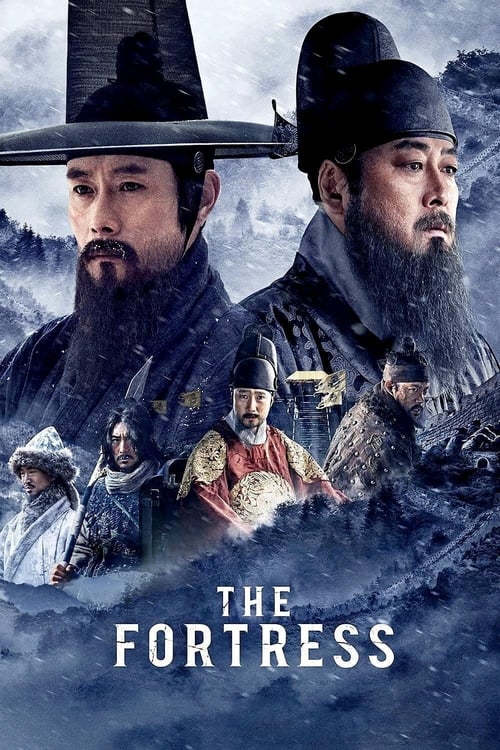
The Fortress
Ancient Korea, 17th century. The powerful Khan of the Jurchen tribe of Manchuria, who fights the Ming dinasty to gain China, becomes the first ruler of the Qing dinasty and demands from King In-jo of Joseon to bow before him; but he refuses, being loyal to the Mings. On December 14th, 1636, the Qing horde invades Joseon, so King In-jo and his court shelter in the mountain fortress of Namhan and prepare to defend the kingdom.
The film earned $28.6M at the global box office.


Plot Structure
Story beats plotted across runtime


Narrative Arc
Emotional journey through the story's key moments
Story Circle
Blueprint 15-beat structure
Arcplot Score Breakdown
Weighted: Precision (70%) + Arc (15%) + Theme (15%)
The Fortress (2017) showcases precise plot construction, characteristic of Hwang Dong-hyuk's storytelling approach. This structural analysis examines how the film's 15-point plot structure maps to proven narrative frameworks across 2 hours and 20 minutes. With an Arcplot score of 7.1, the film balances conventional beats with creative variation.
Characters
Cast & narrative archetypes

King Injo
Choi Myung-gil
Kim Sang-heon
Seo Nal-soe
Jung Myung-soo
Crown Prince Sohyeon
Main Cast & Characters
King Injo
Played by Lee Byung-hun
The 16th king of Joseon, trapped in Namhansanseong fortress, forced to choose between national pride and survival during the Qing invasion.
Choi Myung-gil
Played by Lee Seung-joon
Pragmatic Minister of the Interior who advocates for peace negotiations and surrender to save lives, representing realpolitik over honor.
Kim Sang-heon
Played by Kim Yoon-seok
Idealistic Minister of Rites who fiercely opposes surrender and advocates fighting to the death to preserve Joseon's honor and principles.
Seo Nal-soe
Played by Go Soo
A skilled blacksmith conscripted to forge weapons in the fortress, representing the common people caught in political and military conflicts.
Jung Myung-soo
Played by Park Hae-il
Court official and military commander who must navigate between ideological extremes while managing the fortress's defense.
Crown Prince Sohyeon
Played by Park Hee-soon
King Injo's eldest son who will be taken as hostage to Qing, bearing the consequences of his father's decisions.
Structural Analysis
The Status Quo at 2 minutes (2% through the runtime) establishes King Injo presides over his court in relative peace, maintaining diplomatic relations with both Ming China and the Qing. The Joseon kingdom appears stable under tributary arrangements.. Notably, this early placement immediately immerses viewers in the story world.
The inciting incident occurs at 17 minutes when News arrives that Qing forces have crossed the border and are advancing rapidly toward the capital. The king realizes his diplomatic position has collapsed and invasion is imminent.. At 12% through the film, this Disruption aligns precisely with traditional story structure. This beat shifts the emotional landscape, launching the protagonist into the central conflict.
The First Threshold at 34 minutes marks the transition into Act II, occurring at 24% of the runtime. This demonstrates the protagonist's commitment to King Injo makes the active decision to retreat to Namhansanseong Fortress with his court, abandoning the capital. This choice traps them in a siege situation where the ideological conflict will be forced to resolution., moving from reaction to action.
At 69 minutes, the Midpoint arrives at 49% of the runtime—precisely centered, creating perfect narrative symmetry. The analysis reveals that this crucial beat A relief force from the southern provinces is decisively defeated by Qing forces. This false hope crushed—no rescue is coming. The king realizes negotiation may be the only path, but doing so means absolute humiliation and betraying Ming China., fundamentally raising what's at risk. The emotional intensity shifts, dividing the narrative into clear before-and-after phases.
The Collapse moment at 104 minutes (74% through) represents the emotional nadir. Here, Minister Kim Sang-hun is arrested and sentenced to death by the king for insubordination, representing the death of the honorable resistance position. The king has spiritually surrendered even before the physical act. Hope and dignity die together., indicates the protagonist at their lowest point. This beat's placement in the final quarter sets up the climactic reversal.
The Second Threshold at 111 minutes initiates the final act resolution at 80% of the runtime. The king accepts that survival of his people requires absolute humiliation. He synthesizes both positions: Choi was right about survival, Kim was right about the cost. He chooses life over honor, fully understanding what it means., demonstrating the transformation achieved throughout the journey.
Emotional Journey
The Fortress's emotional architecture traces a deliberate progression across 15 carefully calibrated beats.
Narrative Framework
This structural analysis employs systematic plot point analysis that identifies crucial turning points. By mapping The Fortress against these established plot points, we can identify how Hwang Dong-hyuk utilizes or subverts traditional narrative conventions. The plot point approach reveals not only adherence to structural principles but also creative choices that distinguish The Fortress within the war genre.
Hwang Dong-hyuk's Structural Approach
Among the 2 Hwang Dong-hyuk films analyzed on Arcplot, the average structural score is 6.9, demonstrating varied approaches to story architecture. The Fortress represents one of the director's most structurally precise works. For comparative analysis, explore the complete Hwang Dong-hyuk filmography.
Comparative Analysis
Additional war films include Fury, Shenandoah and More American Graffiti. For more Hwang Dong-hyuk analyses, see Silenced.
Plot Points by Act
Act I
SetupStatus Quo
King Injo presides over his court in relative peace, maintaining diplomatic relations with both Ming China and the Qing. The Joseon kingdom appears stable under tributary arrangements.
Theme
Minister Choi Myung-gil states: "Survival requires bending, not breaking. Pride is a luxury the dead cannot afford." This introduces the central conflict between pragmatic surrender and honorable resistance.
Worldbuilding
Establishment of the political factions at court: Minister Choi Myung-gil advocates pragmatic diplomacy with the Qing, while Minister Kim Sang-hun demands loyalty to Ming China at any cost. The king struggles between these opposing councils.
Disruption
News arrives that Qing forces have crossed the border and are advancing rapidly toward the capital. The king realizes his diplomatic position has collapsed and invasion is imminent.
Resistance
The court debates whether to flee, fight, or negotiate. The king is pressured from all sides. He makes hurried preparations and struggles with the decision to abandon the capital or mount a defense. The two ministers continue their ideological battle.
Act II
ConfrontationFirst Threshold
King Injo makes the active decision to retreat to Namhansanseong Fortress with his court, abandoning the capital. This choice traps them in a siege situation where the ideological conflict will be forced to resolution.
Mirror World
The blacksmith Seo Nal-soe, a commoner conscripted to the fortress, represents the perspective of ordinary people who suffer regardless of which philosophical position wins. His pragmatic survival instinct mirrors the theme.
Premise
The siege begins in earnest. Court debates intensify between Choi's faction (negotiate and survive) and Kim's faction (resist and preserve honor). Small military skirmishes occur. Winter conditions worsen. The promise of the premise: a pressure-cooker debate about honor versus survival.
Midpoint
A relief force from the southern provinces is decisively defeated by Qing forces. This false hope crushed—no rescue is coming. The king realizes negotiation may be the only path, but doing so means absolute humiliation and betraying Ming China.
Opposition
Conditions deteriorate rapidly. Food runs low, soldiers freeze, disease spreads. The Qing demands grow harsher. Kim Sang-hun's faction becomes more desperate and radical. Choi Myung-gil's negotiation attempts are repeatedly rejected or fail. The king's authority fractures as both sides intensify pressure.
Collapse
Minister Kim Sang-hun is arrested and sentenced to death by the king for insubordination, representing the death of the honorable resistance position. The king has spiritually surrendered even before the physical act. Hope and dignity die together.
Crisis
The king sits in darkness contemplating the full weight of his impending surrender. He must perform the kowtow ritual—three kneelings and nine prostrations—before the Qing emperor. His identity as sovereign dies. The court processes this dark reality in silence.
Act III
ResolutionSecond Threshold
The king accepts that survival of his people requires absolute humiliation. He synthesizes both positions: Choi was right about survival, Kim was right about the cost. He chooses life over honor, fully understanding what it means.
Synthesis
King Injo exits the fortress and performs the humiliating surrender ceremony before the Qing emperor. He prostrates himself completely. The treaty is signed. The court is released. The kingdom survives, but the king is broken. Minister Choi watches with hollow victory.
Transformation
The king returns to the fortress interior, now empty and silent. Where the opening showed him presiding with authority, he now sits alone, a king in title only, having sacrificed his dignity for his people's survival. The transformation is complete: from sovereign to supplicant.