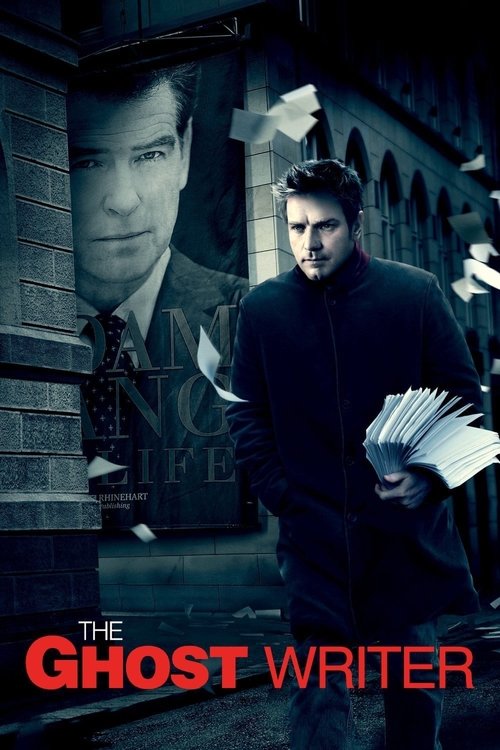
The Ghost Writer
A writer stumbles upon a long-hidden secret when he agrees to help former British Prime Minister Adam Lang complete his memoirs on a remote island after the politician's assistant drowns in a mysterious accident.
Working with a mid-range budget of $45.0M, the film achieved a steady performer with $60.3M in global revenue (+34% profit margin).
34 wins & 57 nominations


Plot Structure
Story beats plotted across runtime


Narrative Arc
Emotional journey through the story's key moments
Story Circle
Blueprint 15-beat structure
Arcplot Score Breakdown
Weighted: Precision (70%) + Arc (15%) + Theme (15%)
The Ghost Writer (2010) reveals deliberately positioned dramatic framework, characteristic of Roman Polanski's storytelling approach. This structural analysis examines how the film's 15-point plot structure maps to proven narrative frameworks across 2 hours and 8 minutes. With an Arcplot score of 7.0, the film balances conventional beats with creative variation.
Characters
Cast & narrative archetypes

The Ghost
Adam Lang
Ruth Lang
Amelia Bly
Paul Emmett
Professor Richard Rycart
Main Cast & Characters
The Ghost
Played by Ewan McGregor
An unnamed ghostwriter hired to complete the memoirs of former British Prime Minister Adam Lang, who stumbles into a dangerous political conspiracy.
Adam Lang
Played by Pierce Brosnan
Former British Prime Minister accused of war crimes, charismatic but potentially compromised politician hiding dark secrets.
Ruth Lang
Played by Olivia Williams
Adam Lang's wife and political advisor, intelligent and calculating woman with her own hidden agenda.
Amelia Bly
Played by Kim Cattrall
Adam Lang's personal assistant and mistress, caught between loyalty and self-preservation.
Paul Emmett
Played by Timothy Hutton
Lang's loyal aide and damage control specialist, protective of the former PM's reputation.
Professor Richard Rycart
Played by Robert Pugh
Former British Foreign Secretary and political rival who accuses Lang of war crimes.
Structural Analysis
The Status Quo at 1 minutes (1% through the runtime) establishes The Ghost is a hired gun writer, professional and detached, taking jobs for money without personal investment. He meets with his agent in London about potential work.. Notably, this early placement immediately immerses viewers in the story world.
The inciting incident occurs at 15 minutes when War crimes accusations against Lang break in the news. The former PM is accused of illegally seizing British citizens and handing them to the CIA. The safe memoir job becomes politically radioactive.. At 12% through the film, this Disruption aligns precisely with traditional story structure. This beat shifts the emotional landscape, launching the protagonist into the central conflict.
The First Threshold at 31 minutes marks the transition into Act II, occurring at 24% of the runtime. This illustrates the protagonist's commitment to The Ghost actively decides to investigate his predecessor's death rather than just finishing the sanitized memoir. He finds the previous ghostwriter's BMW and discovers mysterious materials, crossing into detective territory., moving from reaction to action.
At 65 minutes, the Midpoint arrives at 50% of the runtime—precisely centered, creating perfect narrative symmetry. Notably, this crucial beat The Ghost discovers that Lang was likely recruited by the CIA while at Cambridge, through Professor Emmett. The memoir is a cover-up. False defeat: he now knows the truth but realizes he's in grave danger—his predecessor was murdered for this knowledge., fundamentally raising what's at risk. The emotional intensity shifts, dividing the narrative into clear before-and-after phases.
The Collapse moment at 96 minutes (75% through) represents the emotional nadir. Here, Adam Lang is assassinated by a protestor at a press conference. The Ghost's leverage dies with him. The one person who could confirm the conspiracy and potentially protect him is gone. Death is literal and definitive., reveals the protagonist at their lowest point. This beat's placement in the final quarter sets up the climactic reversal.
The Second Threshold at 102 minutes initiates the final act resolution at 80% of the runtime. At the funeral reception, the Ghost decodes the final clue: the beginning words of each chapter in the manuscript spell out a message revealing Ruth Lang as the true CIA operative who recruited her husband. He realizes the full scope of the conspiracy., demonstrating the transformation achieved throughout the journey.
Emotional Journey
The Ghost Writer's emotional architecture traces a deliberate progression across 15 carefully calibrated beats.
Narrative Framework
This structural analysis employs proven narrative structure principles that track dramatic progression. By mapping The Ghost Writer against these established plot points, we can identify how Roman Polanski utilizes or subverts traditional narrative conventions. The plot point approach reveals not only adherence to structural principles but also creative choices that distinguish The Ghost Writer within the thriller genre.
Roman Polanski's Structural Approach
Among the 11 Roman Polanski films analyzed on Arcplot, the average structural score is 6.5, demonstrating varied approaches to story architecture. The Ghost Writer represents one of the director's most structurally precise works. For comparative analysis, explore the complete Roman Polanski filmography.
Comparative Analysis
Additional thriller films include The Warriors, Thunderball and Rustom. For more Roman Polanski analyses, see Frantic, Tess and Carnage.
Plot Points by Act
Act I
SetupStatus Quo
The Ghost is a hired gun writer, professional and detached, taking jobs for money without personal investment. He meets with his agent in London about potential work.
Theme
The agent mentions the previous ghostwriter drowned and warns: "When did he find time to walk on water?" A hint that digging too deep is dangerous, foreshadowing the central theme of complicity versus truth.
Worldbuilding
The Ghost accepts the high-paying job to finish Adam Lang's memoirs. He travels to Martha's Vineyard, meets the isolated compound, Lang's staff, and his wife Ruth. The manuscript is bland and heavily controlled.
Disruption
War crimes accusations against Lang break in the news. The former PM is accused of illegally seizing British citizens and handing them to the CIA. The safe memoir job becomes politically radioactive.
Resistance
The Ghost debates whether to stay on the job as media descends on the compound. He's pressured by his agent and the money. He begins noticing inconsistencies in Lang's story and finds the previous writer's clues hidden in the manuscript.
Act II
ConfrontationFirst Threshold
The Ghost actively decides to investigate his predecessor's death rather than just finishing the sanitized memoir. He finds the previous ghostwriter's BMW and discovers mysterious materials, crossing into detective territory.
Mirror World
Ruth Lang becomes the Ghost's confidante and eventual lover. She represents the personal cost of political ambition and hints at deeper truths about her husband. Their relationship carries the film's theme of intimacy versus betrayal.
Premise
The Ghost follows clues from his predecessor: tracking down contacts, visiting the old man who drove the previous writer, discovering connections to Professor Emmett. The investigation deepens as he pieces together Lang's past and CIA connections.
Midpoint
The Ghost discovers that Lang was likely recruited by the CIA while at Cambridge, through Professor Emmett. The memoir is a cover-up. False defeat: he now knows the truth but realizes he's in grave danger—his predecessor was murdered for this knowledge.
Opposition
The Ghost is hunted by mysterious agents. He tries to get evidence out but is blocked at every turn. Lang's aide Amelia is revealed to be a handler. The Ghost attempts to flee but is trapped. Paranoia and surveillance intensify as he realizes the conspiracy goes to the top.
Collapse
Adam Lang is assassinated by a protestor at a press conference. The Ghost's leverage dies with him. The one person who could confirm the conspiracy and potentially protect him is gone. Death is literal and definitive.
Crisis
The Ghost processes the murder and realizes he must act carefully. He returns to the compound for Lang's funeral, still in possession of the dangerous truth but unsure how to expose it without being killed himself.
Act III
ResolutionSecond Threshold
At the funeral reception, the Ghost decodes the final clue: the beginning words of each chapter in the manuscript spell out a message revealing Ruth Lang as the true CIA operative who recruited her husband. He realizes the full scope of the conspiracy.
Synthesis
The Ghost writes his revelation on a note and passes it to Ruth during her speech. She reads it and her face betrays the truth. The Ghost attempts to leave the compound with the evidence, walking through the crowd of mourners and security.
Transformation
The Ghost steps into the street to hail a cab. A car suddenly accelerates and strikes him, killing him instantly. The manuscript pages scatter in the wind. Like his predecessor, he dies for knowing the truth. The cycle of complicity continues.