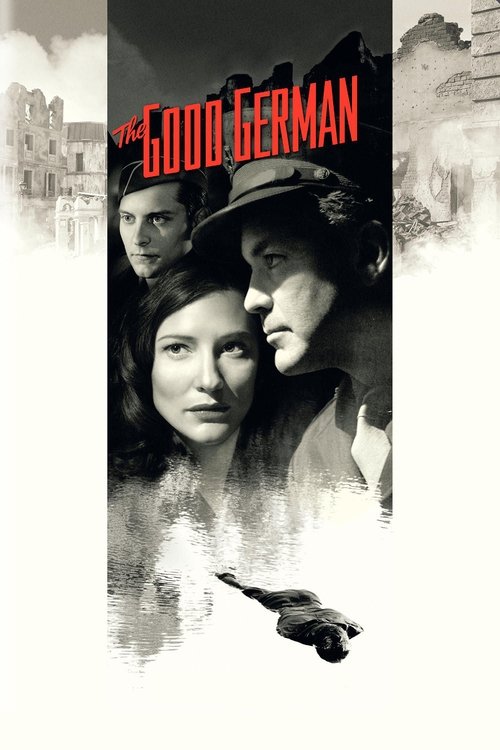
The Good German
An American journalist arrives in Berlin just after the end of World War Two. He becomes involved in a murder mystery surrounding a dead GI who washes up at a lakeside mansion during the Potsdam negotiations between the Allied powers. Soon his investigation connects with his search for his married pre-war German lover.
The film box office disappointment against its moderate budget of $32.0M, earning $5.9M globally (-82% loss). While initial box office returns were modest, the film has gained appreciation for its unconventional structure within the drama genre.
Nominated for 1 Oscar. 3 wins & 5 nominations


Plot Structure
Story beats plotted across runtime


Narrative Arc
Emotional journey through the story's key moments
Story Circle
Blueprint 15-beat structure
Arcplot Score Breakdown
Weighted: Precision (70%) + Arc (15%) + Theme (15%)
The Good German (2006) reveals precise plot construction, characteristic of Steven Soderbergh's storytelling approach. This structural analysis examines how the film's 15-point plot structure maps to proven narrative frameworks across 1 hour and 48 minutes. With an Arcplot score of 7.4, the film balances conventional beats with creative variation.
Characters
Cast & narrative archetypes

Jake Geismer
Lena Brandt
Tully
Colonel Muller
Bernie Teitel
Congressman Breimer
Main Cast & Characters
Jake Geismer
Played by George Clooney
American war correspondent returning to post-war Berlin to cover the Potsdam Conference, searching for his former lover while uncovering dark secrets.
Lena Brandt
Played by Cate Blanchett
German woman with a mysterious past, caught between survival and her complicated relationship with Jake, hiding secrets from the Nazi era.
Tully
Played by Tobey Maguire
Corrupt American soldier profiteering in the black market of occupied Berlin, Lena's current protector with violent tendencies.
Colonel Muller
Played by Beau Bridges
American military officer overseeing operations in Berlin, attempts to control the investigation and protect American interests.
Bernie Teitel
Played by Leland Orser
Jake's journalist colleague and friend in Berlin, provides support and local knowledge during the investigation.
Congressman Breimer
Played by Jack Thompson
American politician visiting Berlin as part of the Potsdam delegation, represents political interests in the unfolding conspiracy.
Structural Analysis
The Status Quo at 1 minutes (1% through the runtime) establishes Jake Geismer arrives in devastated post-war Berlin as a war correspondent, returning to a city he once knew. The opening establishes him as a journalist seeking stories in the ruins of Nazi Germany during the Potsdam Conference.. The analysis reveals that this early placement immediately immerses viewers in the story world.
The inciting incident occurs at 14 minutes when Tully is found murdered in the Russian sector, floating dead in the Havel River. This death disrupts the status quo and draws Jake into a dangerous mystery, as Tully was his assigned driver and connected to Lena.. At 13% through the film, this Disruption is delayed, allowing extended setup of the story world. This beat shifts the emotional landscape, launching the protagonist into the central conflict.
The First Threshold at 27 minutes marks the transition into Act II, occurring at 25% of the runtime. This reveals the protagonist's commitment to Jake makes the active choice to investigate Tully's murder despite warnings from military authorities. He crosses into the dangerous world of post-war espionage and hidden Nazi secrets, committing himself to uncovering the truth about what happened., moving from reaction to action.
At 54 minutes, the Midpoint arrives at 50% of the runtime—precisely centered, creating perfect narrative symmetry. Of particular interest, this crucial beat Jake discovers that Lena's husband Emil Brandt is alive and that American intelligence is protecting former Nazi scientists and officials for Cold War purposes. What seemed like a simple murder investigation becomes a conspiracy involving the highest levels of power. False defeat: the truth makes Jake more endangered, not safer., fundamentally raising what's at risk. The emotional intensity shifts, dividing the narrative into clear before-and-after phases.
The Collapse moment at 81 minutes (75% through) represents the emotional nadir. Here, Emil Brandt is killed, taking secrets to his grave. Lena is revealed to have been complicit in Nazi atrocities at a concentration camp, shattering Jake's romantic idealization of her. Jake's hope for both justice and love dies. The "whiff of death" is both literal (Emil) and metaphorical (Jake's illusions)., illustrates the protagonist at their lowest point. This beat's placement in the final quarter sets up the climactic reversal.
The Second Threshold at 86 minutes initiates the final act resolution at 80% of the runtime. Jake synthesizes his understanding: the war didn't end with V-E Day, it simply changed form. He accepts that he cannot save Lena or deliver clean justice, but he can bear witness to the truth. He chooses the journalist's path—document what happened, even if it changes nothing immediately., demonstrating the transformation achieved throughout the journey.
Emotional Journey
The Good German's emotional architecture traces a deliberate progression across 15 carefully calibrated beats.
Narrative Framework
This structural analysis employs a 15-point narrative structure framework that maps key story moments. By mapping The Good German against these established plot points, we can identify how Steven Soderbergh utilizes or subverts traditional narrative conventions. The plot point approach reveals not only adherence to structural principles but also creative choices that distinguish The Good German within the drama genre.
Steven Soderbergh's Structural Approach
Among the 17 Steven Soderbergh films analyzed on Arcplot, the average structural score is 7.1, reflecting strong command of classical structure. The Good German represents one of the director's most structurally precise works. For comparative analysis, explore the complete Steven Soderbergh filmography.
Comparative Analysis
Additional drama films include After Thomas, South Pacific and Dirty Dancing: Havana Nights. For more Steven Soderbergh analyses, see Ocean's Twelve, Ocean's Thirteen and Contagion.
Plot Points by Act
Act I
SetupStatus Quo
Jake Geismer arrives in devastated post-war Berlin as a war correspondent, returning to a city he once knew. The opening establishes him as a journalist seeking stories in the ruins of Nazi Germany during the Potsdam Conference.
Theme
A character remarks about the impossibility of knowing who was guilty and who was innocent in wartime Berlin, suggesting everyone has something to hide. This establishes the film's central theme: the moral ambiguity of survival and complicity in war.
Worldbuilding
Jake settles into occupied Berlin, meeting his driver Tully and learning the black market dynamics. He reconnects with the military bureaucracy and discovers his former lover Lena Brandt is still in the city, now involved with Tully. The ruined city, divided zones, and emerging Cold War tensions are established.
Disruption
Tully is found murdered in the Russian sector, floating dead in the Havel River. This death disrupts the status quo and draws Jake into a dangerous mystery, as Tully was his assigned driver and connected to Lena.
Resistance
Jake debates whether to investigate Tully's death or stay focused on his journalism assignment. He reunites with Lena, who is evasive about her past and present circumstances. Military officials warn Jake away from asking questions. He resists getting involved but is drawn by his feelings for Lena and journalistic instinct.
Act II
ConfrontationFirst Threshold
Jake makes the active choice to investigate Tully's murder despite warnings from military authorities. He crosses into the dangerous world of post-war espionage and hidden Nazi secrets, committing himself to uncovering the truth about what happened.
Mirror World
Jake's deepening relationship with Lena represents the Mirror World subplot. She embodies the theme of moral compromise—a woman who survived the war through questionable choices. Their relationship forces Jake to confront whether love can exist without judgment in a morally compromised world.
Premise
Jake investigates the noir mystery, navigating between American, British, and Russian sectors. He uncovers connections between Tully's death, Lena's husband Emil Brandt (a missing Nazi), and a conspiracy involving both Nazi war criminals and Allied intelligence. Classic noir investigation scenes deliver the promise of the premise.
Midpoint
Jake discovers that Lena's husband Emil Brandt is alive and that American intelligence is protecting former Nazi scientists and officials for Cold War purposes. What seemed like a simple murder investigation becomes a conspiracy involving the highest levels of power. False defeat: the truth makes Jake more endangered, not safer.
Opposition
The conspiracy tightens around Jake. Military intelligence actively works against him. Lena's revelations about her wartime survival and marriage to Emil complicate Jake's feelings. Russian agents pursue Emil. Multiple factions close in, each with conflicting agendas. Jake's moral certainty erodes as he learns everyone is compromised.
Collapse
Emil Brandt is killed, taking secrets to his grave. Lena is revealed to have been complicit in Nazi atrocities at a concentration camp, shattering Jake's romantic idealization of her. Jake's hope for both justice and love dies. The "whiff of death" is both literal (Emil) and metaphorical (Jake's illusions).
Crisis
Jake processes the devastating truth about Lena and the moral bankruptcy of the Allied conspiracy to shelter war criminals. He confronts the film's central question: in a world where everyone is guilty, what does justice mean? He must decide whether to expose the truth or accept the pragmatic compromises of the Cold War.
Act III
ResolutionSecond Threshold
Jake synthesizes his understanding: the war didn't end with V-E Day, it simply changed form. He accepts that he cannot save Lena or deliver clean justice, but he can bear witness to the truth. He chooses the journalist's path—document what happened, even if it changes nothing immediately.
Synthesis
Jake confronts American intelligence with what he knows. Lena faces consequences for her past. The conspiracy continues as predicted—war criminals are smuggled West for Cold War purposes. Jake writes his story, knowing it may be buried. He helps Lena escape the worst punishment but cannot absolve her guilt or reclaim their past.
Transformation
Jake departs Berlin alone, looking back at the ruined city. Unlike his arrival, he now understands that everyone is implicated, including himself. The closing image mirrors the opening but shows transformation: Jake is no longer a naive idealist but a witness to moral complexity who must live with uncomfortable truths.