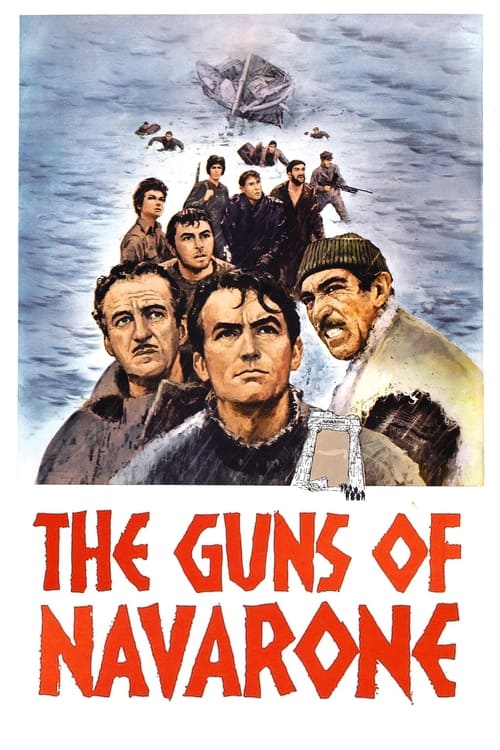
The Guns of Navarone
A team of allied saboteurs are assigned an impossible mission: infiltrate an impregnable Nazi-held island and destroy the two enormous long-range field guns that prevent the rescue of 2,000 trapped British soldiers.
Despite its modest budget of $6.0M, The Guns of Navarone became a solid performer, earning $28.9M worldwide—a 382% return. The film's distinctive approach engaged audiences, confirming that strong storytelling can transcend budget limitations.
1 Oscar. 4 wins & 12 nominations


Plot Structure
Story beats plotted across runtime


Narrative Arc
Emotional journey through the story's key moments
Story Circle
Blueprint 15-beat structure
Arcplot Score Breakdown
Weighted: Precision (70%) + Arc (15%) + Theme (15%)
The Guns of Navarone (1961) exhibits precise story structure, characteristic of J. Lee Thompson's storytelling approach. This structural analysis examines how the film's 15-point plot structure maps to proven narrative frameworks across 2 hours and 40 minutes. With an Arcplot score of 7.1, the film balances conventional beats with creative variation.
Characters
Cast & narrative archetypes

Captain Keith Mallory
Corporal Miller
Andrea Stavros
Colonel Andrea Stavrou
Major Roy Franklin
Spyros Pappadimos
Maria Pappadimos
Anna
Butcher Brown
Main Cast & Characters
Captain Keith Mallory
Played by Gregory Peck
British mountaineer and saboteur leading the mission to destroy the guns of Navarone.
Corporal Miller
Played by David Niven
American explosives expert with a cynical attitude and sharp technical skills.
Andrea Stavros
Played by Anthony Quinn
Greek resistance fighter seeking revenge for his family, Mallory's trusted lieutenant.
Colonel Andrea Stavrou
Played by Anthony Quinn
Greek officer with deep knowledge of the island and burning desire for vengeance.
Major Roy Franklin
Played by Anthony Quayle
Original mission leader who becomes injured, forcing Mallory to take command.
Spyros Pappadimos
Played by James Darren
Greek resistance fighter and guide who assists the team on Navarone.
Maria Pappadimos
Played by Irene Papas
Greek resistance fighter, sister of Spyros, hardened by war and betrayal.
Anna
Played by Gia Scala
Young Greek resistance fighter working alongside Maria, traumatized into silence.
Butcher Brown
Played by Stanley Baker
British engineer and combat soldier assisting with the sabotage mission.
Structural Analysis
The Status Quo at 2 minutes (1% through the runtime) establishes Opening narration and maps establish the dire situation in the Aegean Sea during WWII. Two massive German guns on the island of Navarone dominate the sea lanes, threatening 2,000 British soldiers trapped on nearby Kheros who face annihilation within a week.. Structural examination shows that this early placement immediately immerses viewers in the story world.
The inciting incident occurs at 19 minutes when Mallory and Miller are summoned and given their impossible mission: infiltrate Navarone, scale unclimbable cliffs, penetrate a fortress, and destroy the guns within days. The stakes are explicit - failure means the deaths of 2,000 soldiers and British defeat in the Aegean.. At 12% through the film, this Disruption aligns precisely with traditional story structure. This beat shifts the emotional landscape, launching the protagonist into the central conflict.
The First Threshold at 40 minutes marks the transition into Act II, occurring at 25% of the runtime. This shows the protagonist's commitment to The team departs on a small fishing boat disguised as Greek fishermen, leaving the relative safety of Allied territory. When German aircraft attack and they must navigate a violent storm to reach Navarone, there is no turning back - they are committed to the mission or death., moving from reaction to action.
At 80 minutes, the Midpoint arrives at 50% of the runtime—precisely centered, creating perfect narrative symmetry. Of particular interest, this crucial beat The mission suffers a devastating blow when the team is captured by German forces. Their cover as Greek fishermen is blown, and they face interrogation. This false defeat transforms the mission from infiltration to desperate escape - raising stakes dramatically as the clock ticks toward the deadline for the trapped soldiers., fundamentally raising what's at risk. The emotional intensity shifts, dividing the narrative into clear before-and-after phases.
The Collapse moment at 120 minutes (75% through) represents the emotional nadir. Here, Mallory faces the ultimate moral crisis when he must decide Anna's fate. She has betrayed them to the Germans, but she was tortured into collaboration. Miller refuses to execute her, forcing Mallory to confront whether he can commit such an act. Maria ultimately shoots Anna - a mercy killing that carries the "whiff of death" and shows war's true cost., reveals the protagonist at their lowest point. This beat's placement in the final quarter sets up the climactic reversal.
The Second Threshold at 128 minutes initiates the final act resolution at 80% of the runtime. Miller, the reluctant warrior who questioned the morality of killing throughout the film, commits fully to the mission. He devises a new plan using improvised explosives and the team's knowledge of the fortress layout. The synthesis of Miller's technical brilliance with Mallory's tactical leadership creates their final strategy., demonstrating the transformation achieved throughout the journey.
Emotional Journey
The Guns of Navarone's emotional architecture traces a deliberate progression across 15 carefully calibrated beats.
Narrative Framework
This structural analysis employs structural analysis methodology used to understand storytelling architecture. By mapping The Guns of Navarone against these established plot points, we can identify how J. Lee Thompson utilizes or subverts traditional narrative conventions. The plot point approach reveals not only adherence to structural principles but also creative choices that distinguish The Guns of Navarone within the war genre.
J. Lee Thompson's Structural Approach
Among the 13 J. Lee Thompson films analyzed on Arcplot, the average structural score is 7.1, reflecting strong command of classical structure. The Guns of Navarone represents one of the director's most structurally precise works. For comparative analysis, explore the complete J. Lee Thompson filmography.
Comparative Analysis
Additional war films include Fury, Shenandoah and More American Graffiti. For more J. Lee Thompson analyses, see The Greek Tycoon, Happy Birthday to Me and Battle for the Planet of the Apes.
Plot Points by Act
Act I
SetupStatus Quo
Opening narration and maps establish the dire situation in the Aegean Sea during WWII. Two massive German guns on the island of Navarone dominate the sea lanes, threatening 2,000 British soldiers trapped on nearby Kheros who face annihilation within a week.
Theme
Commodore Jensen states the film's thematic core: the guns must be destroyed regardless of the cost in lives. He acknowledges the mission is likely suicide but emphasizes that 2,000 men will die if they fail - establishing the moral calculus of war where some must be sacrificed to save many.
Worldbuilding
The setup establishes the impossible military situation: naval attacks have failed, air strikes cannot penetrate the gun emplacements carved into cliff faces, and the only hope is a small commando team. We meet the assembled specialists - mountaineer Mallory, explosives expert Miller, Greek resistance fighter Andrea, and the support team.
Disruption
Mallory and Miller are summoned and given their impossible mission: infiltrate Navarone, scale unclimbable cliffs, penetrate a fortress, and destroy the guns within days. The stakes are explicit - failure means the deaths of 2,000 soldiers and British defeat in the Aegean.
Resistance
The team assembles and debates the mission's feasibility. Miller openly resists, preferring his comfortable intelligence work to field operations. Tensions emerge between Mallory and Andrea, who has sworn to kill Mallory over a past betrayal. The men prepare equipment and study maps while grappling with the near-certainty of death.
Act II
ConfrontationFirst Threshold
The team departs on a small fishing boat disguised as Greek fishermen, leaving the relative safety of Allied territory. When German aircraft attack and they must navigate a violent storm to reach Navarone, there is no turning back - they are committed to the mission or death.
Mirror World
After the harrowing cliff climb, the team connects with the Greek resistance fighters, including Maria and Anna. These women represent the human face of the occupied population and embody the theme of sacrifice - they have lost everything but continue fighting. Maria challenges the men's assumptions about strength and commitment.
Premise
The commando adventure unfolds: the team survives a brutal storm, scales the "unclimbable" south cliff of Navarone at night, evades German patrols, connects with resistance fighters, and begins moving toward the fortress. The promise of the premise delivers tension-filled infiltration sequences and the team using their specialized skills.
Midpoint
The mission suffers a devastating blow when the team is captured by German forces. Their cover as Greek fishermen is blown, and they face interrogation. This false defeat transforms the mission from infiltration to desperate escape - raising stakes dramatically as the clock ticks toward the deadline for the trapped soldiers.
Opposition
Everything works against the team: after escaping capture, they discover their explosives have been sabotaged by a traitor within their group. Miller's carefully prepared charges are ruined. German patrols intensify their search. Mallory must confront the terrible reality that Anna, the mute resistance fighter, is the traitor - broken by German torture.
Collapse
Mallory faces the ultimate moral crisis when he must decide Anna's fate. She has betrayed them to the Germans, but she was tortured into collaboration. Miller refuses to execute her, forcing Mallory to confront whether he can commit such an act. Maria ultimately shoots Anna - a mercy killing that carries the "whiff of death" and shows war's true cost.
Crisis
In the aftermath of Anna's death, the team must process this tragedy while the mission seems impossible. With sabotaged explosives, increased German alertness, and their ranks emotionally shattered, completing the mission appears hopeless. Mallory and Miller must reconcile their philosophical differences about the morality of their actions.
Act III
ResolutionSecond Threshold
Miller, the reluctant warrior who questioned the morality of killing throughout the film, commits fully to the mission. He devises a new plan using improvised explosives and the team's knowledge of the fortress layout. The synthesis of Miller's technical brilliance with Mallory's tactical leadership creates their final strategy.
Synthesis
The climactic assault on the gun emplacement unfolds with precision and desperation. The team infiltrates the fortress through flooding tunnels, plants explosives in the gun mechanisms, and fights their way out as alarms sound. Andrea sacrifices his chance at safety to hold off German soldiers, fulfilling his arc of redemption.
Transformation
The guns of Navarone explode in a massive detonation just as British destroyers attempt to pass through the strait. The ships sail through safely, the 2,000 soldiers will be rescued, and the survivors watch from their escape boat. Miller and Mallory, once antagonists, share a moment of exhausted triumph - transformed by sacrifice and mutual respect.