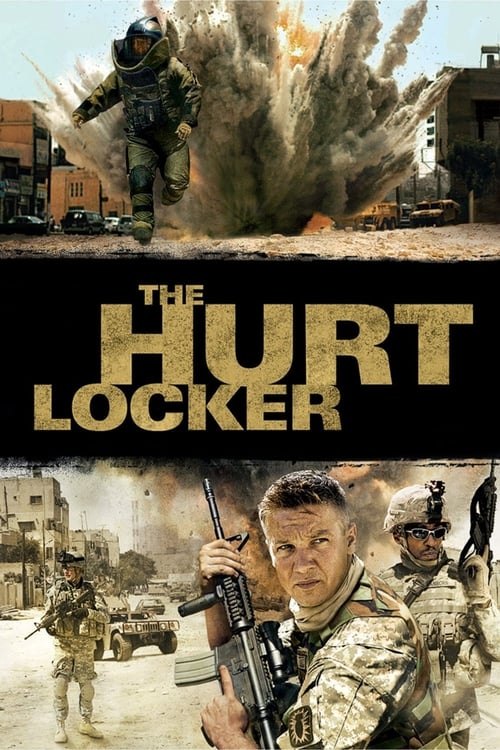
The Hurt Locker
During the Iraq War, a Sergeant recently assigned to an army bomb squad is put at odds with his squad mates due to his maverick way of handling his work.
Despite a moderate budget of $15.0M, The Hurt Locker became a box office success, earning $49.3M worldwide—a 228% return.
6 Oscars. 125 wins & 130 nominations


Plot Structure
Story beats plotted across runtime


Narrative Arc
Emotional journey through the story's key moments
Story Circle
Blueprint 15-beat structure
Arcplot Score Breakdown
Weighted: Precision (70%) + Arc (15%) + Theme (15%)
The Hurt Locker (2008) reveals meticulously timed dramatic framework, characteristic of Kathryn Bigelow's storytelling approach. This structural analysis examines how the film's 15-point plot structure maps to proven narrative frameworks across 2 hours and 11 minutes. With an Arcplot score of 6.9, the film balances conventional beats with creative variation.
Structural Analysis
The Status Quo at 1 minutes (1% through the runtime) establishes Bravo Company EOD team defuses IED in Baghdad street. Staff Sergeant Thompson leads with careful precision, establishing the methodical, cautious approach to bomb disposal that keeps soldiers alive.. Of particular interest, this early placement immediately immerses viewers in the story world.
The inciting incident occurs at 15 minutes when Staff Sergeant Thompson is killed when an insurgent detonates an IED despite his cautious approach. The bomb suit cannot save him. This death disrupts the team and introduces the film's central tension: no method guarantees survival.. At 11% through the film, this Disruption aligns precisely with traditional story structure. This beat shifts the emotional landscape, launching the protagonist into the central conflict.
The First Threshold at 32 minutes marks the transition into Act II, occurring at 24% of the runtime. This illustrates the protagonist's commitment to James chooses to manually defuse a complex car bomb in dense civilian area despite Sanborn's objections. He removes his headset, ignoring orders, committing fully to his own dangerous approach. The team must now operate under his rules., moving from reaction to action.
At 66 minutes, the Midpoint arrives at 50% of the runtime—precisely centered, creating perfect narrative symmetry. The analysis reveals that this crucial beat False defeat: During sniper engagement in the desert, the team is pinned down for hours in scorching heat. They successfully kill insurgents but the experience is harrowing, showing the limits of James's invincibility. Eldridge is psychologically unraveling. Stakes raise: they have 38 days left., fundamentally raising what's at risk. The emotional intensity shifts, dividing the narrative into clear before-and-after phases.
The Collapse moment at 96 minutes (73% through) represents the emotional nadir. Here, Eldridge is critically wounded during a mission, screaming at James that it's his fault. As Eldridge is evacuated, he may die, and the team is broken. James faces the consequence of his addiction: he destroys those around him. Whiff of death literal and metaphorical., reveals the protagonist at their lowest point. This beat's placement in the final quarter sets up the climactic reversal.
The Second Threshold at 104 minutes initiates the final act resolution at 80% of the runtime. James realizes he loves only one thing: the adrenaline, the chaos, the war. "There's enough things you love" - but he doesn't. He chooses to return to Iraq for another tour. Not growth, but acceptance of his addiction., demonstrating the transformation achieved throughout the journey.
Emotional Journey
The Hurt Locker's emotional architecture traces a deliberate progression across 15 carefully calibrated beats.
Narrative Framework
This structural analysis employs proven narrative structure principles that track dramatic progression. By mapping The Hurt Locker against these established plot points, we can identify how Kathryn Bigelow utilizes or subverts traditional narrative conventions. The plot point approach reveals not only adherence to structural principles but also creative choices that distinguish The Hurt Locker within the drama genre.
Kathryn Bigelow's Structural Approach
Among the 7 Kathryn Bigelow films analyzed on Arcplot, the average structural score is 7.1, reflecting strong command of classical structure. The Hurt Locker takes a more unconventional approach compared to the director's typical style. For comparative analysis, explore the complete Kathryn Bigelow filmography.
Comparative Analysis
Additional drama films include After Thomas, South Pacific and Dirty Dancing: Havana Nights. For more Kathryn Bigelow analyses, see Detroit, Zero Dark Thirty and K-19: The Widowmaker.
Plot Points by Act
Act I
SetupStatus Quo
Bravo Company EOD team defuses IED in Baghdad street. Staff Sergeant Thompson leads with careful precision, establishing the methodical, cautious approach to bomb disposal that keeps soldiers alive.
Theme
Sanborn to Eldridge: "Everyone's a coward about something." The film's exploration of what drives men toward danger versus safety, and whether addiction to war is courage or pathology.
Worldbuilding
Establishment of EOD protocols, the team dynamic between Thompson, Sanborn, and Eldridge, the rules of engagement, and the constant threat environment. Shows routine until Thompson is killed by remote-detonated IED, shattering the status quo.
Disruption
Staff Sergeant Thompson is killed when an insurgent detonates an IED despite his cautious approach. The bomb suit cannot save him. This death disrupts the team and introduces the film's central tension: no method guarantees survival.
Resistance
Staff Sergeant William James arrives as replacement team leader. Sanborn and Eldridge resist his reckless methods - he disables headset communications, approaches bombs without protocol, takes unnecessary risks. Tension builds as they debate whether his cowboy tactics will get them killed.
Act II
ConfrontationFirst Threshold
James chooses to manually defuse a complex car bomb in dense civilian area despite Sanborn's objections. He removes his headset, ignoring orders, committing fully to his own dangerous approach. The team must now operate under his rules.
Mirror World
James discovers the body-bomb of a young boy, "Beckham," whom he believes is the Iraqi boy who sells DVDs at base. This humanizing connection represents the thematic counterpoint - attachment and humanity versus detachment and war addiction.
Premise
The promise of the premise: intense bomb disposal sequences showcasing James's unorthodox brilliance. Includes warehouse body-bomb discovery, desert sniper standoff, and multiple high-stakes defusals. James thrives in chaos while Sanborn and Eldridge grow more disturbed by his addiction to danger.
Midpoint
False defeat: During sniper engagement in the desert, the team is pinned down for hours in scorching heat. They successfully kill insurgents but the experience is harrowing, showing the limits of James's invincibility. Eldridge is psychologically unraveling. Stakes raise: they have 38 days left.
Opposition
Pressure intensifies. James's recklessness escalates - he goes AWOL at night searching for Beckham's killers, endangering himself and the mission. Sanborn confronts him, nearly kills him. Eldridge's mental state deteriorates. Team cohesion collapses under James's pathology.
Collapse
Eldridge is critically wounded during a mission, screaming at James that it's his fault. As Eldridge is evacuated, he may die, and the team is broken. James faces the consequence of his addiction: he destroys those around him. Whiff of death literal and metaphorical.
Crisis
James processes the darkness. He completes his rotation - 873 bombs defused. He returns home to his wife and infant son. But in domestic safety, he is empty, lost. The war is his only truth.
Act III
ResolutionSecond Threshold
James realizes he loves only one thing: the adrenaline, the chaos, the war. "There's enough things you love" - but he doesn't. He chooses to return to Iraq for another tour. Not growth, but acceptance of his addiction.
Synthesis
James returns to Iraq with a new EOD rotation - 365 days. He walks toward another bomb in the suit. The finale synthesizes the thematic question: he cannot change, cannot escape, can only return to the one thing he understands.
Transformation
Final image mirrors Status Quo: James walks alone toward another IED in the bomb suit, but now we understand he is not a hero defying death - he is an addict who cannot live without it. Negative character arc complete.