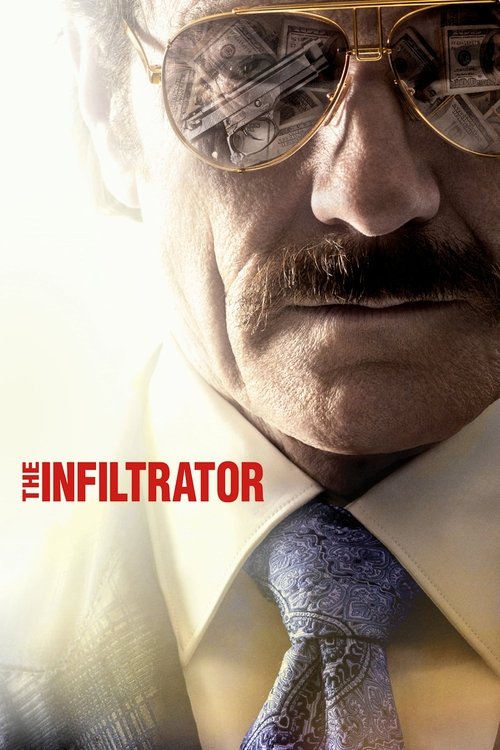
The Infiltrator
A U.S Customs official uncovers a massive money laundering scheme involving Pablo Escobar.
The film disappointed at the box office against its mid-range budget of $28.0M, earning $21.0M globally (-25% loss).


Plot Structure
Story beats plotted across runtime


Narrative Arc
Emotional journey through the story's key moments
Story Circle
Blueprint 15-beat structure
Arcplot Score Breakdown
Weighted: Precision (70%) + Arc (15%) + Theme (15%)
The Infiltrator (2016) exhibits meticulously timed narrative design, characteristic of Brad Furman's storytelling approach. This structural analysis examines how the film's 15-point plot structure maps to proven narrative frameworks across 2 hours and 7 minutes. With an Arcplot score of 6.7, the film balances conventional beats with creative variation.
Structural Analysis
The Status Quo at 1 minutes (1% through the runtime) establishes Robert Mazur is shown as a dedicated family man and experienced federal agent in Tampa, establishing his dual identity as both a loving husband and father while working dangerous undercover operations.. Of particular interest, this early placement immediately immerses viewers in the story world.
The inciting incident occurs at 15 minutes when Mazur is presented with the opportunity to go deep undercover as Bob Musella, a wealthy businessman who can launder money for the Colombian cartels. This massive operation could take down the Medellín Cartel's financial network.. At 12% through the film, this Disruption aligns precisely with traditional story structure. This beat shifts the emotional landscape, launching the protagonist into the central conflict.
The First Threshold at 32 minutes marks the transition into Act II, occurring at 25% of the runtime. This illustrates the protagonist's commitment to Mazur fully commits to the operation by meeting with Gonzalo Mora Jr., a key cartel associate, and begins actively laundering money. There is no turning back as he enters the criminal underworld as Bob Musella., moving from reaction to action.
At 64 minutes, the Midpoint arrives at 50% of the runtime—precisely centered, creating perfect narrative symmetry. Of particular interest, this crucial beat Mazur secures a meeting with BCCI bank officials in Paris, proving he can move massive amounts of cartel money through legitimate banking channels. This false victory opens doors to the highest levels of the operation but deepens his moral compromise., fundamentally raising what's at risk. The emotional intensity shifts, dividing the narrative into clear before-and-after phases.
The Collapse moment at 95 minutes (75% through) represents the emotional nadir. Here, Mazur witnesses the brutal murder of an informant by cartel members, a stark reminder of what happens to those who betray them. He realizes the Alcainos, who have become genuine friends, will face the same fate of imprisonment because of him., indicates the protagonist at their lowest point. This beat's placement in the final quarter sets up the climactic reversal.
The Second Threshold at 102 minutes initiates the final act resolution at 80% of the runtime. Mazur commits to ending the operation with a sting at his fake wedding to Kathy. He chooses to complete his mission despite the personal cost, using the celebration as the perfect trap for mass arrests., demonstrating the transformation achieved throughout the journey.
Emotional Journey
The Infiltrator's emotional architecture traces a deliberate progression across 15 carefully calibrated beats.
Narrative Framework
This structural analysis employs proven narrative structure principles that track dramatic progression. By mapping The Infiltrator against these established plot points, we can identify how Brad Furman utilizes or subverts traditional narrative conventions. The plot point approach reveals not only adherence to structural principles but also creative choices that distinguish The Infiltrator within the crime genre.
Brad Furman's Structural Approach
Among the 3 Brad Furman films analyzed on Arcplot, the average structural score is 6.9, demonstrating varied approaches to story architecture. The Infiltrator takes a more unconventional approach compared to the director's typical style. For comparative analysis, explore the complete Brad Furman filmography.
Comparative Analysis
Additional crime films include The Bad Guys, Rustom and The Whole Ten Yards. For more Brad Furman analyses, see The Lincoln Lawyer, Runner Runner.
Plot Points by Act
Act I
SetupStatus Quo
Robert Mazur is shown as a dedicated family man and experienced federal agent in Tampa, establishing his dual identity as both a loving husband and father while working dangerous undercover operations.
Theme
Mazur's wife Evelyn expresses concern about the toll undercover work takes on him, asking how long he can keep living two lives. The theme of identity and the moral cost of deception is established.
Worldbuilding
We see Mazur's home life with his family, his reputation as a skilled undercover agent, and the early stages of a money laundering investigation. His partner Emir Abreu is introduced as his streetwise counterpart.
Disruption
Mazur is presented with the opportunity to go deep undercover as Bob Musella, a wealthy businessman who can launder money for the Colombian cartels. This massive operation could take down the Medellín Cartel's financial network.
Resistance
Mazur prepares his Bob Musella identity, establishes his cover story, and debates the risks with his wife. He sets up the financial infrastructure needed to appear as a legitimate money launderer and connects with initial contacts.
Act II
ConfrontationFirst Threshold
Mazur fully commits to the operation by meeting with Gonzalo Mora Jr., a key cartel associate, and begins actively laundering money. There is no turning back as he enters the criminal underworld as Bob Musella.
Mirror World
Kathy Ertz is assigned as Mazur's fake fiancée to help maintain his cover. Her presence introduces a parallel relationship that mirrors and threatens his real marriage, embodying the theme of double lives.
Premise
Mazur as Bob Musella works his way up the cartel hierarchy, laundering millions and gaining trust. He befriends Roberto Alcaino and his wife, attends lavish parties, and builds relationships that blur the line between investigation and genuine connection.
Midpoint
Mazur secures a meeting with BCCI bank officials in Paris, proving he can move massive amounts of cartel money through legitimate banking channels. This false victory opens doors to the highest levels of the operation but deepens his moral compromise.
Opposition
The cartel becomes suspicious of leaks. Mazur faces increasing danger as bodies start dropping around him. His friendship with Roberto Alcaino deepens, making the inevitable betrayal more painful. His family life suffers as Bob Musella consumes more of his identity.
Collapse
Mazur witnesses the brutal murder of an informant by cartel members, a stark reminder of what happens to those who betray them. He realizes the Alcainos, who have become genuine friends, will face the same fate of imprisonment because of him.
Crisis
Mazur grapples with the moral weight of his deception. He has formed real emotional bonds with people he must destroy. The line between Bob Musella and Robert Mazur has become dangerously blurred.
Act III
ResolutionSecond Threshold
Mazur commits to ending the operation with a sting at his fake wedding to Kathy. He chooses to complete his mission despite the personal cost, using the celebration as the perfect trap for mass arrests.
Synthesis
The wedding sting unfolds as federal agents arrest the cartel members and corrupt bankers in attendance. Mazur must personally betray Roberto Alcaino, who believed they were genuine friends. The operation results in over 85 arrests and the indictment of BCCI.
Transformation
Text reveals the operation's success but also shows Mazur haunted by his actions. He receives a letter from Roberto Alcaino in prison, still believing in their friendship. Mazur is left with the permanent cost of living as someone else—a man who can never fully return to who he was.