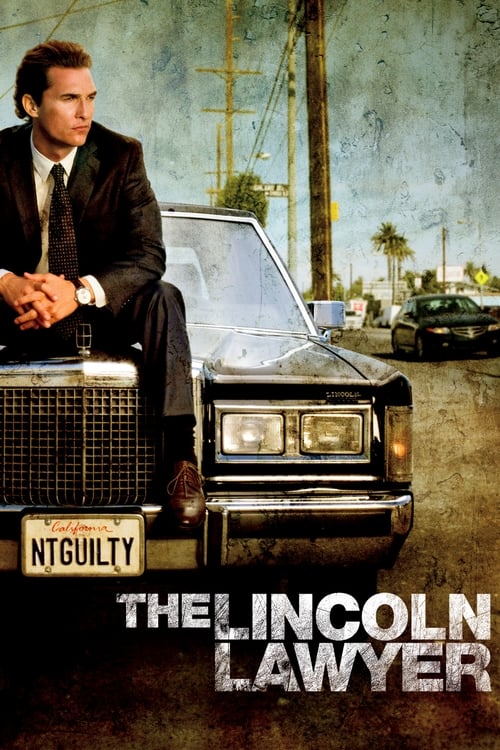
The Lincoln Lawyer
Mick Haller is a charismatic defense attorney who does business out of his Lincoln Continental sedan. Mick spends most of his time defending petty crooks and other bottom-feeders, so it comes as quite a surprise when he lands the case of a lifetime: defending a Beverly Hills playboy who is accused of attempted murder. However, what Mick initially thinks is an open-and-shut case with a big monetary reward develops into something more sinister.
Despite a mid-range budget of $40.0M, The Lincoln Lawyer became a commercial success, earning $85.4M worldwide—a 114% return.


Plot Structure
Story beats plotted across runtime


Narrative Arc
Emotional journey through the story's key moments
Story Circle
Blueprint 15-beat structure
Arcplot Score Breakdown
Weighted: Precision (70%) + Arc (15%) + Theme (15%)
The Lincoln Lawyer (2011) exhibits meticulously timed narrative design, characteristic of Brad Furman's storytelling approach. This structural analysis examines how the film's 15-point plot structure maps to proven narrative frameworks across 1 hour and 59 minutes. With an Arcplot score of 7.2, the film balances conventional beats with creative variation.
Structural Analysis
The Status Quo at 1 minutes (1% through the runtime) establishes Mickey Haller conducts business from his Lincoln Town Car, a smooth-talking defense attorney who represents criminals and gets them deals. He's cynical, successful, and divorced, operating in moral gray areas without remorse.. Of particular interest, this early placement immediately immerses viewers in the story world.
The inciting incident occurs at 14 minutes when Val brings Mickey a career-making case: Louis Roulet, a wealthy Beverly Hills playboy accused of brutally assaulting a woman. The case comes with money, publicity, and a seemingly innocent, well-connected client - everything Mickey wants.. At 12% through the film, this Disruption aligns precisely with traditional story structure. This beat shifts the emotional landscape, launching the protagonist into the central conflict.
The First Threshold at 30 minutes marks the transition into Act II, occurring at 25% of the runtime. This illustrates the protagonist's commitment to Mickey fully commits to defending Louis Roulet, building his strategy around proving Reggie Campo set Louis up. He believes in his client's innocence and throws all his resources into the case, seeing it as a chance to defend someone truly innocent for once., moving from reaction to action.
At 60 minutes, the Midpoint arrives at 50% of the runtime—precisely centered, creating perfect narrative symmetry. The analysis reveals that this crucial beat False defeat: Frank Levin shows Mickey evidence that Louis Roulet is actually guilty - and worse, he matches the description of the real killer in an old case where Mickey's innocent client Jesus Martinez went to prison. Mickey realizes he put an innocent man away while now defending a guilty, dangerous murderer., fundamentally raising what's at risk. The emotional intensity shifts, dividing the narrative into clear before-and-after phases.
The Collapse moment at 89 minutes (75% through) represents the emotional nadir. Here, Mickey discovers Frank Levin has been murdered - shot with Mickey's gun that was in Frank's possession. Louis killed him. Mickey is devastated, guilt-ridden, and now under police suspicion. His mentor/friend is dead, his family is threatened, and he's bound to defend a murderer. All is lost., shows the protagonist at their lowest point. This beat's placement in the final quarter sets up the climactic reversal.
The Second Threshold at 94 minutes initiates the final act resolution at 79% of the runtime. Mickey realizes he can use the system itself against Louis. He can't reveal privileged information, but he CAN defend his client incompetently or maneuver Louis into incriminating himself. He synthesizes his lawyer skills with his newfound commitment to truth - he'll win by making Louis lose., demonstrating the transformation achieved throughout the journey.
Emotional Journey
The Lincoln Lawyer's emotional architecture traces a deliberate progression across 15 carefully calibrated beats.
Narrative Framework
This structural analysis employs proven narrative structure principles that track dramatic progression. By mapping The Lincoln Lawyer against these established plot points, we can identify how Brad Furman utilizes or subverts traditional narrative conventions. The plot point approach reveals not only adherence to structural principles but also creative choices that distinguish The Lincoln Lawyer within the crime genre.
Brad Furman's Structural Approach
Among the 3 Brad Furman films analyzed on Arcplot, the average structural score is 6.9, demonstrating varied approaches to story architecture. The Lincoln Lawyer represents one of the director's most structurally precise works. For comparative analysis, explore the complete Brad Furman filmography.
Comparative Analysis
Additional crime films include The Bad Guys, Rustom and The Whole Ten Yards. For more Brad Furman analyses, see The Infiltrator, Runner Runner.
Plot Points by Act
Act I
SetupStatus Quo
Mickey Haller conducts business from his Lincoln Town Car, a smooth-talking defense attorney who represents criminals and gets them deals. He's cynical, successful, and divorced, operating in moral gray areas without remorse.
Theme
Mick's ex-wife Maggie (a prosecutor) warns him: "The scariest client a lawyer will ever have is an innocent client. Because if you screw up and he goes to jail, it'll scar you for life." This foreshadows the central conflict between winning and truth.
Worldbuilding
Mickey's world is established: his Lincoln office, his driver Earl, his investigator Frank Levin, bail bondsman Val who feeds him clients. He works the system brilliantly, defending bikers and criminals. We meet his daughter, ex-wife Maggie, and see his smooth operation.
Disruption
Val brings Mickey a career-making case: Louis Roulet, a wealthy Beverly Hills playboy accused of brutally assaulting a woman. The case comes with money, publicity, and a seemingly innocent, well-connected client - everything Mickey wants.
Resistance
Mickey meets the Roulet family, takes the case for a large retainer. He investigates, meets the victim Reggie Campo. Louis claims innocence and self-defense. Mickey debates whether this is really the righteous case it appears to be, but the money and Louis's convincing story pull him forward.
Act II
ConfrontationFirst Threshold
Mickey fully commits to defending Louis Roulet, building his strategy around proving Reggie Campo set Louis up. He believes in his client's innocence and throws all his resources into the case, seeing it as a chance to defend someone truly innocent for once.
Mirror World
Mickey reconnects meaningfully with Maggie and his daughter. Maggie represents the world of truth and justice he abandoned. Their relationship subplot carries the theme - she prosecutes to find truth, he defends to win. His work on Louis's case affects their rekindling relationship.
Premise
Mickey works the case brilliantly, investigating Reggie Campo's background, finding her prior accusations, building the defense. The promise of the premise: watching a skilled lawyer dismantle the prosecution's case. He's in his element, confident, getting closer to Maggie, and Louis seems genuinely grateful.
Midpoint
False defeat: Frank Levin shows Mickey evidence that Louis Roulet is actually guilty - and worse, he matches the description of the real killer in an old case where Mickey's innocent client Jesus Martinez went to prison. Mickey realizes he put an innocent man away while now defending a guilty, dangerous murderer.
Opposition
Mickey is trapped by attorney-client privilege - he can't reveal Louis's guilt. Louis threatens Mickey's family if he doesn't get him acquitted. The walls close in: Mickey must win the case or his family dies, but winning means freeing a killer and betraying Jesus Martinez. Frank is murdered by Louis.
Collapse
Mickey discovers Frank Levin has been murdered - shot with Mickey's gun that was in Frank's possession. Louis killed him. Mickey is devastated, guilt-ridden, and now under police suspicion. His mentor/friend is dead, his family is threatened, and he's bound to defend a murderer. All is lost.
Crisis
Mickey mourns Frank and grapples with his dark night. He's built his career on moral flexibility, and now it's destroying him. He can't tell the truth without violating privilege and getting disbarred. He can't win without freeing a killer. He processes the cost of his choices.
Act III
ResolutionSecond Threshold
Mickey realizes he can use the system itself against Louis. He can't reveal privileged information, but he CAN defend his client incompetently or maneuver Louis into incriminating himself. He synthesizes his lawyer skills with his newfound commitment to truth - he'll win by making Louis lose.
Synthesis
The trial finale: Mickey manipulates events to get Jesus Martinez to testify, knowing Louis will arrogantly take the stand to refute him. On the stand, Louis incriminates himself. Mickey also has Roulet's mother testify, exposing the family's corruption. The bikers exact justice for Frank's murder. Louis is arrested for murder.
Transformation
Final image mirrors the opening but shows transformation: Mickey still works from his Lincoln, but now he carries Frank's photo and has reconnected with his family. He's still a defense attorney, but now he's committed to truth, not just winning. The scariest client scarred him - and made him better.