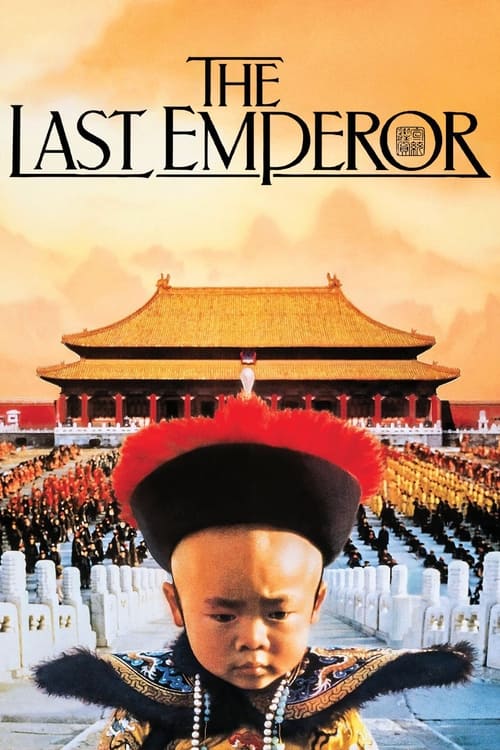
The Last Emperor
A dramatic history of Pu Yi, the last of the Emperors of China, from his lofty birth and brief reign in the Forbidden City, the object of worship by half a billion people; through his abdication, his decline and dissolute lifestyle; his exploitation by the invading Japanese, and finally to his obscure existence as just another peasant worker in the People's Republic.
Working with a respectable budget of $23.8M, the film achieved a modest success with $44.0M in global revenue (+85% profit margin).
9 Oscars. 58 wins & 20 nominations


Plot Structure
Story beats plotted across runtime


Narrative Arc
Emotional journey through the story's key moments
Story Circle
Blueprint 15-beat structure
Arcplot Score Breakdown
Weighted: Precision (70%) + Arc (15%) + Theme (15%)
The Last Emperor (1987) showcases precise narrative design, characteristic of Bernardo Bertolucci's storytelling approach. This structural analysis examines how the film's 15-point plot structure maps to proven narrative frameworks across 2 hours and 43 minutes. With an Arcplot score of 6.5, the film balances conventional beats with creative variation.
Structural Analysis
The Status Quo at 2 minutes (1% through the runtime) establishes 1950: Puyi arrives at a war criminal detention center in Communist China. He attempts suicide in the bathroom, slashing his wrists—a broken man stripped of all identity and power, establishing his complete fall from grace.. Notably, this early placement immediately immerses viewers in the story world.
The inciting incident occurs at 20 minutes when The 1911 Revolution forces the abdication of the child emperor. Though allowed to remain in the Forbidden City, Puyi learns he is emperor of nothing—the Republic of China has been declared, and his world has fundamentally changed without his consent.. At 12% through the film, this Disruption aligns precisely with traditional story structure. This beat shifts the emotional landscape, launching the protagonist into the central conflict.
The First Threshold at 41 minutes marks the transition into Act II, occurring at 25% of the runtime. This demonstrates the protagonist's commitment to In 1924, the warlord Feng Yuxiang's army expels Puyi from the Forbidden City at gunpoint. For the first time in his life, the former emperor must step beyond the palace gates and enter the real world—not by choice, but by force, beginning his long journey through Republican China., moving from reaction to action.
At 82 minutes, the Midpoint arrives at 50% of the runtime—precisely centered, creating perfect narrative symmetry. Of particular interest, this crucial beat False victory: The Japanese install Puyi as the puppet Emperor of Manchukuo in 1934. He finally has his throne again, believing he can use the Japanese to restore Chinese glory. In reality, he has traded one cage for another, becoming a tool of imperial Japan's conquest., fundamentally raising what's at risk. The emotional intensity shifts, dividing the narrative into clear before-and-after phases.
The Collapse moment at 122 minutes (75% through) represents the emotional nadir. Here, Japan surrenders in 1945. Soviet troops capture Puyi as he attempts to flee to Japan. He watches newsreel footage of Japanese war crimes committed in his name in Manchukuo, including human experimentation. The full horror of what he enabled—however passively—destroys his last illusions about his reign., shows the protagonist at their lowest point. This beat's placement in the final quarter sets up the climactic reversal.
The Second Threshold at 130 minutes initiates the final act resolution at 80% of the runtime. Puyi finally writes his genuine confession, taking responsibility for his actions rather than blaming fate or circumstance. For the first time, he acknowledges his agency—both his failures to act and his choice to collaborate. He accepts he was never truly powerless, only unwilling to sacrifice comfort for principle., demonstrating the transformation achieved throughout the journey.
Emotional Journey
The Last Emperor's emotional architecture traces a deliberate progression across 15 carefully calibrated beats.
Narrative Framework
This structural analysis employs structural analysis methodology used to understand storytelling architecture. By mapping The Last Emperor against these established plot points, we can identify how Bernardo Bertolucci utilizes or subverts traditional narrative conventions. The plot point approach reveals not only adherence to structural principles but also creative choices that distinguish The Last Emperor within the drama genre.
Bernardo Bertolucci's Structural Approach
Among the 5 Bernardo Bertolucci films analyzed on Arcplot, the average structural score is 6.9, demonstrating varied approaches to story architecture. The Last Emperor takes a more unconventional approach compared to the director's typical style. For comparative analysis, explore the complete Bernardo Bertolucci filmography.
Comparative Analysis
Additional drama films include After Thomas, South Pacific and Dirty Dancing: Havana Nights. For more Bernardo Bertolucci analyses, see Stealing Beauty, Little Buddha and The Dreamers.
Plot Points by Act
Act I
SetupStatus Quo
1950: Puyi arrives at a war criminal detention center in Communist China. He attempts suicide in the bathroom, slashing his wrists—a broken man stripped of all identity and power, establishing his complete fall from grace.
Theme
The prison governor tells Puyi that he must confess his crimes and transform himself. "You must be born again," encapsulating the film's central theme: identity is not bestowed by titles but forged through self-examination and accountability.
Worldbuilding
The dual narrative structure is established: the 1950 prison frame alternates with the 1908 flashback where three-year-old Puyi is taken from his mother and enthroned as the Son of Heaven in the Forbidden City, surrounded by thousands of eunuchs and servants in a gilded cage.
Disruption
The 1911 Revolution forces the abdication of the child emperor. Though allowed to remain in the Forbidden City, Puyi learns he is emperor of nothing—the Republic of China has been declared, and his world has fundamentally changed without his consent.
Resistance
Puyi grows up isolated within the Forbidden City walls, forbidden to leave. His Scottish tutor Reginald Johnston arrives and opens his eyes to the modern world beyond the vermillion walls, teaching him English and Western ideas while the young emperor increasingly chafes at his gilded imprisonment.
Act II
ConfrontationFirst Threshold
In 1924, the warlord Feng Yuxiang's army expels Puyi from the Forbidden City at gunpoint. For the first time in his life, the former emperor must step beyond the palace gates and enter the real world—not by choice, but by force, beginning his long journey through Republican China.
Mirror World
Puyi settles in the Japanese Concession in Tianjin with his wife Wanrong and consort Wenxiu. He embraces Western modernity—tennis, jazz, tuxedos—experiencing a taste of freedom and normalcy with his wives, representing the life he could have if he abandoned his imperial delusions.
Premise
Puyi lives as a playboy in Tianjin, enjoying Western pleasures while Japanese agents court him with promises of restoration. He entertains fantasies of reclaiming his throne, torn between his modernizing impulses and his longing for imperial glory, while his marriages begin to fracture.
Midpoint
False victory: The Japanese install Puyi as the puppet Emperor of Manchukuo in 1934. He finally has his throne again, believing he can use the Japanese to restore Chinese glory. In reality, he has traded one cage for another, becoming a tool of imperial Japan's conquest.
Opposition
Puyi's puppet reign in Manchukuo grows increasingly hollow. The Japanese control everything while he signs whatever they demand. Wanrong descends into opium addiction and madness. His driver and confidant is revealed as a Japanese spy. Every attempt at agency is crushed by his handlers.
Collapse
Japan surrenders in 1945. Soviet troops capture Puyi as he attempts to flee to Japan. He watches newsreel footage of Japanese war crimes committed in his name in Manchukuo, including human experimentation. The full horror of what he enabled—however passively—destroys his last illusions about his reign.
Crisis
In the re-education prison, Puyi faces systematic interrogation about his collaboration with Japan. He must confront his lifetime of passivity, his willful blindness, and his complicity. Stripped of all status, he is just another prisoner, forced to examine who he truly is beneath the titles.
Act III
ResolutionSecond Threshold
Puyi finally writes his genuine confession, taking responsibility for his actions rather than blaming fate or circumstance. For the first time, he acknowledges his agency—both his failures to act and his choice to collaborate. He accepts he was never truly powerless, only unwilling to sacrifice comfort for principle.
Synthesis
Puyi is released and becomes an ordinary citizen of the People's Republic of China—a gardener in the Beijing Botanical Gardens. He lives simply, works with his hands, and finds a quiet dignity in anonymity that eluded him on every throne he occupied.
Transformation
During the Cultural Revolution, an elderly Puyi visits the Forbidden City as a tourist. He approaches his former throne and shows a young Red Guard boy the cricket he hid there as a child emperor. The cricket emerges alive—a symbol of enduring life beyond gilded cages. Puyi has finally found freedom in his humanity.