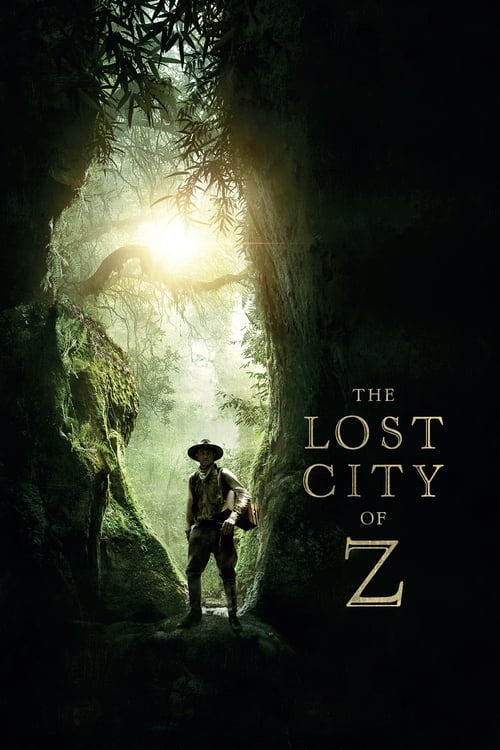
The Lost City of Z
A true-life drama in the 1920s, centering on British explorer Col. Percy Fawcett, who discovered evidence of a previously unknown, advanced civilization in the Amazon and disappeared whilst searching for it.
The film commercial failure against its moderate budget of $30.0M, earning $8.6M globally (-71% loss). While initial box office returns were modest, the film has gained appreciation for its compelling narrative within the adventure genre.
5 wins & 31 nominations


Plot Structure
Story beats plotted across runtime


Narrative Arc
Emotional journey through the story's key moments
Story Circle
Blueprint 15-beat structure
Arcplot Score Breakdown
Weighted: Precision (70%) + Arc (15%) + Theme (15%)
The Lost City of Z (2017) demonstrates carefully calibrated plot construction, characteristic of James Gray's storytelling approach. This structural analysis examines how the film's 15-point plot structure maps to proven narrative frameworks across 2 hours and 21 minutes. With an Arcplot score of 6.7, the film balances conventional beats with creative variation.
Structural Analysis
The Status Quo at 1 minutes (1% through the runtime) establishes Percy Fawcett hunts a stag in Ireland, 1905. A skilled military officer trapped by his father's disgrace, seeking recognition to restore his family's honor. The hunt symbolizes his quest for validation in a society that has already judged him.. The analysis reveals that this early placement immediately immerses viewers in the story world.
The inciting incident occurs at 16 minutes when The Royal Geographical Society offers Fawcett a mission to map the Bolivia-Brazil border in the Amazon. This represents both opportunity for glory and a dangerous unknown. For the first time, his merit might outweigh his father's shame.. At 12% through the film, this Disruption aligns precisely with traditional story structure. This beat shifts the emotional landscape, launching the protagonist into the central conflict.
The First Threshold at 34 minutes marks the transition into Act II, occurring at 24% of the runtime. This shows the protagonist's commitment to Fawcett boards the ship to South America, making the active choice to leave his family and comfortable life for the unknown jungle. He crosses into a new world that will consume him for the rest of his life., moving from reaction to action.
At 71 minutes, the Midpoint arrives at 50% of the runtime—precisely centered, creating perfect narrative symmetry. Significantly, this crucial beat Fawcett returns to England as a celebrated hero, receiving medals and recognition. FALSE VICTORY: He has achieved the glory he sought, but the discovery of the pottery has planted an obsession that will destroy him. He presents his theory of a lost civilization to acclaim, but also ridicule from racist colleagues., fundamentally raising what's at risk. The emotional intensity shifts, dividing the narrative into clear before-and-after phases.
The Collapse moment at 106 minutes (75% through) represents the emotional nadir. Here, Fawcett returns from war wounded and defeated. His younger son Brian resents his absence. The family is fractured. WHIFF OF DEATH: Fawcett is older, damaged, but still obsessed. He has lost years with his children and his chance at normal life. His dream has cost him everything, yet he cannot let it go., reveals the protagonist at their lowest point. This beat's placement in the final quarter sets up the climactic reversal.
The Second Threshold at 113 minutes initiates the final act resolution at 80% of the runtime. Fawcett and Jack depart for the final expedition to find Z. This is not triumph but tragedy - Fawcett has learned nothing. He brings his son into his obsession. The synthesis is corrupted: he combines his old skills with his son's youth, but for a doomed quest., demonstrating the transformation achieved throughout the journey.
Emotional Journey
The Lost City of Z's emotional architecture traces a deliberate progression across 15 carefully calibrated beats.
Narrative Framework
This structural analysis employs a 15-point narrative structure framework that maps key story moments. By mapping The Lost City of Z against these established plot points, we can identify how James Gray utilizes or subverts traditional narrative conventions. The plot point approach reveals not only adherence to structural principles but also creative choices that distinguish The Lost City of Z within the adventure genre.
James Gray's Structural Approach
Among the 5 James Gray films analyzed on Arcplot, the average structural score is 7.1, reflecting strong command of classical structure. The Lost City of Z takes a more unconventional approach compared to the director's typical style. For comparative analysis, explore the complete James Gray filmography.
Comparative Analysis
Additional adventure films include The Black Stallion, The Bad Guys and Puss in Boots. For more James Gray analyses, see We Own the Night, Armageddon Time and Ad Astra.
Plot Points by Act
Act I
SetupStatus Quo
Percy Fawcett hunts a stag in Ireland, 1905. A skilled military officer trapped by his father's disgrace, seeking recognition to restore his family's honor. The hunt symbolizes his quest for validation in a society that has already judged him.
Theme
At the Royal Geographical Society, Sir George Goldie tells Fawcett: "A man's reach should exceed his grasp, or what's a heaven for?" This encapsulates the film's exploration of ambition, obsession, and the human cost of reaching for the impossible.
Worldbuilding
Establishment of Fawcett's world: his military service, his loving family with wife Nina and son Jack, the class prejudice that blocks his advancement, and the rigid British society that judges him by his father's alcoholism rather than his own merit.
Disruption
The Royal Geographical Society offers Fawcett a mission to map the Bolivia-Brazil border in the Amazon. This represents both opportunity for glory and a dangerous unknown. For the first time, his merit might outweigh his father's shame.
Resistance
Fawcett debates the mission with Nina, who wants to accompany him but is forbidden by society. He prepares for the expedition, recruits aide-de-camp Henry Costin, and struggles with leaving his family. Nina supports him despite her own frustrated ambitions for adventure.
Act II
ConfrontationFirst Threshold
Fawcett boards the ship to South America, making the active choice to leave his family and comfortable life for the unknown jungle. He crosses into a new world that will consume him for the rest of his life.
Mirror World
Fawcett meets Henry Costin in the Amazon. Costin becomes his loyal companion and thematic mirror - a man who shares Fawcett's courage but maintains perspective about what truly matters. Their friendship represents the balance Fawcett will fail to achieve.
Premise
The first expedition into the Amazon. Fawcett and team navigate dangerous rapids, encounter indigenous peoples, and discover ancient pottery that suggests a sophisticated civilization. Fawcett becomes obsessed with proving the existence of a lost city, which he calls "Z." The jungle reveals both wonders and horrors.
Midpoint
Fawcett returns to England as a celebrated hero, receiving medals and recognition. FALSE VICTORY: He has achieved the glory he sought, but the discovery of the pottery has planted an obsession that will destroy him. He presents his theory of a lost civilization to acclaim, but also ridicule from racist colleagues.
Opposition
Fawcett plans a second expedition but faces opposition from the scientific establishment who dismiss his theories. WWI interrupts, and he serves at the Somme where he is injured. Years pass. His son Jack grows up idolizing his absent father. Nina ages, waiting. The cost of obsession mounts as Fawcett becomes increasingly distant from his family.
Collapse
Fawcett returns from war wounded and defeated. His younger son Brian resents his absence. The family is fractured. WHIFF OF DEATH: Fawcett is older, damaged, but still obsessed. He has lost years with his children and his chance at normal life. His dream has cost him everything, yet he cannot let it go.
Crisis
Fawcett grapples with whether to abandon his quest or make one final attempt. Nina, now elderly, tells him to go - understanding that he will never be at peace otherwise. Jack, now grown, insists on accompanying his father to finally connect with him.
Act III
ResolutionSecond Threshold
Fawcett and Jack depart for the final expedition to find Z. This is not triumph but tragedy - Fawcett has learned nothing. He brings his son into his obsession. The synthesis is corrupted: he combines his old skills with his son's youth, but for a doomed quest.
Synthesis
The final expedition into the Amazon. Fawcett and Jack travel deeper into the jungle than anyone before. They bond as father and son, but the jungle consumes them. They encounter indigenous peoples and push forward toward Z. The film suggests they are captured or killed, disappearing into legend.
Transformation
Nina, now very old, sits in the audience at the Royal Geographical Society. She stands and declares that Percy and Jack are still alive, that they found Z and chose to stay. TRAGIC TRANSFORMATION: She has joined his delusion, unable to accept that his obsession destroyed them all. The final image shows her clinging to myth rather than truth.