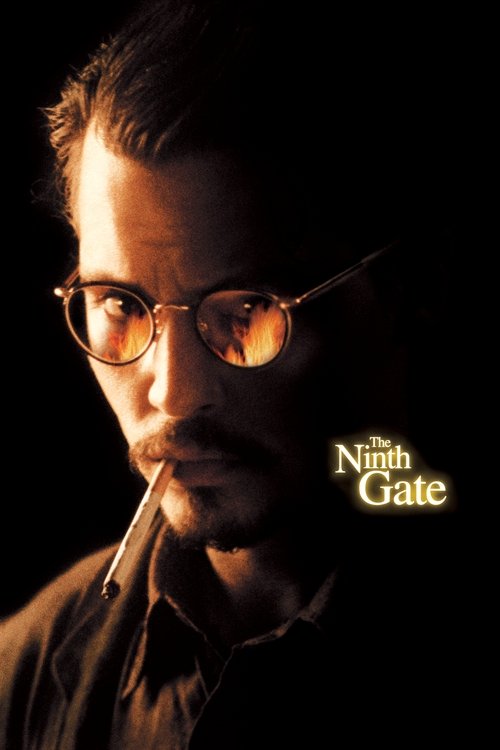
The Ninth Gate
A rare book dealer finds himself at the heart of a string of paranormal events when he is hired to find the last two copies of a text, The Nine Gates of the Kingdom of Shadows, capable of summoning the Devil.
Working with a moderate budget of $38.0M, the film achieved a respectable showing with $58.4M in global revenue (+54% profit margin).
2 wins & 5 nominations


Plot Structure
Story beats plotted across runtime


Narrative Arc
Emotional journey through the story's key moments
Story Circle
Blueprint 15-beat structure
Arcplot Score Breakdown
Weighted: Precision (70%) + Arc (15%) + Theme (15%)
The Ninth Gate (1999) reveals precise plot construction, characteristic of Roman Polanski's storytelling approach. This structural analysis examines how the film's 15-point plot structure maps to proven narrative frameworks across 2 hours and 13 minutes. With an Arcplot score of 6.7, the film balances conventional beats with creative variation.
Structural Analysis
The Status Quo at 1 minutes (1% through the runtime) establishes Andrew Telfer hangs himself in his library surrounded by occult books, establishing a world where forbidden knowledge has deadly consequences. The camera lingers on The Nine Gates before his death.. Of particular interest, this early placement immediately immerses viewers in the story world.
The inciting incident occurs at 16 minutes when Corso accepts Balkan's assignment to travel to Europe and verify the book's authenticity. His partner Bernie warns him about the danger, sensing something deeply wrong about this commission.. At 12% through the film, this Disruption aligns precisely with traditional story structure. This beat shifts the emotional landscape, launching the protagonist into the central conflict.
The First Threshold at 33 minutes marks the transition into Act II, occurring at 25% of the runtime. This reveals the protagonist's commitment to Corso departs for Europe to examine the other two copies of The Nine Gates. He commits fully to the investigation, crossing into a world of occult collectors, secret societies, and supernatural forces., moving from reaction to action.
At 67 minutes, the Midpoint arrives at 50% of the runtime—precisely centered, creating perfect narrative symmetry. Structural examination shows that this crucial beat Corso learns Bernie has been murdered in New York - strangled and hung upside down like the Hanged Man tarot card. The investigation is no longer academic; he's now marked for death and must see it through., fundamentally raising what's at risk. The emotional intensity shifts, dividing the narrative into clear before-and-after phases.
The Collapse moment at 100 minutes (75% through) represents the emotional nadir. Here, Corso arrives at Balkan's location to find the satanic ritual already underway. Liana Telfer is immolated when her ritual fails - she had counterfeit engravings. Corso witnesses the violent death and Balkan's ruthless pursuit of power., illustrates the protagonist at their lowest point. This beat's placement in the final quarter sets up the climactic reversal.
The Second Threshold at 106 minutes initiates the final act resolution at 80% of the runtime. The Girl frees Corso from his bonds. He realizes one of Balkan's engravings is a forgery - the final authentic engraving still exists somewhere. Corso now has purpose: find the true ninth gate., demonstrating the transformation achieved throughout the journey.
Emotional Journey
The Ninth Gate's emotional architecture traces a deliberate progression across 15 carefully calibrated beats.
Narrative Framework
This structural analysis employs proven narrative structure principles that track dramatic progression. By mapping The Ninth Gate against these established plot points, we can identify how Roman Polanski utilizes or subverts traditional narrative conventions. The plot point approach reveals not only adherence to structural principles but also creative choices that distinguish The Ninth Gate within the mystery genre.
Roman Polanski's Structural Approach
Among the 11 Roman Polanski films analyzed on Arcplot, the average structural score is 6.5, demonstrating varied approaches to story architecture. The Ninth Gate represents one of the director's most structurally precise works. For comparative analysis, explore the complete Roman Polanski filmography.
Comparative Analysis
Additional mystery films include Lone Star, The Wicker Man and A Soldier's Story. For more Roman Polanski analyses, see Frantic, Tess and Carnage.
Plot Points by Act
Act I
SetupStatus Quo
Andrew Telfer hangs himself in his library surrounded by occult books, establishing a world where forbidden knowledge has deadly consequences. The camera lingers on The Nine Gates before his death.
Theme
Boris Balkan tells Corso about the book's legend: "The right buyer with the right knowledge could use it to summon the Devil himself." The theme of dangerous pursuit of forbidden power is stated.
Worldbuilding
We meet Dean Corso as a cynical, amoral rare book dealer who cheats elderly collectors. Balkan commissions him to authenticate The Nine Gates by comparing it to the only two other surviving copies in Europe.
Disruption
Corso accepts Balkan's assignment to travel to Europe and verify the book's authenticity. His partner Bernie warns him about the danger, sensing something deeply wrong about this commission.
Resistance
Corso researches the book's history and meets Liana Telfer, the widow who aggressively wants the book back. He discovers discrepancies in the engravings and prepares for his European journey.
Act II
ConfrontationFirst Threshold
Corso departs for Europe to examine the other two copies of The Nine Gates. He commits fully to the investigation, crossing into a world of occult collectors, secret societies, and supernatural forces.
Mirror World
The mysterious green-eyed Girl appears, watching Corso from across the plaza in Toledo. She becomes his supernatural protector and guide, representing the otherworldly forces taking interest in his journey.
Premise
Corso examines copies in Toledo and Paris, discovering that the three books together contain the complete secret - each has different authentic engravings. The Girl saves him from multiple murder attempts as bodies pile up around him.
Midpoint
Corso learns Bernie has been murdered in New York - strangled and hung upside down like the Hanged Man tarot card. The investigation is no longer academic; he's now marked for death and must see it through.
Opposition
Corso races to find the remaining authentic engravings as Liana Telfer and her satanic cult pursue him. The Baroness Kessler is murdered. Corso grows obsessed with solving the mystery as the supernatural elements become undeniable.
Collapse
Corso arrives at Balkan's location to find the satanic ritual already underway. Liana Telfer is immolated when her ritual fails - she had counterfeit engravings. Corso witnesses the violent death and Balkan's ruthless pursuit of power.
Crisis
Balkan reveals he has collected all nine authentic engravings and plans to complete the ritual himself. Corso is captured and must watch as Balkan attempts to summon dark powers, believing he has everything needed.
Act III
ResolutionSecond Threshold
The Girl frees Corso from his bonds. He realizes one of Balkan's engravings is a forgery - the final authentic engraving still exists somewhere. Corso now has purpose: find the true ninth gate.
Synthesis
Balkan sets himself on fire believing he's invincible but burns to death - his ritual incomplete. Corso shoots him to end his suffering. Corso then returns to the Ceniza brothers' shop and finds the final authentic engraving.
Transformation
Corso walks toward a castle engulfed in brilliant light - the true Ninth Gate opened. Unlike the skeptic who began this journey, he has embraced the supernatural and willingly enters the realm of darkness, completing his corruption arc.