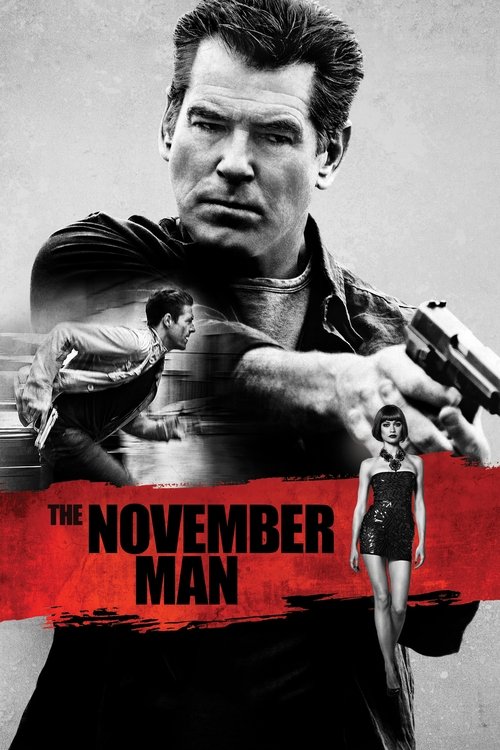
The November Man
An ex-CIA operative is brought back in on a very personal mission and finds himself pitted against his former pupil in a deadly game involving high level CIA officials and the Russian president-elect.
Despite a mid-range budget of $15.0M, The November Man became a commercial success, earning $32.6M worldwide—a 117% return.


Plot Structure
Story beats plotted across runtime


Narrative Arc
Emotional journey through the story's key moments
Story Circle
Blueprint 15-beat structure
Arcplot Score Breakdown
Weighted: Precision (70%) + Arc (15%) + Theme (15%)
The November Man (2014) reveals strategically placed story structure, characteristic of Roger Donaldson's storytelling approach. This structural analysis examines how the film's 15-point plot structure maps to proven narrative frameworks across 1 hour and 48 minutes. With an Arcplot score of 7.2, the film balances conventional beats with creative variation.
Structural Analysis
The Status Quo at 1 minutes (1% through the runtime) establishes Peter Devereaux, retired CIA operative, lives peacefully in Switzerland, fishing and enjoying solitude away from his former life of espionage and violence.. Of particular interest, this early placement immediately immerses viewers in the story world.
The inciting incident occurs at 12 minutes when Devereaux's former handler Hanley arrives in Switzerland begging for help: his asset in Moscow, Alice Fournier (also Devereaux's former lover), has intel on Russian presidential candidate Arkady Federov that could prevent his election.. At 11% through the film, this Disruption aligns precisely with traditional story structure. This beat shifts the emotional landscape, launching the protagonist into the central conflict.
The First Threshold at 26 minutes marks the transition into Act II, occurring at 24% of the runtime. This demonstrates the protagonist's commitment to Devereaux actively chooses to enter Russia for the extraction. During the mission, Mason (unknowingly working the same operation) is ordered to terminate Alice. She's killed in crossfire and dies in Devereaux's arms, devastating him., moving from reaction to action.
At 51 minutes, the Midpoint arrives at 48% of the runtime—precisely centered, creating perfect narrative symmetry. Of particular interest, this crucial beat False defeat: Devereaux discovers the conspiracy goes to the highest levels of CIA—Hanley and Perry are protecting Federov because he's their asset. The organization he served is now hunting him. Stakes escalate massively., fundamentally raising what's at risk. The emotional intensity shifts, dividing the narrative into clear before-and-after phases.
The Collapse moment at 78 minutes (72% through) represents the emotional nadir. Here, Lucy, Devereaux's goddaughter and Mason's girlfriend, is kidnapped by the CIA to force Devereaux to surrender. Mason realizes his own agency has become the enemy. A metaphorical death of innocence and institutional trust., illustrates the protagonist at their lowest point. This beat's placement in the final quarter sets up the climactic reversal.
The Second Threshold at 85 minutes initiates the final act resolution at 79% of the runtime. Devereaux and Mason forge temporary alliance, combining their skills. Devereaux synthesizes his experience with Mason's resources. New information reveals Federov's location at embassy event, creating opportunity for exposure and rescue., demonstrating the transformation achieved throughout the journey.
Emotional Journey
The November Man's emotional architecture traces a deliberate progression across 15 carefully calibrated beats.
Narrative Framework
This structural analysis employs structural analysis methodology used to understand storytelling architecture. By mapping The November Man against these established plot points, we can identify how Roger Donaldson utilizes or subverts traditional narrative conventions. The plot point approach reveals not only adherence to structural principles but also creative choices that distinguish The November Man within the crime genre.
Roger Donaldson's Structural Approach
Among the 13 Roger Donaldson films analyzed on Arcplot, the average structural score is 7.2, reflecting strong command of classical structure. The November Man represents one of the director's most structurally precise works. For comparative analysis, explore the complete Roger Donaldson filmography.
Comparative Analysis
Additional crime films include The Bad Guys, Rustom and The Whole Ten Yards. For more Roger Donaldson analyses, see Species, Dante's Peak and Seeking Justice.
Plot Points by Act
Act I
SetupStatus Quo
Peter Devereaux, retired CIA operative, lives peacefully in Switzerland, fishing and enjoying solitude away from his former life of espionage and violence.
Theme
In flashback, Devereaux tells his protégé David Mason: "This job makes you choose between the mission and the person. When you hesitate, people die." The cost of loyalty vs. duty.
Worldbuilding
Flashback to Montenegro showing Devereaux training Mason, their mentor-student bond, and a botched mission where Mason's hesitation gets an innocent woman killed. Jump to present: Devereaux retired, Mason now active CIA agent.
Disruption
Devereaux's former handler Hanley arrives in Switzerland begging for help: his asset in Moscow, Alice Fournier (also Devereaux's former lover), has intel on Russian presidential candidate Arkady Federov that could prevent his election.
Resistance
Devereaux initially refuses, debates returning to the life he escaped. Hanley reveals Alice specifically requested him. He reluctantly agrees to extract her for personal reasons, prepares gear, studies the mission parameters.
Act II
ConfrontationFirst Threshold
Devereaux actively chooses to enter Russia for the extraction. During the mission, Mason (unknowingly working the same operation) is ordered to terminate Alice. She's killed in crossfire and dies in Devereaux's arms, devastating him.
Mirror World
Devereaux encounters Mira Filipova, a social worker who unknowingly holds the key to the conspiracy. She represents innocence and moral clarity in contrast to his dark world of espionage and betrayal.
Premise
Devereaux goes rogue, pursuing Alice's leads to uncover Federov's dark secret. Cat-and-mouse games through Belgrade, protecting Mira while evading both Russian assassins and his former protégé Mason. Trademark spy tradecraft and action sequences.
Midpoint
False defeat: Devereaux discovers the conspiracy goes to the highest levels of CIA—Hanley and Perry are protecting Federov because he's their asset. The organization he served is now hunting him. Stakes escalate massively.
Opposition
Both Russian and American forces close in. Mason struggles with orders to kill his mentor. Devereaux uncovers that Federov orchestrated the Chechen refugee camp massacre, and Mira is a survivor witness. Enemies tighten the noose from all sides.
Collapse
Lucy, Devereaux's goddaughter and Mason's girlfriend, is kidnapped by the CIA to force Devereaux to surrender. Mason realizes his own agency has become the enemy. A metaphorical death of innocence and institutional trust.
Crisis
Devereaux faces impossible choice: surrender and let Federov's crimes stay hidden, or sacrifice Lucy. He processes the dark reality that everyone he cared for has been used against him. Mason questions everything he believed.
Act III
ResolutionSecond Threshold
Devereaux and Mason forge temporary alliance, combining their skills. Devereaux synthesizes his experience with Mason's resources. New information reveals Federov's location at embassy event, creating opportunity for exposure and rescue.
Synthesis
Finale: coordinated assault to rescue Lucy, expose Federov, and eliminate corrupt CIA handlers. Confrontation between Devereaux and Perry. Mason must choose between career and truth. Mira testifies, destroying Federov's presidential bid.
Transformation
Devereaux walks away from the carnage, having chosen the person over the mission—saving Lucy and exposing truth cost him everything but his humanity. He remains in shadows but morally transformed, while Mason inherits his mentor's hard wisdom.